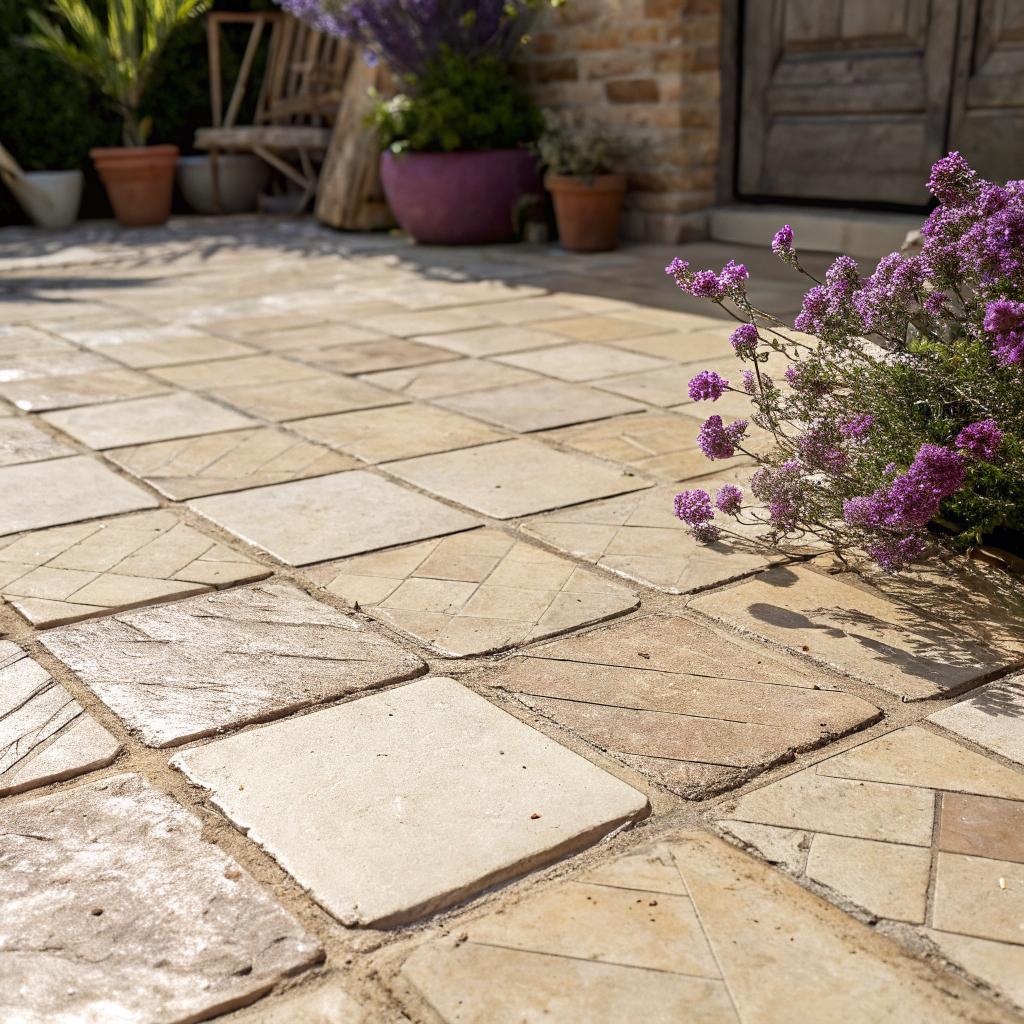
I used to think tile was just background, like the beige default theme you change as soon as you boot a new laptop. Then I noticed something strange: the people in my timeline who care the most about mechanical keyboard switches and screen color profiles are the same ones obsessing over beige Zellige in their kitchens and home offices.
The short answer is simple: tech lovers are choosing beige zellige tile because it feels like the physical version of a well designed interface. It is neutral but not boring, handcrafted but still clean, reflective but not harsh on the eyes, and it plays very nicely with screens, cables, and all the devices that fill a modern home.
Why beige Zellige fits a tech heavy life
When you spend most of your day looking at bright monitors and sharp interfaces, your space starts to matter in a different way. You notice glare. You notice color cast on your screen. You notice how loud or quiet a room feels on calls.
Beige Zellige helps with all of that in small but real ways.
Beige Zellige is calm enough for focus, textured enough for interest, and warm enough to stop a tech space feeling like a server room.
Here is why that matters if you care about hardware, software, and the spaces where you use both.
- Visual comfort: The soft, warm beige tones reduce harsh contrast with screens, so the room feels less aggressive on your eyes.
- Subtle texture: Each tile is slightly different, with gentle ripples and shade shifts. That breaks up flat surfaces the same way a good UI breaks up solid blocks of color.
- Light management: The glossy, uneven surface bounces light in different directions, which can soften reflections around your displays.
- Neutral “OS” for your decor: Beige behaves like a default UI theme that works with many icon packs. It sits behind colorful devices, artwork, and LEDs without fighting them.
- Timeless rather than trendy: Tech changes fast. Beige Zellige tends to outlive your current monitor, phone, and probably your next upgrade cycle.
If you are used to thinking about design in terms of UX, component libraries, and color tokens, Zellige is weirdly satisfying. It gives you randomness and character inside a very simple, predictable grid.
What Zellige actually is, in plain terms
In case you are still not totally sure what people even mean when they say “Zellige”, here is the short version.
Zellige is a traditional Moroccan tile made from clay, shaped and glazed by hand, then fired. No two tiles come out exactly the same.
Even if you do not care about history, it helps to know the basics so the marketing does not feel like magic.
Key traits of Zellige
| Trait | What it means in real life |
|---|---|
| Handmade clay body | Edges are slightly irregular, surfaces are not perfectly flat. |
| Glazed face | Glossy finish, tiny variations in color and thickness. |
| Shade variation | Tiles in the same color box are not identical; some are lighter or darker. |
| Micro imperfections | Pinholes, little chips, hairline marks in the glaze are part of the look. |
| Reflective but not mirror-like | Light scatters rather than reflecting as a sharp glare. |
If you enjoy the idea of a custom keyboard where no keycap is exactly like the next, or a 3D printed part that still shows layer lines, Zellige hits that same part of the brain. It is not “factory perfect”. It is a grid of small, controlled differences.
Why the beige tone in particular appeals to tech people
I used to ignore beige completely. It felt like the color of old plastic monitors and office cubicles. Then I saw it in Zellige, and it looked more like warm sand than old CRTs.
Beige sounds boring on paper, but in Zellige it behaves more like a spectrum. Some tiles lean cream, some caramel, some almost stone-like. Put them together and the wall feels alive, but still quiet.
Here is why that works well in a tech focused home.
1. Beige plays well with screens
If you have ever tried to color grade photos or code in a room with very bright primary colored walls, you know it is distracting. Your eyes are always adjusting. The wall color sneaks into the way you see your screen.
Beige Zellige is gentle on color perception. It is warm, but not so strong that it tints everything. That helps in a few ways:
- Your wall is not fighting your monitor’s white balance.
- Ambient light around the screen feels softer, especially at night.
- Reflections in glossy displays are less aggressive than with white paint or very dark walls.
If you work from home, stream, game, or run a media setup, you know how much small lighting tweaks matter. Tile sounds like a big, heavy decision, but the day to day effect can be as subtle as switching from a harsh fluorescent bulb to a warmer LED.
2. Beige Zellige is like a neutral theme for your hardware
Most people who are deep into tech do not leave their spaces empty. There are:
- Monitors and TV screens
- Smart speakers and hubs
- LED strips and bias lighting
- Consoles, PCs, laptops, tablets
- Cables, docks, and storage
If your walls are also loud, everything competes.
Beige Zellige gives you a consistent, calm backdrop. It lets your hardware be the “accent color” in the room. If you swap your RGB setup for a clean, monochrome look, the tile still works. If you go from a minimalist desk to a full streaming rig, the tile still works.
I underestimated that part. It is like choosing a font that looks good in both a landing page and a CLI screenshot. You stop worrying about it so much.
3. Subtle movement for people who stare at static layouts
A wall of flat plaster is like a white background in a design mockup. It is fine, but it does not tell you anything.
A wall of beige Zellige has tiny shifts in shade, shine, and depth. During the day, light moves across it. At night, task lighting and screens cast different tones.
If you stare at grids all day, beige Zellige is a kind of reward: it is a physical grid that refuses to be perfectly uniform.
There is something relaxing about that. Especially for people who spend a lot of time aligning pixels, debugging layouts, or managing complex systems that never feel “done”.
Where tech lovers are using beige Zellige
People often picture Zellige only in kitchens or fancy bathrooms. That is still common, but tech heavy homes are pushing it into other corners.
1. Home office backdrops for calls and streams
If you do a lot of video calls, your wall is suddenly part of your professional presence. You might not want RGB strips behind you on a client call, but you also might not want a blank white wall that feels like a rental.
Beige Zellige hits a middle ground:
- Neutral enough to look clean and professional
- Textured enough that the camera sees depth, not a flat surface
- Warm enough that your skin tone does not look washed out
For streamers or YouTubers, it does a similar job. It adds character without locking you into a purple-and-neon aesthetic you may regret next year.
2. Kitchens that double as workspaces
Many tech people use their kitchen table as a second desk. Maybe you take calls there. Maybe you work from a laptop while cooking.
A beige Zellige backsplash behind the counter can change how that feels:
- It reflects under-cabinet lighting in a softer way, which helps if your laptop is on the island.
- It handles splashes from coffee or food better than paint, once sealed.
- It sits quietly behind stainless appliances, black devices, or a tablet dock.
The kitchen is also the room guests see the most. If your office is full of gear, sometimes you want the kitchen to feel calmer. Beige Zellige is good at that.
3. Bathrooms that feel like a reset from notifications
Bathrooms are usually phone zones, like it or not. Many people check email, scroll, or watch videos there. A hard, cold bathroom with bright white tiles can feel a bit like an airport restroom.
Beige Zellige shifts the mood. It feels warmer and more relaxed, especially with soft lighting. That might sound like design fluff, but there is a mental effect. When the space looks calm, your brain gets a hint that this is not another “productivity” zone.
Some tech lovers use beige Zellige on shower walls or as an accent around a soaking tub. The glossy surface handles steam and water quite well when installed correctly.
4. Entryways with hooks, routers, and charging stations
The entrance area often ends up as the place where you install the router, drop your keys, and plug in your phone. It can look messy fast.
A small wall of beige Zellige behind that zone can:
- Give cables and hardware a more intentional background
- Protect the wall from scuffs and dropped items
- Reflect a bit of natural light and stop the area feeling like a dark corner
It is a design trick that makes everyday tech clutter feel a bit more deliberate.
Comparing beige Zellige to other surfaces tech fans consider
If you are thinking about tile, you might be weighing it against paint, flat porcelain, or something like exposed concrete. This is where a simple comparison helps.
Surface comparison
| Surface | Look and feel | Tech related pros | Tech related cons |
|---|---|---|---|
| Beige Zellige tile | Warm, reflective, irregular | Soft light reflection, visual interest, durable | Glare possible with harsh spotlights, needs sealing and good install |
| Plain painted wall | Flat, smooth, very simple | Easy to repaint, minimal distraction | Shows scuffs, can feel clinical, more glare on glossy paint |
| Flat porcelain tile in beige | Uniform, often matte or slight sheen | Predictable, less variation, sometimes cheaper | Lacks depth and movement, can feel generic |
| Exposed concrete | Cool, industrial, grey | Matches a certain tech aesthetic, low visual noise | Can feel cold, echoes sound, less forgiving with stains |
If your home is already full of screens, cables, and gear, the warmth of beige Zellige often wins out over the colder materials.
Things tech minded people worry about, and how beige Zellige handles them
Many tech lovers are detail oriented in a particular way. They care about specs. They read long reviews. They worry about real world usage more than showroom photos.
Tile is similar. Most of the problems only show up once you live with it. So it helps to look at beige Zellige in that same critical light.
1. Maintenance and cleaning
You might wonder if Zellige is high maintenance. The honest answer is: it depends where you put it and how your installer treats it, but it is not as fragile as it looks.
Some practical points:
- Glazed face: Wipes clean with a soft cloth, water, and mild soap in most cases.
- Grout: Stains quicker than the tile, so many people pick a mid-tone grout to hide everyday marks.
- Sealing: Recommended, especially in kitchens and bathrooms, to help repel moisture and stains.
If you are the kind of person who keeps microfiber cloths for your monitors and phones, you already have the mindset for keeping Zellige looking good. Regular light cleaning is easier than rare heavy cleaning.
2. Small imperfections and tolerance for “bugs”
One thing to be clear about: Zellige is not a bug free product. Pins in the glaze, tiny chips on edges, and slight bends in the tile are normal.
If you want pixel perfect, machine made uniformity, Zellige might annoy you. If you like a bit of noise in the signal, it will feel right.
Some tech lovers love this. It feels more like a handmade keyboard case or a limited run PCB than a mass produced plastic part. Others struggle with the lack of perfect alignment.
Being honest with yourself about your taste helps. If misaligned icons on your phone drive you crazy, you might want to look at lots of real photos before committing.
3. Sound and echo in a tech heavy room
Rooms with lots of hard surfaces can echo. If you use the space for calls, podcasts, or video, that matters.
Zellige is a hard surface, so it does not absorb sound. That is the same as almost all tile. The uneven surface, though, helps scatter reflections a bit more than a completely flat wall.
In practice:
- You still need soft elements like rugs, curtains, or acoustic panels.
- Beige Zellige on only one or two walls is usually fine.
- Full tile boxes with no soft furnishings can feel echoey.
If you are already used to tuning audio setups, this will not surprise you. Tile is part of the equation, not the full answer.
How beige Zellige supports a long hardware upgrade cycle
Tech moves fast. Surfaces do not. That mismatch is where a lot of regret comes from.
A neon wall that looked great with your old gaming rig might not work when you move toward a calmer setup. A cold, all white interior might clash when you bring in warmer wood desks and analog gear.
Beige Zellige holds up better over time because:
- It is not tied to a specific trend year.
- It pairs with both black and white hardware, and with wood or metal.
- It fits casual, professional, and “cozy” phases of your life without needing a full refit.
You can change your monitor, speakers, keyboard, chair, and rug, and the tile still sits in the background doing its job.
For people who treat their home like a long running project, that stability matters.
Design tips if you are a tech person planning beige Zellige
If you think in systems, it helps to treat tile as one part of a larger setup. Here are some fairly practical points to think about.
1. Think about color temperature, not just color
Beige Zellige looks different under:
- Cool daylight LEDs
- Warm incandescent style bulbs
- RGB mood lighting
If you care about color temperature (2700K vs 4000K and so on), test tile samples under the actual lighting you plan to use. The same tile can look cream in one room and more caramel in another.
2. Plan your cable and device layout first
Before you tile, think through:
- Where monitors or TVs will sit
- Where you need outlets and ports
- Where you might mount speakers or cameras
You do not want to drill through your new Zellige more than needed. It is better to over plan your power and data points than to patch things later.
This is where tech thinking helps. Pretend you are mapping a network diagram on your walls before the “UI layer” goes on.
3. Think about grout as part of the design, not an afterthought
The grout color changes how “busy” the tile looks:
- Light grout with beige tile gives a soft, almost seamless look.
- Mid-tone grout outlines each tile and emphasizes the grid.
- Dark grout creates strong contrast and can feel more graphic.
If you are used to wireframes and grids, this is similar. Thicker, darker lines change how you see the layout.
For most tech friendly spaces, a grout that is close to the tile color works well. It keeps the background calm so your devices can stand out.
4. Match finishes with your hardware
Beige Zellige is normally glossy. Many tech items are matte or satin. That contrast is part of the charm.
You can lean into that by:
- Choosing matte black or white hardware against the shiny tile
- Using brushed metal fixtures instead of mirror chrome
- Keeping your desk surface more matte to balance the shine on the wall
If everything is glossy, reflections can start to feel chaotic.
Why tech culture and beige Zellige overlap at all
This is the part that surprised me. Beige Zellige is a very old material. Tech culture is new. Yet you see them together more and more.
Some of it comes down to how tech people think about objects.
- They like to know how things are made.
- They often value craft, even in modern products.
- They appreciate when something is both functional and pleasing to look at daily.
Zellige, even in a quiet beige tone, fits that mindset. It has:
- A clear, understandable production process.
- Visible traces of the human hand, like code comments left by another developer.
- A long history that has outlived many design cycles.
There is a small contradiction here that I find interesting. Many tech lovers say they want “minimal” spaces, but then they fall for a tile that is full of small imperfections. Maybe minimal does not always mean “perfect” or “sterile”. It might mean “focused”, with just enough texture to keep you grounded.
Common questions tech lovers have about beige Zellige
Q: Will beige Zellige look dated in a few years, like some colored LEDs do?
A: Probably not in the same way. Beige is close to natural stone and clay tones that have been around for a long time. While specific layouts might feel trendy after a while, the base color and material age more gently than strong fashion colors.
Q: Does the glossy surface cause bad reflections on monitors or TV screens?
A: It can, but usually not if you are careful with light placement. Glare tends to be worst with strong spotlights pointed straight at the tile and screen. If you use diffused lighting, indirect wall washing, or softer bulbs, the reflections are more scattered and less visible on the display.
Q: Is beige Zellige practical for someone who spends all day at home, cooking, working, and using lots of gear?
A: Yes, if you plan the install well. Seal the tiles, choose a sensible grout, and place them where they are easy to wipe. Many people with remote jobs use Zellige in kitchens and home offices without issues. It is not completely set-and-forget, but if you maintain your devices regularly, the level of care will feel familiar.
If you already debug your own network, tweak your own PC, and calibrate your own screens, beige Zellige fits right into that mindset: a bit of attention, and it quietly does its job in the background while your tech does its job in the foreground.