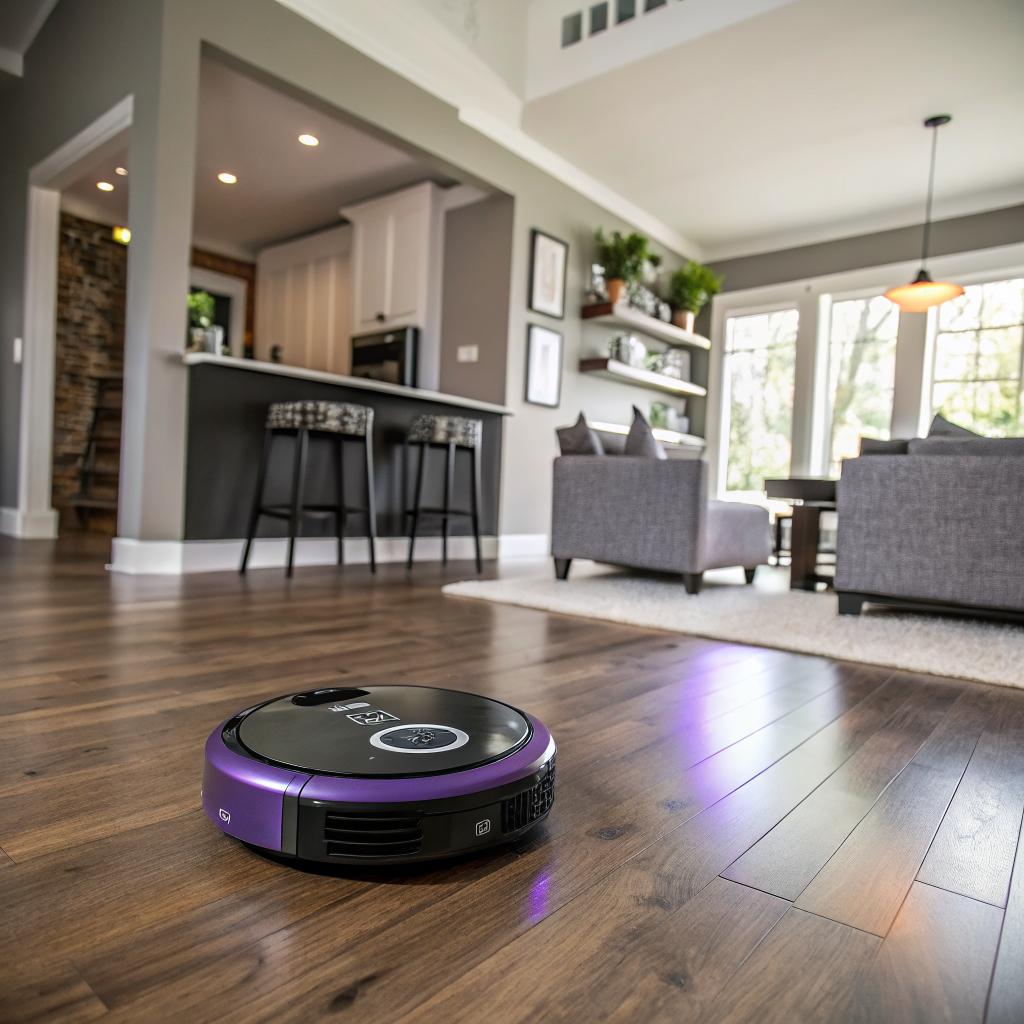
I used to think floors were just background, like the part of the house you do not really notice until something spills. Then I installed hardwood in a smart home setup and realized the floor quietly controls how the whole space looks, sounds, and even how your tech feels day to day.
If you are wondering whether a smart home upgrade should include hardwood, the short answer is yes: pairing a solid smart home setup with quality hardwood floor installation Denver can make your space look better, feel quieter, boost resale value, and play nicely with things like smart thermostats, robot vacuums, and sensors, as long as the installation is done correctly and the right materials are chosen for Colorado’s dry climate.
Why tech-minded homeowners care about hardwood floors
Most people see hardwood as a design choice. You pick a wood, a color, maybe a plank width, and that is it.
If you are into tech, you look at it a bit differently. You probably think about:
– How sound travels in the room where your speakers or TV are
– How well robot vacuums will move
– How heat and humidity affect both your floor and your gear
– Whether your smart home feels “finished” or still halfway there
Hardwood is not some old-fashioned, anything-goes material. It behaves in a predictable way. It reacts to temperature and humidity. It affects acoustics and wireless performance. It changes how light bounces for your security cameras and how your sensors sit on the surface.
If you treat hardwood as a core part of your smart home system, not just decoration, you get a quieter, more stable, and more future-proof space.
That is why I think more people who read about Wi-Fi 7 routers and Matter devices should also spend a bit of time understanding floors. It is not as fun as unboxing a new gadget, but it has a bigger impact on how your home feels.
How hardwood floors affect your smart home setup
Let me start with the parts that tech people usually care about: sound, sensors, and automation.
Acoustics and your home theater or audio setup
Hard floors reflect sound. Carpets absorb it. That is the simple version.
With hardwood, your speakers will sound different than they do on carpet. Not worse by default, just different.
Here is what tends to happen when you go from carpet to hardwood in a living room or media room:
- Voices sound clearer, because the floor is not swallowing mid and high frequencies.
- Bass can feel boomy if you do not have rugs or soft furniture to break up reflections.
- Echo in a bare room is more obvious, especially if you have high ceilings.
So if you add hardwood, you might need to make some tech tweaks:
– Recalibrate your AV receiver or soundbar using its built-in room correction.
– Use an area rug in front of the TV to cut down extra reflections.
– Add basic acoustic panels if you are picky about audio.
It is a small tradeoff. You get a cleaner, higher-end look on video calls and content, and with a bit of tuning you keep the audio performance you want.
Robot vacuums and smart cleaning devices
Hardwood is usually the easiest surface for robot vacuums and mops.
But the quality of the installation matters more than you might think. If boards are not level, or if you have big transitions between rooms, robots get stuck, bump, or fail to map accurately.
Things that help smart cleaning devices on hardwood:
- Flat transitions between rooms, with low or no thresholds when possible.
- Consistent finish sheen so robot sensors can “see” the floor properly.
- Limited gaps between boards so dirt does not fall into cracks.
If you like the idea of setting routines like “vacuum every day at 10 AM while I am at work,” a well-installed hardwood floor makes that work with less babysitting.
Smart thermostats, sensors, and Denver’s dry climate
Colorado has low humidity for much of the year. Winters, especially, can be very dry indoors.
Wood floors expand and contract with moisture. That is normal. The problem is when the change is extreme.
Poor moisture control can:
– Create gaps between boards
– Cause squeaks
– Put stress on baseboards and even door frames
Where does tech come in?
Smart thermostats and good sensors are not only for comfort, they help keep your hardwood stable by avoiding sharp swings in temperature and humidity.
If you have:
– A smart thermostat that supports multi-stage or modulating heat
– A smart humidifier or whole-house humidifier
– A few cheap temperature and humidity sensors in key rooms
you can use them together to keep the environment steady, which protects both the wood and your electronics.
Imagine this setup:
– Humidity sensor in the living room near your hardwood
– Humidifier that you can control with your phone
– Automation: if humidity drops below 35 percent, run the humidifier until it reaches 40 percent
That one simple loop does more for your floors than any fancy cleaning product.
RF signals, smart locks, and other gear
Hardwood itself does not block Wi-Fi, Zigbee, Z-Wave, or Bluetooth signals. It is not metal or concrete.
The only minor thing to keep in mind is that:
– Very glossy finishes can produce more glare for security cameras.
– Dark floors may slightly affect low-light camera auto-exposure.
– Raised transitions or badly cut boards can block the perfect fit of door sensors or floor-contact sensors.
None of this is a dealbreaker, it just means the floor is part of the physical environment you are building your system on. If a contact sensor on a door frame is misaligned by a few millimeters because of a strange threshold, it is annoying.
Choosing the right hardwood for a smart home in Denver
Now the part where the “Denver” condition actually matters. Not all hardwood is equally friendly to a dry, semi-arid climate with big day-to-night swings.
Solid vs engineered hardwood for tech-heavy homes
Here is a simple comparison you can skim.
| Feature | Solid hardwood | Engineered hardwood |
|---|---|---|
| Structure | Single piece of wood, same material top to bottom | Real wood top layer over layered wood base |
| Stability in dry climate | More movement with humidity changes | Better stability, less movement |
| Refinishing potential | Many times, as long as thickness allows | Limited refinishes, depends on wear layer |
| Fit with radiant heat | Needs careful selection and control | Usually better for radiant systems |
| Price range | Often a bit higher for premium species | Wide range, some options more budget friendly |
For a smart home in Denver that has, or might later have, radiant floor heat or more complex HVAC control, engineered hardwood often makes more sense. It tolerates fluctuations better.
Solid hardwood still works, but if you pick that route, you have to be stricter with humidity control and installation method.
Wood species that behave better in Denver
All wood moves. Some species move less.
Common options:
- Oak: Very common, stable, takes stain well, works in most Denver homes.
- Hickory: Hard and resistant to dents, but has more color variation, which you may or may not like.
- Maple: Hard and fairly stable, but can show scratches more on smooth, light finishes.
- Walnut: Rich color, a bit softer, better in lower-traffic or adult spaces.
If you have kids, pets, or a lot of gear moving in and out, durability matters more than subtle grain patterns.
For most tech-focused homeowners, the smart choice is a stable species like oak or hickory in a mid-tone color that hides dust and hair better than very dark or very light floors.
You might think pure white floors look amazing in product photos. In real life, every cable, crumb, and pet hair stands out. That can get old fast.
Finish choices: sheen, color, and maintenance
Finish affects:
– How often you need to clean
– How floors look on camera
– How obvious scratches and dents appear
Common sheen levels:
- Matte: Least shiny, hides scratches and dust, best for busy homes.
- Satin: Slight glow, still fairly forgiving, good balance.
- Semi-gloss: Shiny, more formal, shows dust and scratches more.
For a home with:
– Lots of screens
– Security cameras
– Smart lighting scenes
I would avoid very glossy surfaces. Light bounce can be distracting, especially at night when you are using dim lighting or watching TV.
Color also matters:
– Very dark floors look sharp but show dust, footprints, and pet hair.
– Very light floors show stains more easily.
– Medium tones are easier to live with if you do not want to clean constantly.
If you work from home with a camera on, or stream, the floor color and sheen subtly affect how your space looks on video. It is weird, but once you see it, you cannot unsee it.
Planning hardwood around your smart home wiring and gear
Most of the time, people install hardwood either when they buy a place or during a renovation. That is also when you should think hardest about cables, power, and device locations.
Do flooring before you lock in device placement
It can feel tempting to mount all your cameras, speakers, and wall panels first, then lay the floor. That can work, but there are tradeoffs.
Flooring companies need:
– Clear access to the edges of rooms
– Room to work around doors, vents, and stairs
– Freedom to undercut door jambs for a clean fit
If you already have baseboard raceways, wired speakers, or floor-standing racks crammed against every wall, the job is slower and messier.
Better order, if you can swing it:
- Plan your smart home layout: where will hubs, racks, access points, and key devices live.
- Have any subfloor work done: leveling, moisture barrier, cable conduits.
- Install the hardwood, including transitions and vents.
- Add baseboards and trim.
- Finish mounting panels, speakers, cameras, and other gear.
If you like to tinker with your setup, remember that hardwood is a long-term thing. You might swap routers every few years, but the floor should last decades.
Hidden wiring and floor-level devices
Floors are an underused opportunity for neat wiring.
Obvious warnings aside, there are some neat options:
– Floor-level outlets in living rooms, so you can power lamps or devices away from the walls.
– Raceways at the baseboard, matched to your floor color, for low-voltage runs.
– Routed channels in the subfloor before hardwood goes in, for things like Ethernet to a media cabinet.
Things to think about:
- Try to keep low-voltage cables well away from future nail or staple paths.
- Document any hidden runs with photos before the boards go down.
- Keep service loops where you might someday move a rack or TV stand.
If you like floor sensors, pressure mats, or built-in LED step lighting, you really want to decide that before installation. Retrofitting under a finished hardwood floor is painful.
Thresholds, smart locks, and door sensors
At doorways, the way hardwood ties into other flooring or outside entries will affect both comfort and your automation.
Things you want:
– Low, smooth thresholds for robot vacuums.
– Enough clearance under smart locks and deadbolts.
– Predictable gaps for door and contact sensors.
If a floor is installed too high at a front door, a lock might bind or a sensor magnet might sit too far from its contact. Most of this is avoidable if the installer knows about planned hardware in advance.
You do not need to overthink this, but it helps to tell the installer things like:
– “There will be a smart lock here, the door swing cannot drag on the floor.”
– “Robots must move from this room to that room daily.”
– “I may add a floor-standing server rack here later.”
They do not need your whole home automation diagram, but context helps.
Installation choices that matter for comfort and tech
Not all hardwood floors are installed in the same way. The method affects stability, noise, and long-term flexibility.
Nail down, glue down, or floating
Here is a basic comparison.
| Method | How it works | Pros | Cons |
|---|---|---|---|
| Nail down | Boards nailed or stapled to a wood subfloor | Traditional, solid feel, easy to repair boards | Needs wood subfloor, not ideal over some concrete slabs |
| Glue down | Boards glued directly to subfloor | Stable, can reduce hollow sound, good over concrete | Harder to replace boards, removal is messy |
| Floating | Boards lock together and sit on underlayment without glue or nails | Faster install, easier to change later | Can feel less solid, more prone to movement if done poorly |
For a tech-heavy home, my bias is simple:
Prioritize acoustic comfort and stability over the quickest or cheapest install method, especially in rooms where you have audio gear or work all day.
A nail down or properly glued floor with a decent underlayment often results in fewer squeaks and more consistent acoustics.
A floating floor can still be good, but cheap underlayment or rushed installation can give you a hollow step sound that gets annoying in recordings and calls.
Subfloor prep, leveling, and squeaks
Subfloor work is the least glamorous part of a hardwood project, but it is what separates a nice floor from one that creaks and annoys you for years.
Things that matter:
- Flatness: small dips or humps can cause movement that turns into squeaks.
- Secure fastening: loose subfloor panels creak when you walk on them.
- Clean surface: dust and debris under glued floors can create hollow spots.
Imagine sitting on a video call, trying not to move your chair because every small roll produces a tiny noise that your mic picks up. That is usually not the chair. It is the floor under it.
In a room used for work or recording, it can be worth being slightly picky and asking direct questions like:
– How do you check for subfloor flatness?
– How do you handle squeaky spots now, before boards go down?
– Do you use screws, nails, or both on loose areas?
You do not have to become an expert, but showing that you care about this step nudges the installer to care too.
Underlayment and sound control
Underlayment is the layer between the subfloor and your hardwood. It can be a simple foam pad, cork, or a more complex sound control product.
This layer affects:
– Footstep noise to rooms below
– Feel underfoot
– Moisture control in some setups
In a condo or multi-story home, you might have code or HOA rules about sound transmission. Even without that, using a slightly better underlayment helps keep your house quieter for people working in other rooms.
For tech people, things like:
– Less noise bleeding into microphones
– Less footstep noise during streaming or recording
– More stable temperature and moisture control
add up to a better daily experience.
Day-to-day life: automation and maintenance for hardwood
Once the floor is in, how does it change your routine, and what can your tech do to help?
Cleaning routines with smart devices
Most hardwood floors like:
– Regular dust removal
– Gentle cleaning products
– Limited standing water
Robots help with the first part, but you should set them up with a bit of thought.
Ideas:
- Schedule vacuum runs during times with less foot traffic so they do not smear dirt around.
- Use no-mop zones or low-water settings for robot mops on hardwood areas.
- Keep a small stick vacuum or cordless unit handy for quick human cleanups.
If you want to be slightly obsessive, you can tie smart shades to cleaning:
– Open shades a bit during vacuum runs so the robot has enough light to navigate.
– Close shades during manual cleaning if glare on a glossy floor annoys you.
It sounds like overkill, but small automations like that push the house toward “it just runs itself” territory.
Monitoring humidity and protecting the floor
You cannot see wood movement day to day, but you can see humidity numbers.
Simple, cheap sensors like Aqara, Govee, or other brands feed data into Home Assistant, Apple Home, Google Home, or similar systems. That lets you:
– Alert yourself when humidity drops below a certain point.
– Turn humidifiers on and off.
– Correlate squeaks or seasonal changes with actual numbers.
Some rough ranges that work for most hardwood floors:
- Relative humidity around 35 to 50 percent is usually safe.
- Consistent levels are more helpful than chasing a perfect number.
- Big daily swings are the issue, not small slow changes over weeks.
Once you watch that graph for a heating season, you will understand your house better than most people who have lived there for years.
Protecting floors from smart furniture and gear
Some tech gear is surprisingly heavy or moves in ways that damage floors:
– Motorized standing desks
– Rolling office chairs
– Motorized recliners
– Server racks or heavy AV cabinets
The fix is not complicated:
– Use decent chair mats or soft casters on office chairs.
– Put felt pads under stationary legs.
– Place rubber or felt under server racks or towers.
– Avoid sliding heavy gear; lift where you can.
You can also use small smart alerts:
– Contact sensors on sliding doors so you know if someone left them open in wet weather.
– Leak sensors near plants, fridges, or washing machines close to hardwood.
A single overflow can do more harm than years of regular wear.
Cost, value, and long-term thinking for tech homeowners
Hardwood is not cheap. It sits in the same mental budget category as nice networking gear or solar panels: you feel it once, and then you live with the result for a long time.
Where the money goes
Broadly, you pay for:
- Material: species, grade, thickness, and finish type.
- Labor: removal of old flooring, subfloor prep, installation method.
- Extras: baseboards, transitions, stairs, vents, and touch-ups.
There is a strong temptation to cut corners on things you do not see, like:
– Underlayment quality
– Subfloor leveling
– Moisture barriers
If you are in a tech mindset, you already know that hidden parts, like cabling or surge protection, often matter more long-term than the shiny visible parts.
Hardwood is similar.
Resale value and tech appeal
Many buyers now expect:
– Some level of smart home readiness
– Neutral, modern finishes
– Durable, low-maintenance materials
Hardwood and a decent smart home backbone (good wiring, access points, maybe smart thermostat and a few switches) together create a space that is easier to sell later.
I would not pretend you get every dollar back. Markets move. Tastes change. But if someone walks into a house and sees:
– Worn carpet and random smart devices taped to walls
versus:
– Clean hardwood and a tidy, built-in smart setup
they read the second house as “cared for” and “future ready,” even if they cannot fully explain why.
Timing upgrades: floor first or tech first?
One last practical question people ask: should they upgrade floors before or after a big tech overhaul?
My slightly biased answer:
If you are planning both, it usually pays to do flooring first, then do your smart home hardware with the new reality in place.
Reasons:
– You avoid moving and remounting gear twice.
– You can route wires and choose outlets in harmony with the new layout.
– You see how light and sound behave with the new surfaces before placing speakers and screens.
If you already sunk serious money into gear, do not panic. Hardwood still works later. You just have to live with a bit more disruption when you move things around.
Q & A: common smart-home and hardwood questions
Will hardwood floors make my Wi-Fi worse?
No, not in any meaningful way. Wood and typical hardwood finishes do not block RF signals like concrete or metal. If your Wi-Fi is bad after hardwood installation, it is probably placement, interference, or network design, not the floor.
Are robot mops safe on hardwood?
They can be, if you use low-water settings, correct cleaning solutions, and avoid leaving standing water. Many people run them with no issues. If you are nervous, limit mopping to high-traffic zones and supervise the first few runs.
Is radiant floor heat compatible with hardwood?
Usually yes, as long as you choose products rated for radiant systems, follow temperature limits, and keep humidity in a reasonable range. Engineered hardwood often works better here. A smart thermostat that can control radiant heat gently helps a lot.
Do I need to refinish hardwood often?
Not really. In most homes, you might refinish every 10 to 20 years, sometimes even less, depending on traffic and how protective you are with pads and cleaning. Light colors and matte finishes can stretch that period because wear is less obvious.
Is it worth getting hardwood if I plan to move in a few years?
If your current floors are in rough shape or feel cheap, hardwood can make living there nicer and also improve how buyers see the home. If your floors are fine and your budget is tight, you might focus on smart home basics first and keep hardwood as a longer-term goal.
What part of your smart home would change the most if you upgraded to hardwood: how it looks on screen, how it sounds, or how you move and clean each day?