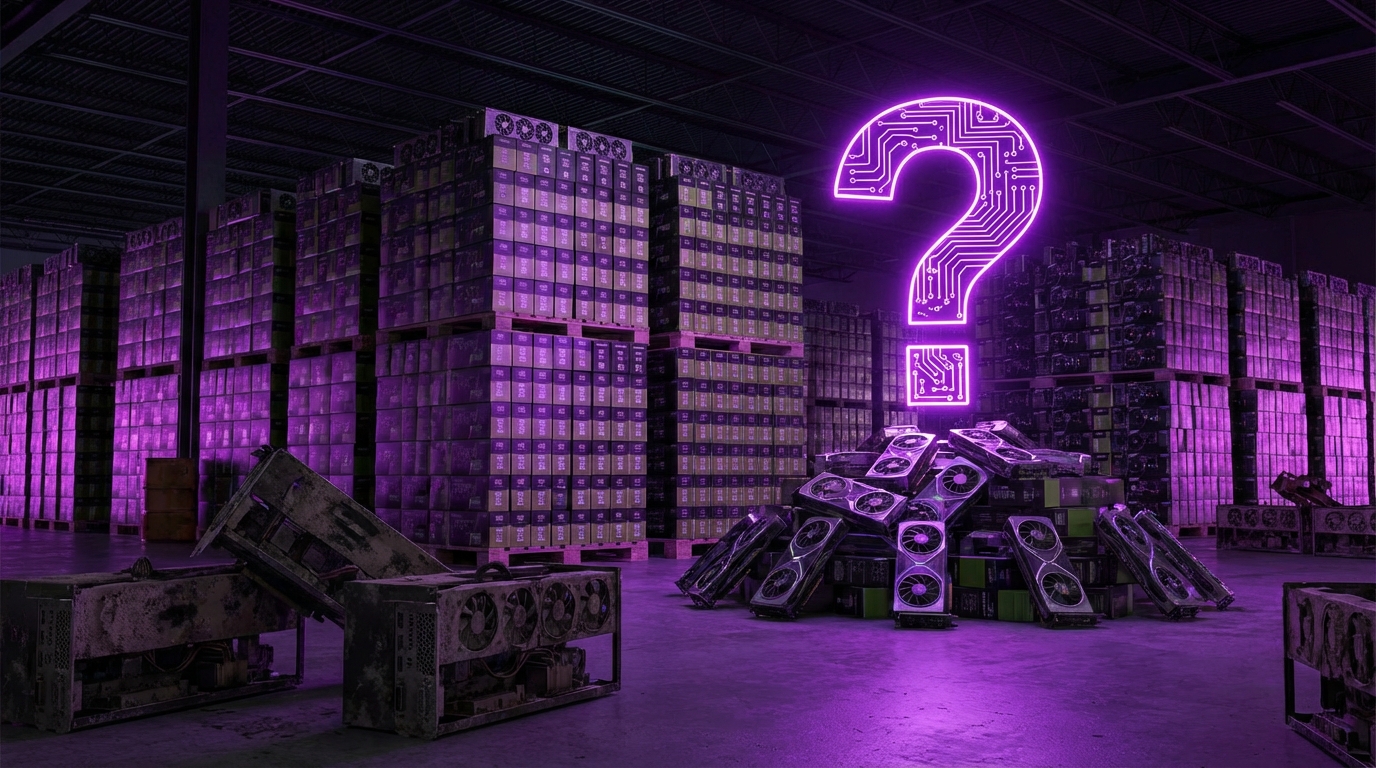
I used to think GPU launches were all about power and benchmarks. You waited, you bought, you bragged. Simple. Then the last few years hit, and getting a GPU started to feel more like trying to buy concert tickets than computer parts.
Short answer: the worst of the GPU shortage is over in most regions, but prices, availability, and value are still not back to what many people would call “normal”. If you are buying a GPU right now, you have more choice and lower prices than during the peak shortage, yet you still have to be careful, price-check across regions, and avoid some very bad deals sitting in retail channels.
What actually caused the GPU shortage in the first place?
The shortage was not one single problem. It was a stack of problems that landed on top of each other and stayed there for a while.
Here are the main drivers:
- Spike in gaming and work-from-home demand
- Crypto mining booms pulling GPUs into farms
- Foundry and supply chain limits on advanced nodes
- Logistics bottlenecks and shipping delays
- Scalper bots and reseller markups
None of these on their own would have broken the market to this level. Together, they did.
1. Gaming and work demand jumped at the same time
People spent more time at home. They built PCs, upgraded old ones, and bought laptops that had to handle both work and play. Business laptops ate up mobile GPU supply. Gamers fought for the rest.
NVIDIA and AMD were not prepared for that spike. No one really was. Forecasts are based on past data. That past data did not predict every gamer trying to upgrade within a short window.
Vendors sized their GPU production for “normal” demand, then demand stopped being normal for almost two years.
2. Crypto mining sucked up consumer GPUs
Every time crypto prices went up fast, GPUs left shelves faster than any gamer could click “Buy”. Mining farms bought GPUs by the hundreds, sometimes thousands. Even small miners with a bit of savings joined in.
To a miner who believed in quick payback, a 100 percent markup on a GPU still looked like a good deal. That means they were willing to overpay, which lifted prices for everyone.
Then there is this loop: higher crypto prices -> more miners -> more GPUs bought -> GPUs go out of stock -> prices climb further.
3. Foundry capacity was stretched thin
Most high-end GPUs are built on advanced process nodes from a small number of foundries (TSMC, Samsung). At the same time, phones, consoles, networking gear, and cars were fighting for similar capacity.
Even if NVIDIA or AMD wanted to double production overnight, they could not. They have contracts and limited wafer allocations. You cannot just walk into a fab and ask for “more GPUs” next week.
4. Logistics and shipping created long delays
It was not only the chips. Even when GPUs were made, containers, ships, and ports became bottlenecks. Shipping times stretched from weeks to months.
Retailers started ordering more than they needed because they did not know when the next shipment would land. That second-order effect added noise and confusion into the supply planning.
5. Scalpers and bots exploited the chaos
When something sells out in seconds, people build scripts to buy it faster. That is what happened.
Scalpers used bots to buy GPUs from retail sites and resold them on secondary markets at huge margins. That pushed “market price” far above MSRP and trained buyers to think “if I see anything close to MSRP, I must grab it”, which kept demand hot and prices high.
High demand plus low supply does not just raise prices. It attracts people whose whole business model is buying before you and reselling to you.
Where are we now: is the shortage actually over?
Short version: shelves are no longer empty, but “over” depends on what you measure.
For most buyers:
- You can buy a GPU at any performance tier without waiting lists.
- High-end cards are available, but many are still expensive compared to historic norms.
- Mid-range and lower-tier GPUs finally give more value, yet not at the level of older sweet spots like GTX 1060 / RX 580 days.
- Secondhand markets are crowded with cards, which affects pricing and choices.
Here is a simple way to think about the current state.
| Aspect | During peak shortage | Now |
|---|---|---|
| Stock availability | Often zero, lotteries and queues | Generally available across tiers |
| Retail pricing vs MSRP | 150-300% of MSRP common | Closer to MSRP, sometimes lower, but uneven |
| Used market | Overpriced, very tight | Plenty of options, prices softening |
| Crypto mining impact | Very strong | Much weaker, but not zero |
| Buying friction | Bots, drops, instant sellouts | Normal online purchase experience |
So if your definition of “shortage” is “I cannot buy a GPU at all”, then yes, the shortage is over. If your definition is “I can get a great performance-per-dollar deal like I did several generations ago”, then it is not really over.
The shelves are full again, but GPU pricing behavior has not fully gone back to what many PC builders were used to.
What changed in the market to fix the shortage?
Several dials moved over time. None of them fixed everything alone, but together they shifted the situation.
1. Crypto market cooled and mining stopped being a GPU gold rush
Crypto prices do not stay high forever. After big drops, many miners shut down or sold hardware. Ethereum moved to proof-of-stake, which removed a major GPU mining use case almost overnight.
With mining income shrinking, buying expensive GPUs for farms no longer made sense. That freed up cards for gamers and creators, both from retail and from used mining rigs.
2. Foundry capacity and planning improved
TSMC and others expanded capacity on several nodes. GPU vendors also adjusted their planning with more conservative and then more realistic demand expectations as the chaos calmed.
NVIDIA, AMD, and Intel staggered product launches, split stacks across different nodes, and targeted segments more clearly. Not perfect, but far less shock to the system than the launch cycles during the peak shortage.
3. Retailers and brands fought scalper bots
Retailers rolled out queue systems, verified accounts, and rate limiting. Brands started their own direct stores with reservation queues and anti-bot measures.
This reduced the volume of GPUs going straight to scalpers. It did not remove the problem, but it made it less dominant.
4. Consumers stopped panic-buying
At one point, many buyers were thinking “if I do not buy now at this crazy price, I may get nothing for a year”. That mindset is gone in most markets.
People wait for sales again. They compare more. This reduces the “buy at any price” pressure that pushed prices far above reasonable levels.
Are GPU prices fair now?
This is where it gets tricky. “Fair” is subjective, but we can look at a few benchmarks that matter.
- Performance per dollar compared to previous generations
- Price gaps between tiers in the same generation
- Regional differences and currency impact
- Price stability over several months
Performance per dollar is better than during the shortage, but not great historically
During the worst months, paying double MSRP for mid-range performance was normal. Compared to that, current prices look friendly.
Compared to older generations like the GTX 1060 or RTX 2060 era, the current mid-range does not look as generous. Vendors moved price brackets upward and stretched the definition of “mid-range”.
The shortage ended, but some of the high pricing that appeared during the chaos stayed as the new normal for certain tiers.
You also have to factor in new features like advanced ray tracing, encoding engines, and upscaling tech. Those are real benefits, yet if you only care about raw frames per second at 1080p, today’s mid-range does not feel like the same bargain it used to be.
Price gaps between tiers are wider
There is more “price cliff” between entry level, mid-range, and high-end than many buyers expect.
For example, there tend to be sharp jumps where:
- You pay much more for only a moderate gain in real-world gaming performance.
- You pay a big premium just to gain VRAM headroom for heavy content creation.
This is not new, yet it feels sharper after a period where people already stretched budgets to get any GPU.
Regional pricing still hurts some buyers
Currency changes, local taxes, and distribution patterns make GeForce or Radeon cards feel “back to normal” in one country and overpriced in another.
If you live in a region where stock is abundant and competition between retailers is strong, you see normal discounts. In other regions, you may see old generation cards still sitting on shelves at prices that made sense during the shortage, not now.
What about AI, LLMs, and data center GPUs?
Consumer and data center GPU markets are linked but not identical.
The surge in AI workloads created extreme demand for high-end data center GPUs. Those are not the same boards you put in a gaming PC, but they depend on similar fabs, packages, and in some cases similar memory.
This raises two concerns:
- Will AI demand steal capacity from gaming and workstation GPUs?
- Will brands prioritize data center margins over consumer supply?
So far, vendors segment these markets carefully. Data center parts have far higher prices and margins, so there is strong incentive to favor that side when capacity is tight.
Consumer supply has still improved compared to the worst shortage phase, yet I would not ignore the risk. If AI demand keeps growing fast, it can limit how aggressively vendors price consumer GPUs or how often they refresh lower tiers.
AI did not cause the last GPU shortage, but the AI boom shapes how GPU companies think about future capacity and pricing.
Is now a good time to buy a GPU?
This is the practical question under the headline. Is the shortage over enough that buying right now makes sense?
The honest answer is: under many conditions, yes. Under some conditions, not really.
Here is a quick breakdown.
| Situation | Is it a good time to buy? | Reasoning |
|---|---|---|
| Your PC has no GPU or a very old one (GTX 900 series or older) | Usually yes | You get large gains, prices are stable enough, and you will feel the difference everywhere. |
| You have a mid-range card from 1-2 gens ago | Maybe | Upgrade only if there is a specific workload or game you care about that is struggling now. |
| You just want “a deal” because the shortage is over | Often no | Prices are better, yet not a clearance sale. Do not upgrade for small gains. |
| You do heavy video, 3D, or AI work on a weak GPU | Usually yes | Time saved per project quickly pays back the cost. |
Key checks before you buy
If you decide to buy, do not just celebrate that cards are in stock. You still need to resist some leftover chaos in the channel.
Here is a structured checklist:
- Know current-gen vs last-gen pricing
Sometimes last-gen high-end cards are priced too high compared to current mid-range ones. Compare across generations, not just within one. - Watch VRAM capacity
Recent games and creation tools are more VRAM hungry. A slightly slower GPU with more VRAM can be the better choice over time. - Check power draw and your PSU
During the shortage, some people grabbed anything available and ignored power. Do not repeat that pattern. - Check cooler and noise
A good cooler matters for comfort and performance. Look at reviews, not just core specs. - Compare new vs used
The used market is full. Some bargains exist, but so do ex-mining cards that were driven hard.
Should you buy used GPUs now that there are so many ex-mining cards?
The end of mining booms releases big waves of used GPUs. That is happening again.
Used can be a smart move, but it carries risk. I do not agree with the idea that “a cheap ex-mining card is always worth it”. Sometimes it is, sometimes it is a long-term headache.
Pros of buying used
- Lower upfront cost for mid to high-end performance.
- Good way to grab older flagships that still perform well in 1080p/1440p.
- You reduce waste by extending a card’s life.
Cons and risks
- Heavy 24/7 mining use can shorten lifespan.
- Warranty may be gone or not transferable.
- Hidden defects that show up after a few weeks.
- Missing accessories or tampered BIOS on some cards.
If you buy used, you are trading money saved today for a bit more risk over the lifetime of the GPU.
Practical guidelines for used GPUs
Here is a simple framework:
- Buy locally when possible
Meeting in person or at least buying from a local marketplace makes returns easier if something goes wrong quickly. - Prefer lightly used gamer cards over bulk mining batches
Cards sold one-by-one with a story and proof of purchase tend to be safer than “50 units available” listings with no detail. - Check for physical signs
Dust patterns, discoloration, replaced screws, or unusual noise under load are warning signals. - Stress test quickly
Run a few hours of gaming or a benchmark as soon as you receive the card, so you can push for a return if needed.
Why GPU pricing might never go back to the “old normal”
Many people expect that once a shortage ends, prices slowly walk back to where they started. Hardware markets do not always behave like that.
There are a few reasons the “new normal” might stay above the old one:
- Manufacturing costs on advanced nodes are higher than older nodes.
- Data center and AI demand supports higher average selling prices.
- Consumers proved they are willing to pay more during shortages.
- New features like advanced encoders and AI upscaling add perceived value.
None of this means you should accept every price without thinking. It just means expecting the same price-per-frame trend from 10 years ago to continue in a straight line is unrealistic.
The shortage did not only affect stock. It taught GPU vendors how far they could stretch the price ladder without losing the market.
How to navigate GPU buying over the next 12-24 months
If you are planning ahead for upgrades, you want some kind of strategy. Not a perfect forecast, just a calm way to think about it.
Here is a practical approach:
1. Define what you actually need the GPU for
This sounds obvious, yet many buyers skip this and just “buy as much as they can afford”.
Ask yourself:
- Do you mainly play esports titles at 1080p?
- Do you play new AAA games at 1440p or 4K with high settings?
- Do you do video editing, 3D, or AI experiments that stress VRAM?
- Do you care about power draw and noise more than raw FPS?
You might discover you do not need top-tier performance. Or, if you are a creator, you might realize VRAM and encoder quality mean more to you than raw shader count.
2. Set a firm budget and a performance target
Pick a budget range and a target experience. For example:
- “I want stable 1440p gaming at high settings in modern titles.”
- “I want more VRAM to handle 4K video timelines in my editor.”
- “I want a second GPU dedicated to AI tinkering, not gaming.”
Then map your budget to realistic options and stay close to that. The shortage taught a lot of people to stretch budgets too far. You do not have to repeat that.
3. Watch for real sales, not fake discounts anchored to shortage prices
Some retailers still list “old” high prices and then show a big red discount that brings the card closer to what it should have been in the first place.
Look at price history charts where you can, or at least compare across multiple stores. If all of them show similar prices, the “sale” label is probably just decoration.
4. Time your purchase around product cycles, not hype
You will always see talk like “a new generation is coming, wait”. Sometimes that advice helps, sometimes it leaves you waiting for years.
Here is a reasonable rule:
- If a new generation is very close and widely reported, wait and see pricing.
- If you are 6-12 months away from any known refresh, buy when you need the GPU and a fair price appears.
Waiting has a cost. If your current GPU limits your work for months, that time has value.
What this all means if you build systems for clients
If you build PCs for others, the shortage changed your world too. You had to tell clients that parts were unavailable or wildly overpriced. Some of that trauma stays.
Now you have more freedom again, but there are new habits that help:
- Quote builds with realistic GPU tiers, not just “the best you can get”
- Explain value differences between two or three target cards
- Tell clients how much of the budget should go to GPU vs CPU, storage, and monitor
- Be open about when waiting might help and when it is just wishful thinking
You also have to decide how you handle used GPUs. Some builders refuse used parts for reputation reasons. Others offer them as a budget option with clear disclaimers.
Trust matters more than raw specs when you build for clients. The shortage taught many people how painful bad supply and pricing can be. Be the person who explains that honestly.
So, is the great GPU shortage finally over?
If you mean:
– Are GPUs available on shelves and online without lotteries?
– Can a normal buyer get a card without fighting bots?
Then yes, the shortage as you remember it is over.
If you mean:
– Are GPU prices back to the old performance-per-dollar trends?
– Did vendors fully roll back the price inflation that appeared during the chaos?
Then no, not really.
The new reality looks like this:
- Stock problems are solved for most segments.
- Pricing is better, yet still elevated compared to older generations.
- AI and data center demand keep upward pressure on high-end silicon.
- Used markets are flooded, offering both bargains and bad risks.
For most people who truly need an upgrade, this is a reasonable time to buy. Just do not let the memory of the shortage push you into overpaying for small improvements. The pressure to “grab anything you can get” is gone. You can slow down, compare, and choose with a clear head.