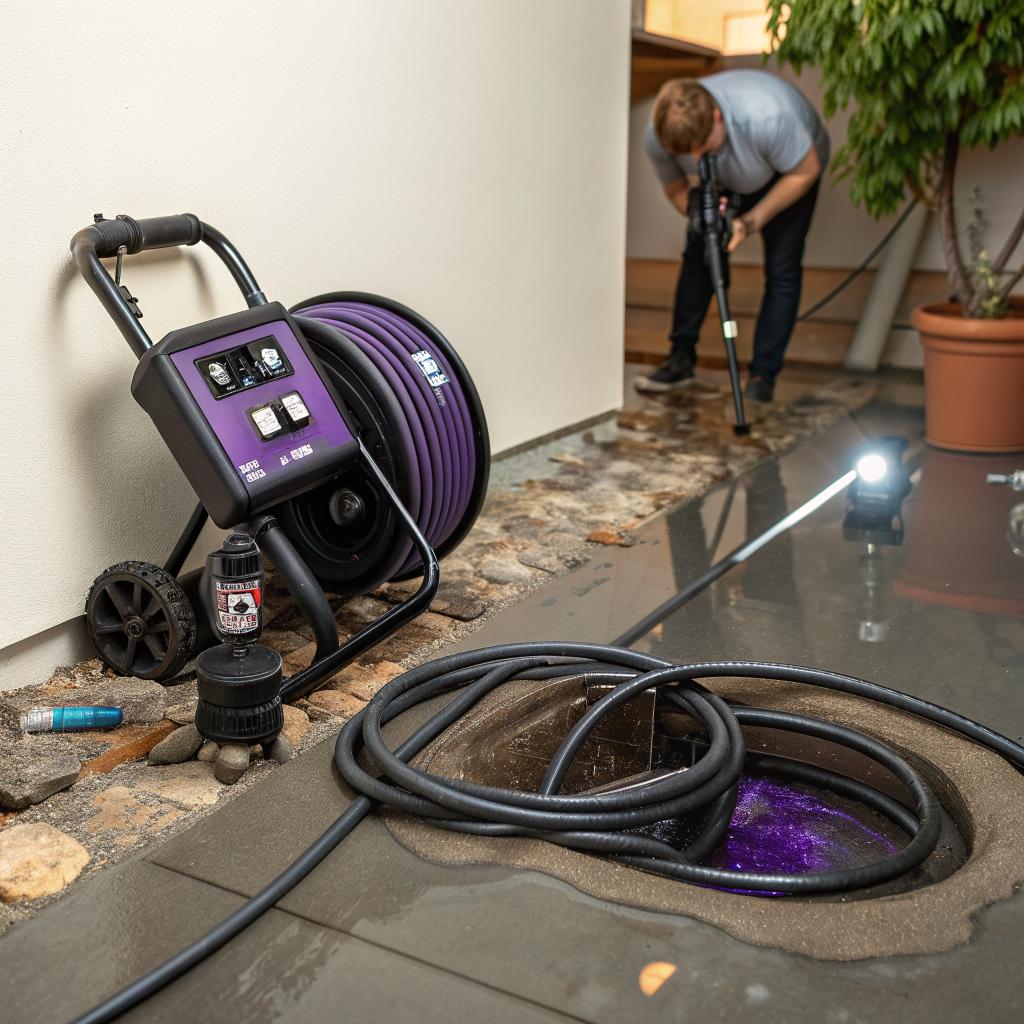
I used to think drain cleaning was the least interesting part of a house. Pipes, sludge, hair, done. Then I watched a tech use a camera, a locator, and a hydro jet in my line and realized my plumbing is basically a hidden system that behaves a lot like a tiny wired network under the slab.
If you just want the short version: modern Arvada drain cleaning is no longer about blindly snaking a line. Good techs use cameras, hydro jetting, smart sensors, and even app-connected devices to find and remove clogs with less guesswork, less damage, and better long-term monitoring. If you are building or upgrading a smart home in Arvada, it actually makes sense to treat your drainage like another system on your network and plan for inspections, sensors, and smarter fixtures. When you look for help, choose someone who offers camera inspection, documented results, and clear tech-focused options, such as Arvada drain cleaning services that can show you video and data, not just a bill.
How drain cleaning fits into a smart home mindset
If you enjoy smart lighting, smart thermostats, or home labs full of gadgets, it is odd to ignore plumbing. Drains are low-tech on the surface, but the way they are cleaned now is quietly very technical.
Your drains are doing a few jobs at once:
- Moving wastewater away at the correct slope and speed
- Ventilating sewer gas safely out of the house
- Handling random abuse from daily life: grease, hair, food, soap scum, some kid’s toy car
When something goes wrong, the failure modes feel familiar if you think about tech:
- Slow drains feel like network congestion
- Full clogs are like a hard crash
- Tree roots are basically physical malware in your line
- Old corroded pipe is like a failing hard drive that still kind of works until it does not
If you treat it as another system to monitor, log, and maintain, you reduce emergency calls and damage to walls, floors, and maybe that server closet in the basement.
Smart homes run better when ugly problems stay boring. Drain cleaning tech helps keep plumbing issues predictable instead of dramatic.
Main drain cleaning technologies you should know
1. Drain cameras: the “inspection layer” of your pipes
This is the part that tech fans usually like. A plumber feeds a flexible camera on a cable into a cleanout or a drain, views live video on a screen, and often records it for you.
A good camera inspection can:
- Show cracks, offsets, dips, and root intrusions
- Reveal what kind of pipe you have: PVC, clay, cast iron
- Pinpoint repeat clog locations along the run
- Record condition over time, like snapshots of system health
Some crews pair the camera with a locator that uses a transmitter at the camera head and a receiver on the surface. That lets them mark on the ground where a crack or root intrusion is, with depth, so if they need to dig, they dig in one precise spot instead of trenching your whole yard.
From a smart home point of view, this is your biggest win:
If a plumber will not show you live camera footage of your main line, you are flying blind on one of the most failure-prone parts of your house.
Do not be afraid to ask:
- Will you perform a camera inspection before and after cleaning?
- Can I get the video file or at least photos with distance markers?
- Can you explain what I am seeing as we go?
Saving that video gives you a baseline. Next time, you can compare like before-and-after benchmarks for a network.
2. Hydro jetting: the high-pressure “reset” for your lines
Hydro jetting uses high-pressure water through special nozzles to scour the inside of pipes. Instead of punching one small hole through a clog, it clears sludge from the whole circumference of the pipe, often back to near-original diameter.
Most techs use it for:
- Heavy grease buildup from kitchens
- Thick scale and soap sludge in older lines
- Tree root intrusion in a sewer line
For a smart home owner, the value is not just “it clears clogs.” It resets the state of the pipe. This makes your camera footage clearer, your risk lower, and your monitoring easier. It also pairs well with scheduled maintenance.
Things to check before someone uses a jetter on your house:
- Pipe material and age, from camera footage
- Pressure rating of their equipment and what they plan to use
- Whether they have smaller nozzles for smaller branch lines
Hydro jetting is not magic. If your pipe is cracked and collapsing, pressure alone will not fix it. It might even expose the problem. From a long-term view, that is good. You would rather know.
3. Power augers and cable machines: the old workhorses
These are still common, and there is nothing wrong with them when used correctly. A motor spins a cable with a cutting head, which chews through clogs like roots or wipes out a plug of paper and waste.
Short runs can use hand crank versions. Larger sewer lines use bigger powered machines.
The drawbacks:
- They tend to open a path instead of cleaning the full inner surface
- They can scratch or catch in fragile, corroded pipes
- They do not tell you why the clog formed there in the first place
In other words, they solve “symptoms” well, but you still want camera inspection to understand the “cause.”
4. Enzymes, bacteria, and chemical cleaners
There are three broad approaches here:
| Type | How it works | Best use | Concerns |
|---|---|---|---|
| Enzyme / bacterial cleaners | Break down organic matter over time | Maintenance on kitchen and bathroom drains | Slow, do not fix full clogs |
| Standard chemical drain openers | Heat and dissolve clogs using caustic chemicals | Sometimes clear minor slowdowns | Can damage pipes, dangerous to handle, bad for septic systems |
| Professional foaming or descaling products | Applied by a tech with controlled dose | Heavy soap or mineral scale with oversight | Should be used by trained pros only |
I am blunt on this: consumer chemical drain cleaners are usually a poor idea for a smart home. They are brute-force, imprecise, and hard on plumbing and people.
If you enjoy data and predictability, camera plus mechanical cleaning is far better than “pour and pray.”
Smart devices and sensors for your plumbing system
Not everything has to involve a truck in your driveway. There are small, thoughtful devices that make your drains part of your smart setup.
Smart leak detectors near risk points
These are small sensors that detect water on the floor and send alerts by Wi-Fi or a hub. They do not clean drains, but they catch problems early.
Good spots to place them:
- Under sinks that serve main lines, like kitchen and main bathroom
- Near the base of the toilet
- Next to the floor drain in the basement or utility room
- By the water heater and washer
If a drain backs up and spills over, you want a message before you notice soaked drywall or the smell.
Smart shutoff valves and water monitors
Full-home smart water valves measure water flow and can close the main line automatically when something looks wrong. While they do not sense clogs directly, a severe backup can show up as strange pressure behavior, and leaks from damaged drain lines can still run water.
Some features to look for:
- App control for open/close
- Usage graphs over time
- Rules for “vacation mode” and alerts
If you travel a lot or rent out space, giving yourself remote control over the main supply is not overkill. It is basically a safety switch for your plumbing.
Smart fixture traps and connected sinks
There are early products that combine sensors with sink drains or traps. They attempt to detect slow flow, small leaks, or unusual patterns.
Right now, a lot of them feel like first generation gear. Some work well, others feel half-finished. I think they are interesting, but I would not rely on them instead of real inspections.
If you like experimenting, treat them as beta hardware for your own house. Give feedback to the makers, log behavior, and compare it with real drain cleaning visits.
Do not confuse gadgets with maintenance. Sensors help notice trouble, but they do not replace real cleaning of sludge, scale, or roots inside a pipe.
Why Arvada homes have drain problems more often than you might think
You probably know this already if you live here, but Arvada has a strange mix of housing ages and soil conditions. That combination is rough on drains.
Here is a quick breakdown of factors that matter:
| Factor | What it means for drains |
|---|---|
| Housing age | Older neighborhoods often have clay or cast iron sewer lines that crack, rust, or shift |
| Trees and landscaping | Mature trees send roots toward moisture, which means any tiny leak in a line becomes a target |
| Seasonal freeze-thaw | Soil shifts move pipes slightly, which can create offsets and dips where sludge gathers |
| Remodels and additions | DIY or older remodel work can create strange pipe runs, bad slopes, or awkward connections |
So if you have a smart home with nice gear, but your main sewer line is 50 years old clay with roots, you have a weak link.
A smart approach is to do a camera inspection at least once when you move in or when you start investing in big interior upgrades. If the line looks fine, you keep video on file and schedule checks every few years or after large landscaping projects.
How to think about maintenance vs emergencies
I see a lot of people treat drain cleaning as a panic button. Nothing until a toilet overflows on a weekend, then frantic calls.
From a tech mindset, that is like never updating firmware and then being surprised by a catastrophic failure.
Consider two modes:
Mode 1: Reactive drain cleaning
This is what most people do:
- Wait until drains are slow or fully clogged
- Try a plunger or cheap cleaner
- Call for urgent help if that fails
- Forget about it again until the next problem
The downsides:
- Higher cost when every visit is urgent
- Greater risk of damage and disgusting cleanup
- No history or baseline to compare against
Mode 2: Planned drain management
This is closer to how you treat important devices or servers.
You:
- Schedule a camera inspection at move-in or when buying
- Record and store the footage like documentation
- Ask the tech to mark any areas of concern and likely next failures
- Plan cleaning or partial line replacement before total failure
Every 1 to 3 years, depending on what they found, you:
- Re-scope the line
- Clean sections that are building residue
- Update your notes about line condition
You still may have surprises, but fewer. And you spread cost over time in ways that match other home tech upgrades.
Treating your drains like infrastructure instead of “out of sight, out of mind” plumbing may not feel exciting, but it saves both money and hardware grief in the long run.
Choosing tech-savvy drain cleaning in Arvada
This is where a lot of people go wrong. They pick purely on price or response time. Those matter, but for a tech-focused home, you want a different starting checklist.
Signs your drain cleaner understands modern tech
Look for these signals when you talk to them or check their site:
- They clearly mention camera inspection and show real footage examples
- They talk about hydro jetting and when it is suitable, not just “we can blast anything”
- They can explain pipe materials and local Arvada issues instead of generic talk
- They are comfortable with photos, email, and file sharing of videos and reports
When they arrive, pay attention to how they work:
- Do they measure and mark locations during a camera run?
- Do they show you the screen and walk you through what they see?
- Do they recommend maintenance timelines, not just “call us next time it clogs”?
If someone resists showing video or explaining, that is not a good sign, especially if you are investing in smart features elsewhere.
Questions to ask before hiring
You do not have to interrogate anyone, but a few direct questions can make a big difference.
You can ask:
- What tools will you use on my main drain and why those?
- Will you perform a camera inspection before and after cleaning?
- How do you record and share findings with clients?
- Have you worked much on older Arvada lines, and what do you see most often?
- What maintenance schedule would you suggest for a house like mine?
Notice there is nothing fancy there. You are just screening for people who think in terms of diagnosis, documentation, and planning.
Connecting plumbing with the rest of your smart home stack
This part feels odd at first. Why think about drains when you are buying smart switches or upgrading Wi-Fi? But everything in a house ties together more than we like to admit.
Here is one simple way to look at it.
Map your “critical systems” like you would a small lab
If you have a whiteboard or a note-taking app you use for home projects, create a basic map:
- Electrical: panel, main circuits, surge protection, key loads
- Networking: modem, router, access points, wired backbone
- Water supply: main shutoff, valves, softener, filters
- Drainage: main sewer line path, cleanouts, known weak points
Then add:
- Which systems are monitored by sensors or smart devices
- Where video, photos, or reports for each system are stored
- Who your go-to people are for each system, with contact info
You are not building a corporate asset database. Just enough context so that if you ever have to shut water off during a backup, or explain a problem to a tech, you are not guessing.
Automations that actually help with plumbing
Some smart home automations are gimmicky, but a few plumbing-related ones can be practical:
- Trigger alerts from leak detectors to your phone and maybe voice assistants
- Turn off the main smart shutoff valve automatically if a sensor near a floor drain or water heater trips
- Log leak events and moisture events to your normal home logging stack if you run one
- Use reminders on your calendar or home app for recurring maintenance, including drain inspections
If you run Home Assistant, Hubitat, or similar, many water sensors and shutoff valves already have integrations. It is not hard to plug them into your system.
Practical choices inside the house that affect your drains
You can have the best tech in the world, and still clog lines with bad daily habits. I know this sounds like a parent lecture, but it matters.
Kitchen drains and garbage disposals
The main enemy here is grease, followed by fibrous food.
Try to avoid:
- Pouring cooking oil or fat down the drain, even with hot water
- Grinding large amounts of starches like rice and pasta
- Stuffing celery, onion skins, or similar into the disposal
Instead:
- Wipe greasy pans with paper towels into the trash before washing
- Use the disposal for small scraps, not full plate dumps
- Run plenty of cold water while the disposal is on
This is boring, but grease and food sludge is one of the biggest reasons hydro jetting is needed.
Bathrooms and personal care products
In bathrooms, hair and non-flushable items are the main problems.
Basic steps that save you a lot later:
- Hair catchers on shower and tub drains
- Trash can close to the toilet so wipes, floss, and cotton pads do not go into the bowl
- Occasional manual cleaning of pop-up stoppers to remove hair wads
If you like thick shampoos and products, remember that some leave residue. That is another case where mild enzyme maintenance products can help, as long as you do not expect them to fix clogs alone.
Tech-style documentation for very non-tech pipes
One habit from tech work that translates nicely to home plumbing is simple documentation.
After a drain cleaning or camera inspection, consider saving:
- Video files or cloud links, labeled by date
- A short text note of what the tech found and where
- Photos of any marked locations outside
Over 5 or 10 years, this starts to matter. You can see:
- Whether a root intrusion is getting worse
- Whether that offset joint is stable or shifting
- Which sections are your chronic problem spots
It also helps a lot if you ever sell the house. Being able to show clean, documented lines can calm down buyers who worry about surprise sewer problems.
Sample maintenance plan for a smart home in Arvada
To make this more concrete, here is one possible pattern that many tech-minded homeowners could adapt.
Year 1, after moving in or deciding to “treat the house like a system”
- Schedule a full camera inspection of your main sewer line
- Perform cleaning if there is obvious sludge or early root intrusion
- Ask for video files and store them in your usual cloud drive with a simple folder name
- Place leak detectors in key areas and set up notifications
- Take note of where your main cleanouts and shutoffs are
Years 2 to 4
- Watch for pattern changes: slower drains, recurring gurgling, frequent plunging
- If behavior changes, call for a scoped inspection rather than guessing
- Consider hydro jetting if sludge is building again, especially in kitchens
Years 5 and beyond
- Re-scope at a steady interval, maybe every 3 to 5 years, depending on what was found
- If any section keeps causing trouble, discuss partial replacement instead of endless spot fixes
- Keep your documentation up to date, just like firmware notes or changelogs
You can push intervals longer if your lines are newer PVC and past scopes looked great. You shorten them if you have older materials, heavy tree roots, or odd movement in the soil around your property.
Common questions from tech-focused homeowners about drain cleaning
Q: Do I really need a camera every time the drain is cleaned?
A: Not always. For a repeat, simple clog in a small branch line, a skilled tech might not need a camera. But for main lines, older pipes, or recurring problems, camera work is worth the cost. Think of it as the difference between rebooting once and ignoring a pattern of crashes in logs.
Q: Is hydro jetting safe for older pipes in Arvada?
A: That depends on the condition of the pipe, which you can only judge fairly with a camera. Many cast iron or clay lines can handle controlled pressure with the right nozzle and approach. Some, which are cracked or thin, are at risk. A careful plumber will scope first, choose appropriate pressure, and sometimes refuse to jet if the line looks too fragile. If they will not explain their reasoning, that is a problem.
Q: Can I rely on smart leak detectors instead of regular inspections?
A: No. Leak detectors are great for catching water on the floor or under a fixture. They tell you when something has already escaped the pipe. They do not show internal corrosion, root intrusion, or offset joints that have not leaked yet. They are a good alert layer, not a diagnostic tool for the state of your drains.
Q: How often should an Arvada homeowner schedule drain maintenance?
A: For a newer home with PVC lines and no trees nearby, you may go many years with no issues. For older neighborhoods with clay or cast iron, plus large trees, a camera inspection every 2 to 3 years is reasonable. Cleaning usually follows the findings. If a tech tells you that you must sign up for yearly jetting without seeing the line first, that is a red flag.
Q: Is all this overkill if my drains seem fine now?
A: Maybe, but that is the same question as “Is monitoring overkill if my server has not crashed yet?” You can ignore it and might be fine for a long time. Or you can choose some light monitoring and documentation so that when things do go wrong, you handle it from a position of knowledge instead of panic. For a smart home full of gear you care about, having fewer plumbing surprises near that gear is not a bad tradeoff.