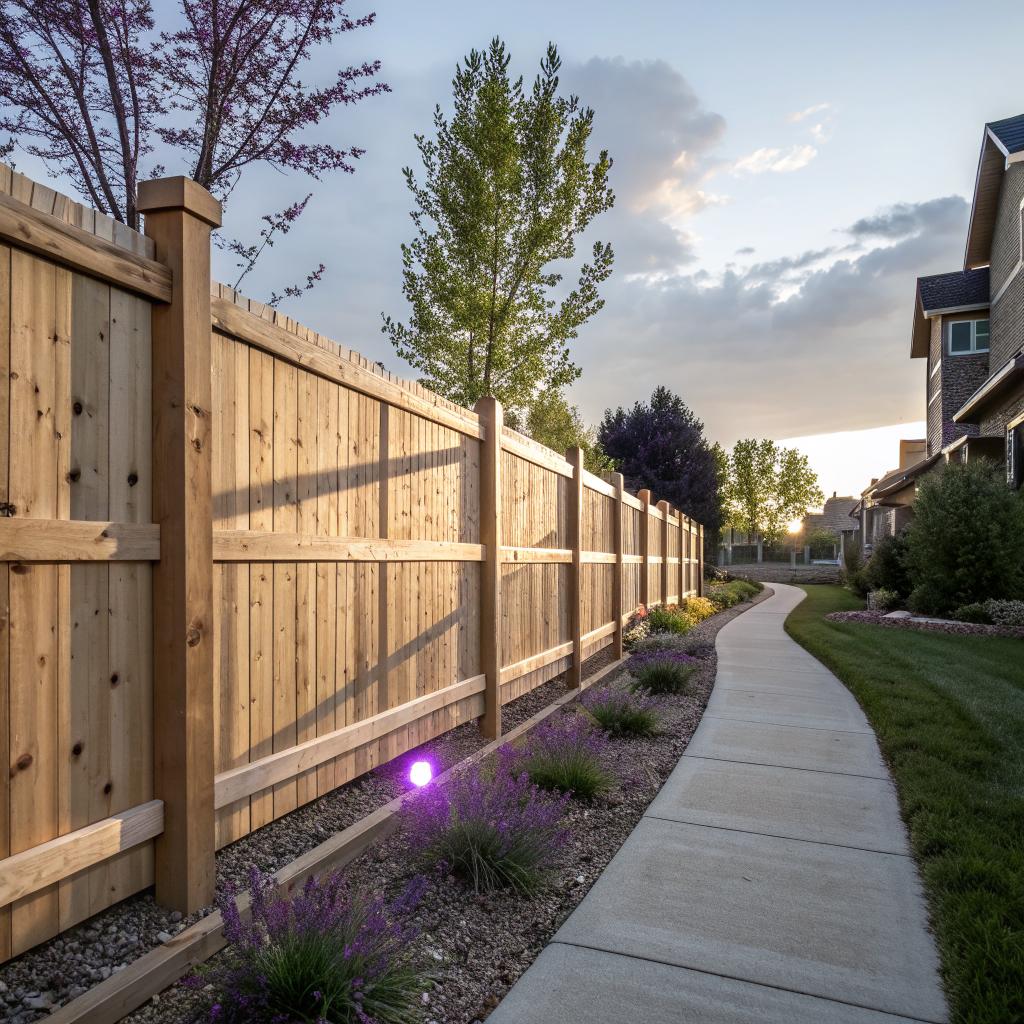
I used to think fencing was one of those low-tech trades that had not really changed in decades. Wood, metal, concrete, maybe some vinyl, a couple of guys with post hole diggers, and that was it.
That picture is already out of date. If you look at how the best fence companies Littleton work today, tech is baked into almost every step: from how they measure your yard, to the way they estimate costs, to the hardware inside your gate. The short version is that tech makes fences in Littleton faster to plan, more accurate to price, stronger, and often smarter, while also giving you more control over privacy and security from your phone.
From here, I want to walk through how that actually looks in practice. Not just buzzwords. What tools are showing up in trucks, in offices, and in your backyard, and what that means if you like tech and happen to need a fence in a place like Littleton, Colorado.
How digital tools are changing that first quote
A few years ago, getting a fence quote meant a phone call, a site visit, maybe some paper sketches, and then waiting for someone to “run the numbers.” Today, that whole process is getting rewired.
Many local fence crews now use some mix of satellite imagery, phone cameras, and estimating software. The flow is something like this:
- You send a couple of photos or a short video of your yard.
- They pull up your property on a mapping tool.
- Software traces the property line and measures linear feet.
- They plug in materials, heights, gates, and get a price range almost on the spot.
It is not perfect. Trees and slopes still confuse things, and a real visit usually follows. But the first estimate is much faster and often very close to the final price.
Fast digital estimates mean you can compare fence options in a day instead of a week.
For people who live in a place like Littleton, where weather and seasons matter, that speed is useful. You can go from “We should fence this yard” to a scheduled install before the next snowstorm or the start of summer.
AR, simple 3D, and seeing your fence before it exists
I was skeptical the first time I saw a fence company pull out an iPad and offer to “place” a virtual fence. It felt a bit gimmicky. But it actually answers a question nearly everyone has: “What will this look like from inside the yard and from the street?”
Some companies use:
- Basic 3D renderings on a laptop, with your lot shape drawn out
- Augmented reality apps on a tablet or phone, so you can walk around and see fence sections overlaid on your camera view
These tools help you answer simple but annoying questions:
– Is a 6-foot fence going to block the mountain view you like?
– Will a black steel fence look too much like a cage beside a light-colored house?
– Where should the gate go so that trash cans and snow shoveling are still tolerable?
It is not high-end CGI, and sometimes the textures look a bit fake. Still, it reduces buyer’s remorse. And it lets more than one person in the household weigh in before money is spent.
Tech in actual fence design and materials
This is where tech people usually perk up. Not the paperwork, but what is happening in the materials and hardware in the ground.
Stronger metal and smarter coatings
Colorado weather is rough on fences. You have temperature swings, wind, and plenty of UV. So materials matter.
Modern metal fences, especially steel and aluminum, now often go through:
- Computer controlled welding for consistent joints
- Powder coating that is baked on in a controlled environment
- Zinc or alloy treatments that slow rust, tracked by batch in a database
Some manufacturers log every production batch in a system that tracks:
| Property | Older metal fences | Modern metal fences |
|---|---|---|
| Weld quality | Manual, varies by worker | Machine guided, more consistent |
| Coating | Simple paint | Powder coat, baked on |
| Rust tracking | No data, just experience | Batch testing logged in software |
You probably do not see any of that when you sign a contract. But the companies that keep that data can predict lifespan better. That affects warranties, and by extension, how honest the sales pitch is.
Composites, vinyl, and data from stress testing
Wood still looks good, and a lot of people prefer it. The problem is maintenance. So composite and vinyl fences are slowly taking more market share in places with sun and snow.
These materials go through:
– UV exposure tests under controlled light
– Freeze and thaw cycles in environmental chambers
– Impact tests, sometimes with automated rigs
What changes for you is that a fence company can say things like:
This composite panel lost about 8 to 10 percent of its color depth after the equivalent of 10 years of UV exposure, while this cheaper one lost closer to 25 percent.
Is that level of detail always shared? Not always. Some installers just go with what they have used for years. Others, especially the more tech oriented ones, use that data when advising on material choices for a specific neighborhood or altitude.
Pre-fabrication with CNC and better accuracy
“Off the shelf” used to mean rough fits and a lot of field adjustments. Now:
– CNC machines cut metal parts with tight tolerances
– Panels arrive pre-built based on digital measurements
– Brackets and posts are labeled and mapped to a layout plan
This reduces onsite errors and rework. It also makes more complex layouts possible, like mixed wood and steel or stepped sections on a steep Littleton slope.
There is still room for mistakes. If the initial measurements are wrong or the survey is off, a CNC machine only helps so much. But when the front end is handled well, the fit on site feels more like assembling a kit than improvising.
Smart gates and connected security
This is the part that probably feels closest to what tech readers expect: hardware, apps, and a bit of networking.
From simple latches to smart locks
Traditional gates used to come with a latch, maybe a keyed lock. Now you see:
- Keypad locks with PIN codes
- Bluetooth locks that open from a phone
- Wi-Fi enabled locks that tie into home hubs
For a lot of people, the starting point is a simple keypad. It is cheap and it solves a real problem:
Keypad gate locks mean your dog walker or yard service can access your backyard without needing a physical key.
More advanced setups integrate with:
– Smart cameras on the fence line or near the gate
– Wi-Fi doorbells mounted on fence posts
– Smart lighting that comes on when the gate opens at night
The obvious concern is security. You are adding one more connected device that might be poorly configured. Some Littleton fence installers now keep a short checklist for clients:
| Area | Good practice | Why it matters |
|---|---|---|
| Wi-Fi locks | Change default passwords | Prevents simple drive-by attacks |
| Guest access | Use time-limited codes | Stops old codes from working forever |
| Cameras | Restrict cloud sharing & geofencing | Reduces oversharing of location and footage |
It is not advanced cybersecurity. But it is at least a basic awareness that installing smart hardware touches your network and your privacy.
Integrating with existing smart home setups
If you already have a smart home hub, the line between “fence” and “home tech” starts to blur slightly.
Common link points:
- Fence gate sensor talks to your home hub, triggers a notification
- Backyard camera sends a clip when the gate opens outside normal times
- Outdoor lights turn on along the fence when motion is detected
Some people like heavy automation: “Lock the gate after 8 pm” or “Arm the backyard cameras when the last family member leaves the geofenced area.” Others prefer one or two simple triggers.
I do think there is a risk of overbuilding. A backyard gate that fails because your Wi-Fi is down is not fun. So there is a quiet trend back toward hybrid setups: physical latch plus smart sensor, not sensor only.
Behind the scenes: how fence companies work differently
The tech shifts do not just show up in the yard. They also change how the companies themselves run day to day. This is less visible to you, but it affects scheduling, quality, and price.
Scheduling software and crew tracking
Paper calendars and whiteboards are rare now. Most companies use job management tools that handle:
- Lead intake from websites or ads
- Scheduling site visits
- Assigning crews and trucks
- Tracking material orders and delivery dates
Some of these tools hook into GPS so the office can see where crews are. That can be abused, but in many cases it just reduces annoying phone calls like “How much longer on that job?”
For homeowners, the benefit looks like:
You get tighter arrival windows and fewer surprise cancellations because the office can see when jobs are running long and adjust in real time.
Of course, software does not fix understaffing or weather delays. But companies that handle this well can communicate delays faster instead of leaving people guessing all afternoon.
Digital records for warranties and repairs
Years after an install, you might forget:
– What exact product line was used
– Which color code was chosen
– Where exactly your property line runs
– What the original warranty terms were
Fence companies that track jobs in a database can pull this up quickly. That means:
– Faster repair quotes after storm damage
– Easier matching of stain or paint for touch ups
– Clear proof of warranty conditions
From the business side, it also gives them feedback. If a certain hinge model keeps failing in Littleton winters, that shows up in the records and they can switch vendors.
Estimating and pricing with less guesswork
For years, a lot of pricing was driven by gut feel. An experienced estimator might be very good at that, but new staff struggled.
Modern estimating tools link:
| Input | Source | Effect |
|---|---|---|
| Lumber and metal prices | Supplier feeds | More accurate material costs |
| Crew labor rates | Company records | Realistic install time estimates |
| Permit fees | City or county schedules | Fewer surprise add-ons later |
There is still judgment involved. A rocky Littleton backyard with a steep slope will need more time than a flat, clear lot. Good estimators adjust for that. But the software sets a framework so estimates are less arbitrary.
Permits, zoning, and digital red tape
No one loves permit work. But tech has changed that process too, especially in cities and counties that have moved to online systems.
Online permit portals and faster approvals
Many jurisdictions now handle:
- Permit applications
- Fee payment
- Status updates
- Final inspection scheduling
all through a web portal.
Fence companies that use these well can:
– Submit accurate site plans in digital format
– Attach property surveys and photos
– Track response times and follow up if a file stalls
This reduces the number of “We thought it was approved” situations. It also helps avoid building over utility lines or too close to sidewalks, which can lead to forced changes later.
Sometimes the tech gets in the way. Badly designed portals, slow response times, and clunky upload limits can cause their own frustration. But on balance, for places like Littleton that have embraced online permitting, the planning lag has shrunk.
GIS data and property line clarity
With public GIS (geographic information system) tools, fence companies can often check:
– Where the recorded property boundary lies
– Whether there are easements or utility corridors
– How the lot grade changes across your yard
That does not replace a formal survey. But it gives an early sanity check. For example, if a fence line you want is clearly inside a city easement for drainage, it is better to know that before digging.
For tech-minded homeowners, these maps can be interesting to look at directly. People sometimes discover that the fence the previous owner installed is not actually on the property line, which is an awkward but useful piece of information.
Designing fences for privacy and data, not just yard space
Privacy now has two layers:
– Physical privacy: who can see into your yard
– Data privacy: what is happening with any cameras or sensors you install
Fence companies do not control all of this, but they increasingly get pulled into the conversation.
Controlling sightlines with planning tools
If a neighbor’s second-story window looks into your yard, a standard 6-foot fence may not do much. Using simple 3D models and line-of-sight tools, planners can show:
– Where a screen panel or pergola could block the view
– How a staggered fence design affects sightlines
– What height is reasonable within code limits
Sometimes, the answer is that no fence can solve a certain privacy issue if code caps your fence height. That is a bit frustrating, but better than spending money on something that does not help.
Security cameras, AI, and overreach
There is also the digital side. AI based detection now sits quietly in many consumer cameras. It can distinguish between:
- Person
- Animal
- Package
- Car
That sounds helpful, and often is. But it also creates questions:
– How long are clips stored?
– Are you recording sidewalks or neighbor yards by accident?
– Who else can access the footage?
Most fence installers are not security experts, and some would probably prefer not to deal with camera integrations at all. Still, the practical side is clear:
The moment you attach a camera to a fence post, you are mixing a physical barrier with digital surveillance, and the lines around privacy get fuzzy.
A few reasonable practices are taking hold:
– Point cameras inward, not outward toward public streets
– Mask or blur areas outside your property where possible
– Set shorter retention for motion clips at fence lines
None of this is perfect, and people disagree on what is acceptable. But at least the conversation is happening more than it did a few years ago.
The DIY tech trend and how it affects local pros
Smart home stores and online marketplaces make it very easy to buy fence kits, smart locks, and motion sensors. That shifts some work away from local pros and into the hands of DIYers.
Pre-configured kits and app-based guidance
You can now order fence panels that come with:
– QR codes linked to install videos
– Premarked post locations and recommended spacing
– Small AR helpers for layout on your phone
For straightforward yards, this works well enough. The risk is that soil, wind, code, and property lines are not always straightforward. A kit vendor does not see the buried rock layer or the neighbor’s shed creeping over the line.
As more people try DIY, local fence companies sometimes get called in later to fix leaning sections, adjust gate posts, or redo parts that failed inspection. There is a tradeoff here. DIY can save money up front, but serious mistakes cost more than a proper plan would have.
Pros who embrace a hybrid approach
Some fence companies in tech aware areas lean into this trend rather than fight it. They offer:
| Service | What it covers | Who it suits |
|---|---|---|
| Consult-only visit | Layout advice, code checks, material suggestions | DIYers who want a sanity check |
| Post-setting only | Digging, concrete, plumb posts | People comfortable with panels but not digging |
| Smart hardware setup | Locks, sensors, hub integration | Owners with complex smart homes |
I think this mixed model will grow. Tech makes it easier for homeowners to do parts of a job, but not everyone wants to handle everything, and soil physics have not changed.
Where tech might take Littleton fencing next
It is always risky to make predictions, but a few trends seem realistic for the next few years.
Better monitoring of wear and damage
Right now, most fence problems are spotted visually. That is fine, but it is reactive. In harsher climates, you could see:
- Embedded moisture sensors in posts that send alerts when rot begins
- Hinges with simple load sensors to detect sagging before a gate drags
- Thermal cameras or occasional drone passes to spot warped sections on big properties
Some of that sounds a bit overdone for a suburban yard. On larger properties, or high security fences, it makes more sense. If the tech gets cheap enough, though, smaller setups might quietly gain these features too.
More data feedback into material choices
Right now, a lot of “this wood lasts longer here” or “that stain performs worse in snow” is based on experience and scattered records. Imagine if:
– Every install logged the materials used, lot conditions, and exposure
– Crews tagged repairs and failures by location and product
– Over time, patterns for Littleton’s climate became obvious
Fence companies could then say with more confidence:
In this neighborhood on the south-facing slope, this style of spruce fence tends to age poorly within eight years, while cedar with this stain has held up closer to twelve.
The tech here is simple: a decent database, some basic analytics, and discipline about logging. The cultural shift is harder than the tools.
More conscious tradeoffs between physical and digital privacy
Tech minded homeowners are starting to ask different questions:
– “If I have a smart gate lock and cameras, do I still need a 6-foot privacy fence, or would a lower one with good lighting be safer?”
– “Is a tall solid fence better for security, or does it give someone a place to hide out of sight?”
– “Do I want data from my fence sensors going to a third party server?”
Fence companies will not have full answers to all of that. They are not security researchers and they are not lawyers. But the overlap between physical security and networked devices will push more of these questions onto the table.
So what should you look for in a tech-aware fence company?
If you live in or near Littleton and you care about tech, but you also just want your fence to work, how do you pick someone?
You can ask a few simple, concrete questions:
- How do you measure and plan my fence layout? Do you use any digital tools to check lengths and property lines?
- Can you show me different styles and heights using any kind of visualizer or simple rendering?
- What material and coating data do you have for the products you propose, especially with respect to Littleton’s weather?
- If we include smart locks or sensors, who handles configuration, and what is the backup if the tech fails?
- How do you track my job information and warranties long term?
- Do you work with online permit systems, or will I need to handle that myself?
You do not need all the fanciest options. In some cases, simpler is better. A well built wood fence with a reliable mechanical lock can be smarter, in practice, than a flaky connected gate that leaves you stuck outside in a snowstorm.
The main point is that tech is no longer separate from trades like fencing. It shapes how companies plan, build, and maintain the physical barriers around your home.
Common questions about tech and fencing in Littleton
Q: Is a “smart fence” actually worth the money, or is it just gadgets?
A: It depends what you mean by “smart.” If you mean solid planning tools, better materials, and a keypad lock, then yes, those usually pay off in fewer headaches and better day to day use. If you mean complex automation, cameras everywhere, and app controlled everything, the benefits are more mixed. There is more to break, more to configure, and more privacy tradeoffs. A moderate level of tech often hits a better balance.
Q: Will tech really make my fence last longer in Littleton’s weather?
A: The tech itself does not fight snow or sun. What helps is how it informs the choices: materials that have been tested properly, coatings with known behavior, and design adjusted to local conditions. That part is real, as long as the installer actually uses the data instead of just repeating sales phrases.
Q: If I am into smart home tech, should I push for the most connected fence setup possible?
A: Not automatically. A fence is first a physical structure. It has to handle weight, wind, ground movement, and people using it daily. Starting with solid construction and appropriate height, then adding a few carefully chosen smart components, usually works better than trying to make the fence itself a centerpiece of your home network. The question to ask yourself is simple: “What problem does this particular gadget solve for me, and what new problems might it create?”