I used to think assisted living was mostly about buildings, staff, and maybe a shuttle van with a printed schedule. Tech felt like an add-on, not the core. Now, after seeing what is happening in assisted living Charleston SC communities, it is hard not to say that tech is right in the middle of how care works day to day.
In short, tech is changing assisted living in Charleston by making care more personal, more responsive, and often safer, while still keeping a human touch. From discreet sensors and medication trackers to telehealth and family apps, many communities, such as assisted living Charleston SC, are using tools that give residents more control and give families better visibility without turning the place into a hospital or a gadget showroom.
I do not think tech magically fixes every problem. It does not replace a kind nurse who knows your name, or a friend who remembers how you like your coffee. But it does remove a lot of small risks and frictions that used to wear people down. And in a city like Charleston, where there is this mix of historic charm and a growing tech scene, the two worlds are starting to connect in interesting ways.
How tech quietly changes daily life in assisted living
When people hear “tech in senior living”, they often picture clumsy tablets, confusing apps, or cameras everywhere. That kind of thing can happen, but the more interesting side is quieter.
A lot of the new tools are in the background. Residents may not even think of them as tech.
- Wearables that track movement and heart rate
- Bed sensors that detect when someone gets up at night
- Medication systems that give reminders and log doses
- Simple video tools that let residents talk to doctors or family
- Building systems that watch air quality, temperature, and access
The point is not “more gadgets”. The point is fewer gaps. Fewer missed medications, fewer unwitnessed falls, fewer “I did not want to bother the nurse, so I did not say anything” moments.
The real win is when tech fades into the background and residents just feel safer, more connected, and less dependent on memory or luck.
I remember talking once with a director from a Charleston community who said that their best tool was not the smartest sensor. It was a very plain dashboard that showed staff who had not been seen in a few hours, so someone could just drop in and say hello. That feels small, but it changes the mood of a place.
From incident response to early signals
Traditional assisted living models react after something happens. A fall. A missed meal. A sudden hospital trip.
Modern systems try to catch signals earlier:
– A resident is walking slower over a few weeks.
– Sleep gets more broken.
– Bathroom visits spike at night.
– Meals are skipped more often.
None of these alone is dramatic. Together, they can point to health changes, mood shifts, or medication issues.
When staff see patterns, not just events, they can act before a crisis, instead of cleaning up after it.
For readers who like a clearer view, here is a simple comparison.
| Area | Traditional assisted living | Tech-supported assisted living |
|---|---|---|
| Fall detection | Pull cords, call buttons, staff rounds | Wearables, motion sensors, smart flooring alerts |
| Medication | Paper charts, manual reminders | Digital med carts, alerts, timestamped records |
| Health changes | Noticed during checkups or incidents | Trend data from wearables, surveys, sleep tracking |
| Doctor visits | Off-site trips, transport coordination | Telehealth visits from resident rooms or a private space |
| Family contact | Phone calls, periodic visits, letters | Apps, photo sharing, video calls, real-time updates |
| Safety | Locked doors, physical checks | Key fobs, access logs, wander alerts, camera coverage |
Some people love this level of tracking. Others feel uneasy. And I understand both reactions. More data can feel reassuring or intrusive, depending on how it is used and explained.
Wearables, sensors, and the “quiet observer” idea
If you live in Charleston and follow tech, you probably think about sensors in terms of smart homes or IoT. Assisted living communities are basically running small smart neighborhoods, but with higher stakes.
Wearables for safety and trends
A lot of residents already wear something on their wrist. So adding a device that tracks steps, heart rate, or activity does not feel strange.
Common use cases in assisted living:
- Fall detection and alerts
- Location inside the building or courtyard
- Heart rate and sometimes oxygen levels
- Daily step counts and activity patterns
Many of these tools now look like regular watches. Residents may forget they are medical devices.
But there is a tradeoff. If staff start to rely only on the data feed, they might miss softer signs: a change in tone, facial expressions, the way someone talks about their day. That risk is real. I think tech teams and care teams need to talk more, not less, when new wearables come in.
Room and bed sensors
Some of the most useful tech never leaves the room.
You see:
– Bed mats that notice when weight is on or off the mattress
– Floor sensors that detect movement and direction
– Door sensors that log exits at odd hours
These tools are especially common in memory care settings for residents with dementia or related conditions.
For example:
– If someone who usually sleeps through the night starts getting up six times, that can trigger a check for pain, infection, or anxiety.
– If a resident who tends to wander leaves their room at 2 am, staff get a quiet alert instead of hoping someone is in the hall at the right moment.
The goal is not to watch every move, but to spot patterns that humans are bad at tracking on their own.
There is a fine line, though. Too many alerts create fatigue. Staff might start ignoring them, the same way we all ignore some notifications on our phones. Good design here is as much about what not to alert on as what to show.
Medication tech: where small errors add up fast
Ask any nurse in assisted living and they will tell you that medication is where stress spikes. Wrong dose, wrong time, wrong person, or simple confusion. Many residents take 5, 10, or more medications a day. Manual systems struggle with that volume.
Digital med records and smart carts
Most Charleston communities are shifting away from paper charts to electronic medication records. The tech angle is not glamorous, but it matters.
Some common features:
- Barcode scanning for resident ID and medication
- Alerts for drug interactions or allergies
- Time windows with reminders instead of exact times
- Clear logs of who gave what, when, and why
You also see smart med carts that lock individual drawers until the right resident profile is selected. That cuts down on mix-ups in busy hallways.
There is a risk that everything feels over-structured. A nurse once joked to me that the computer knew more about her residents than she did. That is not where you want to end up. The best setups keep the tech as a support, not the main act.
Resident-facing reminders
Some residents want more control over their meds. Tech can help without turning them into full-time pharmacists.
Options include:
– Simple talking pill boxes with alarms
– Phone apps connected to the community system
– Tablet reminders with large-font screens
These tools are especially helpful for residents who are still pretty independent but have memory challenges or complex schedules.
For tech-minded readers, this is where UX matters a lot. If the interface is confusing or looks childish, adoption craters. Seniors do not like feeling patronized, and honestly, who does.
Telehealth: less travel, more touch points
Charleston has strong medical resources, but getting to them can be hard if you use a walker, feel unsteady, or just get tired easily. Tech is shrinking that distance.
How telehealth fits into assisted living
Most communities now have at least a basic telehealth setup. Sometimes it is a shared tablet on a rolling stand. Sometimes a private room with better lighting and audio.
Telehealth in assisted living often covers:
- Follow-up visits after hospital stays
- Routine checks for chronic conditions
- Mental health visits and counseling
- Family meetings with doctors and staff together
This reduces transport costs and stress for residents. It can also speed up care. Instead of waiting two weeks for a slot across town, someone might talk to a provider the same day.
One concern: not every condition is suited for video. Some exams need hands-on contact. And some residents feel uneasy talking to a screen. So a mix of in-person and remote care tends to work better than going all-in on telehealth.
Remote monitoring for chronic conditions
For conditions like heart failure, COPD, or diabetes, daily numbers matter.
Common tools:
– Bluetooth blood pressure cuffs
– Scales that report weight trends directly to the record
– Glucose meters that sync readings
– Pulse oximeters for oxygen levels
These can feed into a monitoring service or directly to a local clinic. Early weight gain in heart failure, for example, can flag fluid retention before someone ends up in the ER.
From a tech angle, the challenge is integration. If every device has its own app and login, staff get swamped. The better systems unify those feeds into one dashboard.
Communication: keeping families in the loop
If you have ever tried to keep up with a loved one in assisted living, you know the mix of feelings. You want updates, but you do not want to micromanage staff. You want to be present, but you live in another city or have a busy job.
This is where communication tech helps both sides.
Family portals and apps
Many communities now offer a family app or web portal. These might show:
- Daily or weekly activity participation
- Upcoming appointments
- Menu options and dietary notes
- Photos from events (with consent)
- Messages from staff
Some systems even let families send notes or digital photos that staff can share with residents, which is great for people who might not handle phones well.
From the care side, this cuts down on scattered emails and missed phone messages. From the family side, it reduces the mental load of “I do not know what is happening over there.”
Transparency tends to build trust, and tech makes that transparency easier, as long as information is shared in a clear, respectful way.
Everyday communication for residents
Not every resident wants an app, but many like simple tools:
– Voice assistants for reminders and music
– Large-button phones with photo dialing
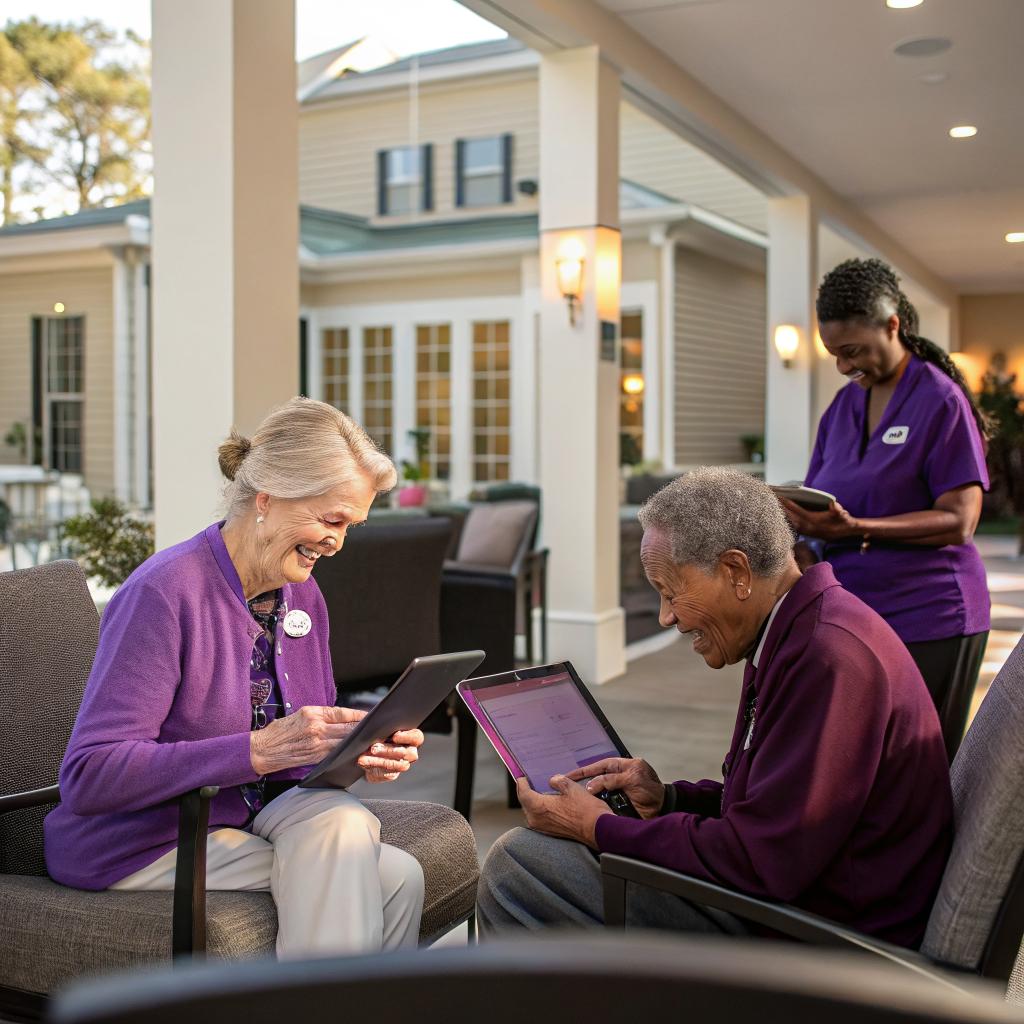
– Simplified tablets with only a few apps: video calls, photos, messages
Some Charleston communities run small “tech corners” where staff or volunteers help residents learn how to use these. I have seen a resident light up when a grandchild appears on screen for the first time. It is not dramatic, but it is real.
The risk here is overload. If you give someone a generic tablet with 40 icons, it often ends up in a drawer. Tailoring matters.
How this affects memory care in Charleston
Memory care is a big focus in assisted living Charleston and across the region. Tech here has to be gentler and more carefully chosen. Confusing interfaces or noisy alerts can make things worse.
Safety and wandering
Communities serving people with dementia often use:
- Wander management systems at doors
- Wearable tags or fobs with location tracking
- Perimeter alerts after certain hours
The idea is not to lock people down, but to allow safe movement. Enclosed courtyards, monitored by soft sensors rather than obvious cameras, let residents walk and explore without constant human shadowing.
For tech-minded readers, this is an interesting mix of physical and digital design. You are designing for freedom with guardrails, not total control.
Engagement and cognitive support
Memory care units are trying a range of tools:
– Touchscreen “activity walls” with simple games and photos
– Music playlists tailored to resident histories
– Digital photo frames that rotate family pictures
– VR experiences that show familiar or calming scenes
Do these solve dementia? No, of course not. But they can soothe anxiety, spark conversation, and fill quiet hours with something more meaningful than television running all day.
I do worry sometimes that tech can become a substitute for staff time. A headset is cheaper than an extra caregiver. The line between support and replacement is thin. Communities that get it right keep staff deeply involved, using tech as one more tool in their hands.
Behind the scenes: data, privacy, and ethics
If you come from a tech background, this is probably where your mind goes. Data, consent, privacy, integration. Health care and senior living can be messy in this area.
What data is being collected?
Common data points in a modern assisted living setting:
- Movement patterns inside the building
- Sleep and rest data from beds or wearables
- Medication timing and history
- Vitals from connected devices
- Activity attendance and engagement
In theory, this can build a very detailed picture of someone’s life. That is both powerful and risky.
Key questions:
– Who owns this data?
– How long is it stored?
– Who can see it: staff only, or also families, or third parties?
– How easy is it to leave with your data if you move to another community?
I do not think many residents sit around asking about data schemas or retention policies. But they do care about feeling watched or judged.
From a tech ethics angle, assisted living is a place where consent can be fuzzy, especially for residents with cognitive decline. Communities in Charleston, or anywhere, that want to be taken seriously by tech-savvy families need to give clear, plain-language answers here.
Privacy vs safety
There is no perfect solution to this tradeoff. Sensors in bathrooms, for example, might reduce serious falls, but they also raise privacy issues. Same with cameras in hallways or entrances.
Some questions that families and residents should ask:
- Where are cameras located, and where are they not allowed?
- Are audio recordings part of the system, or video only?
- Can residents opt out of certain tracking features?
- How are visitors handled in terms of access and tracking?
When tech people design systems for assisted living, they sometimes err on the side of data because that is their comfort zone. Yet the people living there may value dignity and privacy more than one extra percent of safety. That tension is not easy, and pretending it is easy feels dishonest.
What tech-minded families should look for in Charleston communities
If you are reading a tech-focused site, you probably care a bit more about how systems work than the average visitor touring a senior community. You might be the person in the family asked to “make sense of the tech stuff.”
Here are some practical angles to look at during a tour or a call.
1. Ask about their core care platform
Many communities have a central software platform for:
- Care plans
- Medication records
- Incident reporting
- Family communication
Useful questions:
– Do staff find it easy to use?
– How is data backed up?
– Can families see some parts, and if so, which ones?
– If a resident moves out, what happens to their data?
You are not doing a security audit, but the way leaders talk about this can show whether they treat tech as serious infrastructure or a marketing bullet.
2. Check how staff interact with tech in real time
During a visit, quietly watch:
- Do staff carry tablets or phones, and do they seem comfortable with them?
- Are they looking at screens more than at residents?
- Do alerts sound constant, or is it calmer?
You want a place where tech seems used, not resented or ignored. But where it also has not replaced normal human conversation.
3. Explore the Wi-Fi and personal device policy
Simple questions that matter:
– Is Wi-Fi strong and stable in resident rooms?
– Can residents use their own devices easily?
– Is there help available for setup and basic support?
A modern community that only offers buggy shared desktops in a corner feels behind, especially in a city with a growing tech presence.
4. Understand their telehealth approach
You might ask:
- Which types of visits are offered by video vs in person?
- Do they have a preferred telehealth partner or network?
- Can families join a telehealth visit remotely?
If everything is video by default, that can be a red flag. If nothing is video, they might be lagging behind.
What the next few years could look like in assisted living Charleston SC
I sometimes hear people describe senior living tech in grand terms. I do not buy most of that. Progress feels less like a leap and more like steady layering.
Some likely directions in the near term:
More passive monitoring, less active input
Devices that do not require residents to press buttons or log data will keep spreading:
- Smart flooring that senses falls
- Chair and bed sensors for posture and pressure
- Passive air quality and temperature tracking
The less a resident has to remember to “use the tech,” the higher the value. But again, the privacy stakes inch up with each new sensor.
Better personalization through data patterns
As communities gather more history on residents, they can fine-tune:
– Sleep/wake routines
– Preferred activity times
– Early signs of agitation or depression
– Social patterns: who engages with whom
If handled respectfully, this can mean schedules and care plans that reflect real habits instead of generic templates. If handled poorly, it can feel like being profiled by algorithms in your own home.
Closer links between hospitals, clinics, and assisted living
In Charleston, with several medical centers and growing telehealth presence, I expect tighter digital ties:
- Shared records that do not require repeated forms
- Automatic discharge summaries flowing to assisted living staff
- Remote specialist consults from the community building
Done well, that reduces friction and repeated stories for residents. But interoperability has a long history of disappointments in health tech, so I am cautious when people promise quick fixes.
Question and answer: what does this mean if your parent is moving into assisted living?
Q: Will my parent be surrounded by constant screens and devices?
In most Charleston communities, no. The tech is often in the background: sensors in rooms, staff tablets, occasional telehealth visits. You will see more smartphones and tablets in staff hands, but the day-to-day feel still depends more on people and routines than on gadgets.
Q: Should I prioritize tech features when choosing a community?
Not above care quality, staff stability, and culture. Tech can support good care, but it cannot fix bad culture. Once you are comfortable with the human side, then it makes sense to compare tech tools as a tie-breaker or bonus.
Q: How do I balance safety tech with my parents sense of privacy?
Have a direct talk with the community about what is monitored, where, and how. Bring your parent into that conversation if they can. It is reasonable to say yes to fall sensors in the room and no to cameras in private spaces. Your parent should feel informed, not tricked.
Q: What if my parent does not like or understand tech?
That is common. Many tools do not require the resident to operate anything. For the few that do, pick the simplest options and give them time to adjust. If a particular device creates stress, talk with staff about other ways to reach the same goal.
Q: Can I, as a tech-savvy person, help the community improve its systems?
Maybe, but carefully. Some communities welcome feedback, others are guarded because of regulations and liability. Offering to share user perspective, not to “fix” their tech, usually goes over better. And if you see privacy issues, raising those calmly can help everyone.
If you picture yourself, or someone you love, in assisted living Charleston SC a few years from now, how do you want tech to feel in that space: invisible, comforting, optional, or something else entirely?