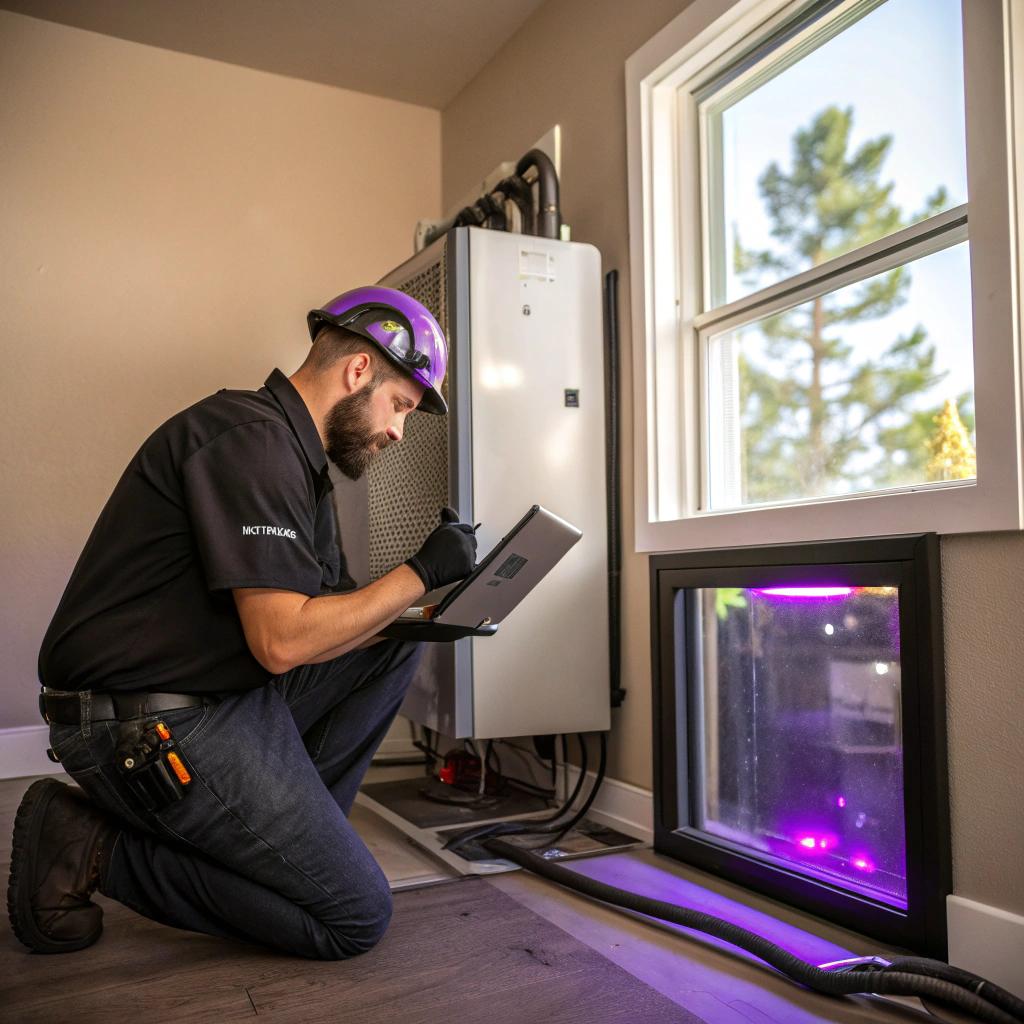
I used to think HVAC was just about hot or cold air and a big metal box outside that you ignore until it breaks. Then I moved into a smart home setup, connected everything to Wi‑Fi, and found out the hard way that my heating and cooling was the most complex “device” in the whole house.
If you like tech and you live in California, you need a local HVAC California in the same way you need a good internet provider. Your HVAC is a network of sensors, motors, control boards, refrigerant lines, and software. A solid contractor helps you pick the right system, install it correctly, tune it for your climate zone, connect it to your smart gear, and keep it running without burning through energy or hardware.
Why tech‑savvy people should care about HVAC more than they do
The part that surprised me is that HVAC has quietly turned into a tech field.
You have:
– Variable speed compressors
– Smart thermostats that use machine learning
– Zoning systems with motorized dampers
– Indoor air quality sensors
– Connected apps with remote diagnostics
That is a lot of hardware and software talking to each other. When it works, you barely think about it. When one part is wrong, the entire system can feel off, even if it “turns on.”
If you care about latency on your network, you should probably care about efficiency and control on your HVAC too.
A good contractor is not just someone who can replace a broken part. You want someone who understands:
– Local California building codes and Title 24 rules
– How different brands integrate with smart thermostats
– The tradeoff between up‑front cost, energy use, and noise
– How to size a system for real‑world living, not just math on paper
California is not one climate, and your HVAC should reflect that
People talk about “California weather” like it is one thing. It is not.
Coastal areas have mild temps but salty, humid air. Inland valleys swing from cool nights to very hot afternoons. Some regions have wildfire smoke part of the year. Desert areas have brutal heat and very dry air.
So the same system that works well in San Diego might be terrible in Sacramento.
A contractor who actually works in your area knows things like:
– How hot your attic gets on a normal summer day
– How often you have smoky air that needs extra filtration
– Whether your area has frequent low‑voltage events or grid stress
– What SEER2 ratings make sense for your power rates
And this matters even more if you have a tech‑heavy home with servers, gaming rigs, or a dedicated office.
How HVAC connects to the rest of your smart home
You probably already have some tech hooked into your home environment:
– Smart thermostat
– Smart vents
– Home assistant like Google Home or Alexa
– Phone app that tells you temperature and humidity
On paper, this looks simple. In practice, it can be messy if the underlying HVAC system is not set up correctly.
- Smart thermostat installed on a system that lacks the right control wire.
- Zoned system that conflicts with “smart” vents and causes airflow problems.
- Heat pump paired with the wrong type of backup heat, wasting power.
- Wi‑Fi features that never get used because the installer did not enable them or explain them.
Smart home gadgets cannot fix a badly designed HVAC system. They just give you better graphs of how wrong things are.
A solid contractor can:
– Tell you if your current system is compatible with the thermostat you want
– Wire in a C‑wire or add a power extender when needed
– Configure thermostat settings for your actual schedule and zoning
– Show you how to use features like geofencing, eco modes, and alerts
If you like tinkering, you can play with settings yourself. The key point is that the base system needs to be designed and installed correctly first.
What tech‑savvy homeowners usually get wrong about HVAC
I say this as someone who reads spec sheets for fun sometimes: it is easy to obsess over the wrong numbers.
Common traps:
– Caring only about SEER rating and ignoring installation quality
– Assuming a bigger system is safer “just in case”
– Thinking manual dampers and DIY zoning are fine
– Ignoring duct design, insulation, and static pressure
– Assuming any smart thermostat works with any HVAC setup
SEER, AFUE, HSPF, and all the new SEER2 terms matter, yes. But if ductwork is bad or airflow is blocked, those ratings are more theory than reality.
A mid‑range system installed well often beats a premium system installed poorly, both in comfort and power use.
This is where a contractor who is comfortable talking about both hardware and usage patterns helps a lot. They can walk you through what actually affects comfort and energy use in your specific house, not just on a brochure.
How to think about HVAC like a system, not a box
If you like tech, you already think in systems.
You know that a fast CPU does not save you if your storage is slow or your network is terrible. HVAC is similar. The outdoor unit is like the CPU, but that is only one part.
Here is a simple way to map it out.
| HVAC Part | Rough “Tech” Analogy | Why it matters to you |
|---|---|---|
| Outdoor unit (condenser / heat pump) | CPU / GPU | Handles most of the heating and cooling work, sets power use and noise. |
| Indoor unit (furnace / air handler) | Motherboard | Controls airflow, connects components, holds control board and safety features. |
| Ductwork | Network cabling | Moves “air packets” where they need to go; leaks and bottlenecks waste power. |
| Thermostat | OS / main UI | How you talk to the system and how automation happens. |
| Sensors and zones | IoT sensors | Feed data about temp, humidity, occupancy into the brain of the system. |
| Filtration and IAQ | Security and filters | Keeps indoor air cleaner, removes particles, sometimes VOCs and smoke. |
When you view it this way, it is easier to see why you cannot just upgrade one piece and call it a day.
Sizing and load calculations, not guesswork
A lot of people still choose HVAC size by square footage alone. “My house is 2,000 square feet, so I need X tons.” That is like choosing a GPU only by screen size.
A good contractor will run a Manual J load calculation or something close to it. It takes into account:
– Square footage
– Insulation quality
– Window type and direction
– Air leakage
– Local weather data
– Number of floors
– People and typical internal loads (computers, lights, etc.)
This is extra important for tech‑heavy homes. A room with two gaming PCs, three monitors, and a server rack is not the same as a simple bedroom.
If you have a home office or a lab corner, say so. The contractor can size ducts or suggest a mini split zone for that area.
Energy, comfort, and your utility bill
California power prices are no joke. If your HVAC is old or sized wrong, it will hit you every month.
For a tech‑minded homeowner, this is almost like tuning performance per watt.
A contractor who cares about design will talk to you about:
– Single stage vs two stage vs variable speed compressors
– ECM (electronically commutated) blower motors
– Heat pump vs gas furnace, depending on your area and rates
– Ventilation strategies so you are not overconditioning outdoor air
They might not use all the same terms you do, but you can ask for details. Ask how many hours per day they expect the system to run on peak days. Ask what temperature swing to expect. Ask what filter type they sized the ductwork for.
If they look annoyed by questions, that is a red flag.
Smart schedules and real savings
A smart thermostat can actually help, but only if the system setup matches your life.
Here is where a contractor can help you avoid some common traps:
– Overusing deep setbacks that cause long recovery times
– Letting the system short cycle all day because the capacity is too high
– Running in on/off mode with a variable speed unit that should modulate gently
– Ignoring humidity control in areas that need it
For example, if you work from home in California, your schedule looks different from a house that is empty from 8 to 6. A contractor who asks about that and sets the thermostat up with you is doing more than just wiring in a box.
Indoor air quality, smoke, and filtration
If you live in California, you probably had at least one summer where you watched an air quality app more than the weather report.
Wildfire smoke, pollution, and even simple pollen seasons change what “good HVAC” means.
HVAC is no longer just about temperature. It is about:
– Particle filtration (PM2.5 and smaller)
– Ventilation rate and source
– Humidity control where needed
– Positive or neutral pressure in the house to avoid pulling dirty air in
A contractor can help you sort through the noise of:
– Basic 1 inch filters
– Media filters
– HEPA bypass options
– Electronic air cleaners
– Fresh air systems and ERVs/HRVs in some areas
I used to think buying an expensive standalone air purifier for one room was enough. Then I realized my central system ran most of the day anyway, moving all the air through the same ducts.
If the central filter is weak, you are cleaning and dirtying the same air at scale.
Smart monitoring for air quality
This is where tech fans can have some fun in a useful way.
You can combine:
– A whole‑house filtration upgrade
– A few indoor air quality sensors (CO2, PM2.5, VOCs)
– Smart controls that boost fan speed or run circulation when levels spike
A contractor can handle the HVAC part and leave you to the sensor setup and automation rules.
Some examples you can build once the system supports it:
– Boost fan circulation if PM2.5 goes above a certain level
– Run fresh air ventilation only when outdoor AQI is decent
– Keep bedroom temp slightly lower at night while watching humidity
The core is still the hardware, though. Without decent duct design and a blower that can handle better filters, automation has limited effect.
What a good California HVAC contractor actually does for a tech‑savvy home
You might think “I just need someone to replace my old unit with a newer one.” That is one way, but it leaves a lot on the table.
A solid contractor in California should be willing to:
- Inspect existing ducts, not just the units.
- Measure static pressure and explain what that means for airflow.
- Discuss smart thermostat compatibility with your brand choices.
- Talk about code compliance and Title 24 without hand‑waving.
- Offer load calculations instead of rough guesses.
- Explain what maintenance the system actually needs.
If you ask about energy modeling, they might not do full simulations, but they should at least speak to rough expectations.
For a tech‑heavy home, I would look for a contractor who is comfortable with:
– Wi‑Fi connected thermostats and vendor apps
– Multi‑zone systems and ductless mini splits
– Variable speed heat pumps
– Communication between indoor and outdoor units
You do not need them to be a software engineer. You just need them to understand that your house is more than a simple on/off box.
Signs your contractor “gets” tech people
This is more subjective, but it has helped me.
Positive signs:
– They are fine with you asking for model numbers and links to manuals.
– They do not panic if you say “I want to log data from this thermostat.”
– They are honest about what they know and what they have not used yet.
– They explain their reasoning in plain language, not only “that is just how we do it.”
Mild warning signs:
– They hate every brand except one without clear reasons.
– They refuse to consider any smart thermostat that is not the cheapest basic one.
– They dismiss air quality concerns or smoke events as “overblown.”
– They never talk about ducts or airflow, only the outdoor unit size.
You do not have to argue with them, but you can decide to keep looking.
Repair, maintenance, and remote diagnostics
HVAC systems are getting closer to other smart devices in one way: they self monitor more.
Newer units can:
– Log error codes
– Track run time
– Record certain pressures and temperatures
– Sometimes send fault data through the thermostat
A forward‑thinking contractor can use this to diagnose problems faster, and in some cases, remotely.
That can mean:
– Fewer truck rolls
– More pointed visits with the right part in hand
– Less guessing and part swapping
For you, the tech‑minded homeowner, it can also mean better visibility. Some thermostats and vendor apps expose data that you can track, like:
– Daily run time
– Stages used (low vs high)
– Indoor humidity trends
– Filter change alerts based on fan hours, not a simple timer
If your contractor is aware of these features, they can configure them correctly.
Preventive care that is not just a “maintenance plan” pitch
A lot of HVAC companies push yearly maintenance plans. Some are fine, some are fluff.
What you actually need, roughly, is:
– Regular filter changes (how often depends on filter type and air quality)
– Coil cleaning when needed
– Drain line checks and clearing
– Electrical checks on key components
– Refrigerant level checks if performance changes
For a techy person, it helps when the contractor explains:
– What they checked
– What the readings were
– What range is normal
You do not need every pressure and temperature value, but a quick summary in plain terms builds trust.
When to repair and when to replace
This is the annoying part. HVAC is expensive, and it fails at the worst possible time.
A contractor who respects you will be transparent about the tradeoffs instead of just pushing a sale.
Things worth asking them:
– How old is the current system?
– What is the expected life for this model in our area?
– How much did power use change after the problem started?
– Are replacement parts still common, or getting rare?
– Does the system use older refrigerant that is being phased out?
If a 20‑year‑old unit loses a compressor, it is rarely worth a major repair. If a 7‑year‑old unit has a bad capacitor, that is a simple fix.
Someone who takes the time to explain all this, and is fine if you choose repair over replacement once or twice, is usually a better long‑term partner.
Thinking ahead: EVs, solar, and future loads
Since we are talking about tech homes, there is a decent chance you either have or want:
– An EV
– Solar panels
– Battery storage
– Maybe an induction range
All of these change how your power use looks.
When you talk to your HVAC contractor, mention:
– If you have solar or plan to get it
– If you will add a second EV charger
– If you plan to add more server or lab gear at home
They can help adjust:
– System size and type (heat pump vs furnace, etc.)
– Breaker size and panel space
– Timing of when the system runs harder, paired with your solar production or off‑peak rates
It will not be perfect, but ignoring this is a missed chance for smoother and cheaper operation over time.
Questions to ask an HVAC contractor in California
You do not need to grill them like a job interview, but a few targeted questions reveal a lot.
Core questions
- “How do you decide what size system my house needs?”
- “Will you check my ducts and static pressure, not just the outdoor unit?”
- “What smart thermostats do you install most often, and why?”
- “How familiar are you with Title 24 requirements in this area?”
- “Have you installed many variable speed systems or heat pumps here?”
If the answers are vague or rushed, that is telling.
Tech‑focused questions
- “Can I access run time and fault data from the thermostat or app?”
- “Is there anything in this setup that might conflict with smart vents or zones?”
- “If I want to link air quality sensors later, is there a good way to control fan only mode?”
- “Do you offer any remote diagnostics, or at least log retrieval during service?”
These do not have to be dealbreakers if they say “no” to some of them. You are just learning how they think.
Bringing it all together in a real home
Let me walk through a simple example.
Say you have:
– A 1,800 square foot home in a hot inland part of California
– Home office with two monitors and a desktop PC
– One EV and plans for solar next year
– A couple of smart speakers and a basic smart thermostat
Your current system is 15 years old, a single stage AC with a gas furnace, noisy, and power bills are rising.
A decent contractor might:
1. Run a load calc and find you can actually use a slightly smaller capacity heat pump with a variable speed compressor.
2. Suggest upgrading ducts in a few spots where static pressure is high.
3. Size the return duct for a better filter like a 4 inch media filter, so you can improve air quality without choking airflow.
4. Install a thermostat that works with your voice assistant and gives you run time data.
5. Place a temperature sensor in your office so it does not turn into an oven during long sessions.
6. Talk to you about setting temperatures in a way that plays well with your solar plans later.
You end up with:
– Quieter operation
– More even temperatures
– Better filtration during smoke days
– Data on how the system runs
– A setup that will not fight your future tech plans
None of this is magic. It is just good design plus a contractor who respects that your home is a bit more connected than average.
Common myths about HVAC in tech‑heavy homes
“I can just DIY most of it if I read enough”
You can handle filters, smart thermostat setup in many cases, and some basic troubleshooting. But refrigerant lines, high voltage work, permit rules, and many safety checks are not things to guess at.
The tricky part is that HVAC errors often do not break things right away. They show up as:
– Shortened equipment life
– Weird noise
– Hot and cold spots
– Higher power use each year
By the time you feel it, the damage is packed in.
“Any smart thermostat is better than a simple one”
Sometimes a simple, well matched thermostat is better.
If a fancy thermostat does not talk the right language with your modulating system, it can actually force it to act like a dumb single stage unit. So you pay for complex hardware but use it in the simplest mode.
This is a place where a contractor who knows both the HVAC side and the thermostat side can really help.
“Bigger system equals more comfort and less stress”
Bigger systems short cycle. Rooms get noisy blasts of air, then long waits. Humidity control suffers. Power use often climbs, not drops.
It is like putting a server‑grade PSU on a Raspberry Pi. It runs, but you did not actually gain anything that matches how the system is used.
A correctly sized system, or even a slightly smaller one that runs longer but quieter, often feels better and costs less to run.
So, does every tech‑savvy home in California really need an HVAC contractor?
If by “need” you mean “must sign up for every plan and upgrade,” no.
If by “need” you mean “should have a trusted expert who understands both HVAC and at least the basics of smart homes,” then yes, very much.
Your HVAC system is:
– One of the biggest power users in your house
– A huge factor in how comfortable you feel while you work, game, or rest
– Increasingly connected to the same network where all your other tech lives
You can ignore it until it breaks. Many people do. Or you can treat it like the complex system it is and have someone who knows what they are doing help you plan, install, and maintain it.
That does not mean giving up control. You still choose:
– How smart your thermostat is
– How strong your filtration should be
– How much you want to spend up front vs over time
– How deep you go with data and automation
The contractor just gives you real options based on your home, your climate, and your tech habits.
One last question and a straight answer
Question: If my current HVAC “works” most of the time, but my bills feel high and some rooms are always off, is it worth bringing in a California HVAC contractor just to look, even if nothing is broken yet?
Answer: Yes, it usually is. A good contractor can spot duct issues, sizing problems, and control settings that waste power or hurt comfort long before the system dies. For a tech‑savvy homeowner, that early check often pays off in lower bills, better integration with your smart gear, and a clearer plan for when the system actually needs replacement, instead of a rushed emergency choice on the hottest day of the year.