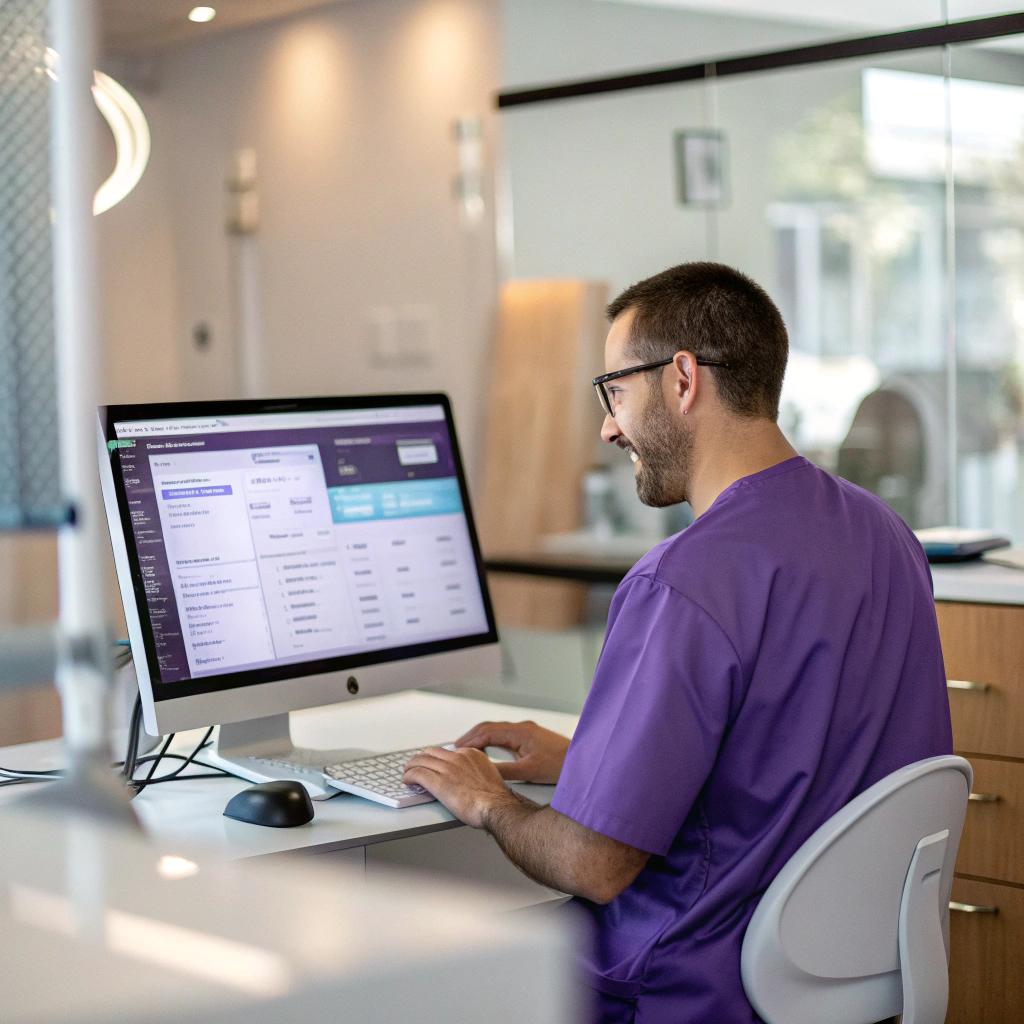
I used to think dentists had it easy on taxes because the income looked predictable and steady. Then I saw a few dental P&Ls and realized those numbers can bleed cash fast if you do not plan, especially when tech and equipment keep changing.
If you want the short answer: the fastest way for a dentist to cut taxes right now is to combine smart tech with aggressive but legal planning. That usually means: tracking every deductible cost in real time, using AI and apps to time big equipment purchases, choosing the right entity type (often S‑Corp), setting up smart retirement plans, and using practice data to shift income and expenses across years. A good specialist who understands Urgent tax strategies for dentists can sometimes free up five or six figures this year, not “someday.”
That is the high-level answer.
Now let us slow down and unpack how this actually works, tool by tool, choice by choice, from the view of someone who uses tech every day and wants clear, concrete steps, not vague tax advice.
Why dentists get crushed by taxes without tech on their side
Dentists often earn high income but run very messy numbers underneath.
You have:
– Big upfront costs: chairs, imaging, software, buildouts
– Ongoing tech fees: practice management, imaging, sensors, scanners
– Staff, hygiene, lab, supplies
– Debt service on school loans and equipment
– Insurance write‑offs and uneven cash flow
Most dentists do not have a live view of what is going on. They see their income roughly once a year when the CPA prepares the return. At that point, it is too late to shift anything meaningful.
So the tax bill feels like a yearly ambush.
Tech can flip that. Not in some magical way, but by making numbers visible weekly or even daily, so tax planning is based on what is actually happening, not what you think is happening.
The earlier you see your real numbers during the year, the more room you have to move income, stack deductions, and lock in tax savings before December 31 hits.
If you already use tech in your practice, you are closer than you think. You are just not using it yet with a tax mindset.
Step 1: Get your financial data out of the dark
Before any strategy, the data has to be clean.
Most dental practices have at least:
– A practice management system (Dentrix, Eaglesoft, Open Dental, etc.)
– Accounting software (QuickBooks, Xero, or something similar)
– Payroll system
The problem is these often do not talk to each other in a useful way.
You want a setup where monthly, and ideally weekly, you can see:
– Collections
– Overhead by category
– Tech and equipment spend
– Owner comp and distributions
– Projected taxable income
Here is where smart tech actually matters.
- Use bank feeds and rules in your accounting software so every expense auto‑categorizes. You should not be manually entering Amazon or dental supply purchases month after month.
- Sync your practice management software to accounting or at least export monthly reports. Production alone is not helpful; collections matter more for tax.
- Use an AI layer or reporting tool that flags trends: rising lab fees, tech subscriptions creeping up, or sudden jumps in supplies.
Once you can see your income and expenses taking shape during the year, your CPA can turn random receipts into actual tax moves, not just compliance work.
Step 2: Entity decisions and S‑Corp timing supported by numbers
A lot of dentists are either:
– Stuck as a sole proprietor or single‑member LLC
– Or they formed an S‑Corp years ago with no real plan for how to use it
Both can be expensive mistakes.
An S‑Corp can save self‑employment taxes by splitting your income into “reasonable salary” and “distributions.” But what is reasonable? This is where tech and concrete numbers help instead of guesswork.
Your accounting and production data can support a defensible salary based on:
– Specialty and local market rates
– Production per hour
– How much chair time you actually work versus management time
With real data, your CPA can run scenarios:
| Scenario | Taxable income | W‑2 salary | Distributions | Estimated self‑employment / payroll tax |
|---|---|---|---|---|
| No S‑Corp (Schedule C) | $400,000 | N/A | N/A | Tax on full $400,000 |
| S‑Corp, high salary | $400,000 | $300,000 | $100,000 | Tax on $300,000 only |
| S‑Corp, data‑driven salary | $400,000 | $220,000 | $180,000 | Tax on $220,000 only |
This is simple, not exact, but you can see how picking a salary supported by real productivity and compensation data gives room for savings without raising red flags.
If your books are current by mid‑year, your CPA can:
– Recommend when to elect S‑Corp status
– Adjust payroll before year‑end
– Plan retirement plan contributions to match your chosen salary
No magic. Just timing plus accurate data.
Using smart tech to trigger immediate deductions
This is usually the part dentists care about first: “What can I buy right now that will help on taxes?”
That question can be dangerous if you buy things you do not need. But some tech purchases can be very smart, especially if your data shows strong cash flow and high taxable income.
Here is where your first bulleted list is actually helpful.
1. Section 179 and bonus for dental equipment and tech
Most big dental tech qualifies for accelerated write‑offs:
- Digital X‑ray systems
- 3D imaging, cone beam CT
- CEREC or other CAD/CAM units
- Intraoral scanners
- Practice management servers and hardware
Smart approach:
– Your accounting software projects taxable income by November
– Your CPA runs a projection and says: “If you stay on this trajectory, you will owe X in federal and state tax.”
– You compare that to your equipment wish list or upgrade plan.
– You decide which items are truly needed in the next 12 to 24 months, not just “nice toys.”
If you will buy a scanner next year anyway and you have large taxable income this year, you might move that purchase forward to this year and capture a big deduction.
The tech alone does not cut your tax. The timing backed by your actual numbers is what turns a purchase into a planned deduction instead of an impulse expense.
Some dentists go overboard and load up on hardware every December, then struggle with cash in February. That is poor planning. Let the data call the shots, not the sales rep.
2. Subscription tech and cloud tools as clean write‑offs
Dentistry is moving hard into subscription software. That is not only convenient for operations; it is also very clean from a tax perspective.
You might already pay monthly for:
– Practice management software
– Imaging cloud storage
– Patient communication tools
– Online scheduling
– Telehealth or virtual consult systems
These are typically ordinary and necessary business expenses.
The trick is to:
– Track them all under a clear “software / tech” account
– Attach receipts or invoices inside your accounting app
– Review quarterly to cancel tools you do not use
Some practices save not just on tax, but on waste, by stacking all recurring tech fees in one report and actually reading it.
If you have a strong year and need more deductions, adding software for things like online reviews, analytics, or AI‑powered treatment planning might not just help tax. It might also help production.
Again, timing matters. Annual prepayments for software can accelerate deductions into the current year. Your CPA can model this if they see your numbers in real time.
3. Smart use of vehicles and home office with apps
Traditional tax advice on vehicles and home offices used to be messy. Records were weak. Deductions looked made up.
Smartphone apps changed that.
– Mileage apps can auto‑track trips to the lab, supply house, CE events, or multiple office locations.
– Good home office tracking tools can record actual usage of a dedicated workspace for admin tasks.
When the data is strong, your CPA can sometimes push for higher deductions with more confidence.
Example:
| Old way | With tech | |
|---|---|---|
| Mileage | Guessing “about 3,000 business miles” | App‑verified 4,780 miles with trip logs |
| Home office | Vague “I work at home sometimes” | Measured, dedicated room used for admin and planning |
Your deduction is higher and more defendable because you have data, not stories.
Using AI and analytics to shape your tax year
This is where the tech audience should feel at home. Most dentists have more data than they realize.
Production reports, procedure mixes, hygiene schedules, cancellations, insurance breakdowns, and even payment timing all hold clues about how your income will land this year.
If you can see that trajectory by mid‑year, you can manipulate taxes in a way that still respects reality.
AI forecasts and “what if” tax planning
More tools now can:
– Pull data from practice management
– Forecast production and collections
– Spot seasonal patterns
Layer tax planning on top of that forecast and you begin to ask better questions:
– “What if I add an associate in October?”
– “What if I delay a second hygienist until January?”
– “What if I open one more day a week for the last quarter?”
– “What if I move my CE travel to next year?”
Your CPA or planning software can model the tax impact of those moves.
Not everything should be driven by tax. Sometimes the right business move raises your tax bill because you earn more. That is fine.
But when you are on the margin of a new bracket or losing a credit or deduction because of income limits, shifting timing by a few months can change your real after‑tax outcome.
Income shifting using practice tech data
Here are some common examples that often come up once a dentist sees their numbers in detail:
– If you notice a wave of high‑ticket procedures scheduled in late December, you might choose to push non‑urgent ones into January if you are looking at a high‑tax year.
– If you know a consulting or speaking gig will pay in December, you might delay invoicing or ask payment in January if the cash flow allows.
– If your collections software shows a backlog of unpaid claims or patient balances, pushing hard on collections late in a low‑income year can be smarter than in a year where you already crossed a threshold.
This is not about gaming anything. It is about having clear sight over time instead of reacting when the year is over.
Expense clustering and “stacking” with a live P&L
There is a concept some CPAs use where they stack expenses in a high‑income year and hold off in a lower one.
Your accounting and payment tools can show:
– Which vendor invoices are due when
– Which costs can be pre‑paid a few months
– Which planned projects can slide a quarter forward or back
When your taxable income is already low for the year, an extra $20,000 deduction is less powerful than the same $20,000 deduction in a year where your marginal tax rate is high.
So if you are having a rough year, it might not be wise to rush every purchase in December “for the write‑off.” Waiting until next year when you bounce back could save more in real dollars.
Retirement plans, HSAs, and benefits with tech doing the heavy lifting
High‑income dentists often leave a lot of money on the table in retirement savings.
You might already know the basic tools:
– 401(k) or SIMPLE plans
– Cash balance or defined benefit plans for very high incomes
– Health Savings Accounts when paired with the right insurance
What has changed is how easy it is to monitor and push these using apps and dashboards.
Smart retirement planning backed by live payroll data
Your payroll and retirement platform can now:
– Show exactly how much you and your staff have contributed year to date
– Estimate max contributions very clearly
– Run “what if” for adding a cash balance plan
When you combine that with your tax projection, you can:
– Bump owner contributions near year‑end to drive down taxable income
– Adjust staff contributions to hit safe harbor thresholds
– Decide if a separate plan for associates makes sense
Here is a simple view of how a dentist might see options:
| Plan type | Who it suits | Potential annual contribution | Tech angle |
|---|---|---|---|
| Solo 401(k) | Single owner, few or no staff | Up to standard 401(k) limits | Online dashboards show real‑time limits |
| Traditional 401(k) with safe harbor | Owner plus staff | Owner can push higher if staff covered | Apps track staff eligibility, testing, and contributions |
| Cash balance plan | Very high earning dentists closer to retirement | Often multiples higher than 401(k) alone | Actuarial and projection software models impact |
This is where a tax‑focused CPA plus a good TPA, both using modern tools, can make a very fast difference. The numbers are large enough that a few months of planning can change your tax bill by tens of thousands.
Health Savings Accounts and tech‑tracked medical costs
HSAs are not unique to dentists, but they fit the profile of high‑income earners who like long‑term options.
Apps now can:
– Track HSA contributions
– Store medical receipts
– Keep a running total of reimbursable expenses
For a dentist who works with a lot of screens already, it is not hard to scan medical receipts into a folder or app. That proof makes HSA strategies stronger and gives more comfort in using them as long‑term tax‑favored buckets, not just current‑year spending accounts.
Tax credits and incentives that tech‑savvy dentists miss
Some incentives are not obvious unless you track the right data.
Here are a few areas where tech and good records matter more than most dentists realize.
1. R&D‑style credits for process and tech improvement
Some jurisdictions allow credits for certain types of “research” or process advancement. Dentistry walks a fine line here. Routine clinical work often does not count, but some tech‑heavy process work might.
Examples that sometimes merit a closer look:
– Developing new digital workflows that reduce material use or time significantly
– Custom in‑house lab workflows using CAD/CAM and new materials
– Software customization that materially changes how you deliver treatment
You need strong documentation:
– Project outlines
– Versions and iteration notes
– Time tracking or staff logs linked to the project
Without tech‑backed records, claiming these credits is risky. With records, they might be worth exploring with a specialist who understands both tax and dental workflows.
I am a bit skeptical of aggressive pitches here. If someone promises large R&D credits for standard crown and bridge work, that is a red flag. Use your own judgment and demand clear explanations.
2. Energy and building‑related deductions tied to sensors and smart devices
If you own your building, energy efficient improvements can sometimes qualify for extra deductions or credits.
What helps here:
– Smart thermostats and occupancy sensors that generate usage reports
– Energy monitoring systems that track reductions in consumption
Again, you need proof that you actually improved efficiency, not just replaced lights. Tech gives you that trail.
This area is complex and very jurisdiction‑dependent, so you need a CPA who will say “no” when something does not qualify, not just “yes” to keep you happy.
Cybersecurity, data protection, and why they matter for tax too
At first glance, cybersecurity looks like a compliance and patient trust issue, not a tax topic. But there is a link.
If you suffer a breach and have to:
– Pay recovery and incident response costs
– Replace hardware
– Buy extra backup and security systems
– Pay for legal and notification services
Those are often deductible expenses. That is the reactive side.
On the proactive side, many cybersecurity tools are also valid practice expenses:
– Encrypted backup services
– HIPAA‑compliant cloud storage
– Security monitoring tools
– Staff training platforms
You can fold them into your tech and security budget and track them year after year. From a tax view they are just part of running a modern dental office.
I would not go shopping for security tools purely for tax reasons. That is backwards. But if you are going to protect your data, do it in a way that is trackable and clearly categorized in your books so the tax side is easy.
Coordinating with a tech‑literate CPA instead of just “a CPA”
One theme that keeps coming back is that taxes are not only about rules. They are about timing and data.
If your CPA:
– Only sees your numbers once a year
– Does not log in to your cloud accounting
– Does not know your practice management system at all
Then it is hard for them to suggest fast, targeted strategies. They are stuck in “historian” mode.
A better approach looks more like:
Monthly or quarterly check‑ins using real dashboards
You and your CPA share access to:
– Your accounting system
– Key practice reports
– Payroll data
On a schedule (monthly is best, quarterly at minimum), you look together at:
– Year‑to‑date profit
– Projected year‑end income
– Planned big purchases or hires
– Opportunities to adjust owner pay and retirement contributions
Those meetings do not have to be long. Sometimes 30 minutes is enough if the data is ready.
The goal is not to predict everything perfectly. It is to catch opportunities while you still have months left to act.
Expect your CPA to push back sometimes
If your plan is “buy every gadget possible in December,” a good CPA who knows your numbers might say no.
– Maybe your cash reserve is too thin.
– Maybe your current year is already low income, so the deduction is weak.
– Maybe debt levels are already high.
Good tax planning for dentists is not “yes to every deduction idea.” It is the opposite. It is picking the moves that fit your actual numbers and long‑term goals.
So if you hear “I do not think that is a smart move for you right now” from a CPA who knows your data, that is often a sign you are getting real advice, not flattery.
Bringing it all together: a realistic yearly playbook
If you like concrete steps, here is how a typical year might look when you combine smart tech with tax planning. It will not match every practice, but it should give you a sense of rhythm.
Q1: Set the baseline
– Clean up last year in your accounting software.
– Make sure bank feeds and rules are working.
– Connect practice management reports to your process, even if by manual monthly exports.
– Decide on entity structure changes (like S‑Corp) early, not in December.
– Review retirement plan design and contribution targets.
This is the “setup” quarter, where you focus on structure more than on quick deductions.
Q2: Watch trends, do light adjustments
– Start tracking monthly reports: collections, overhead, owner comp.
– Check that tech subscriptions and tools are actually used. Cancel dead weight.
– Do a mid‑year tax projection if income is clearly up or down from last year.
– Review equipment needs and build a ranked list with costs.
You are not making huge moves yet. You are learning how the year feels in numbers.
Q3: Make strategic choices while there is still time
– Update your projection again as the pattern of the year becomes clearer.
– Decide whether to activate higher retirement contributions.
– Plan any major tech or equipment purchases for Q3 or Q4 based on cash flow and tax projections.
– Shape your schedule a bit if you are near bracket thresholds or losing credits.
This is where you begin to lock in decisions that move the tax needle while also making sense operationally.
Q4: Execute targeted, not random, moves
– Final tax projection by late November.
– Finalize equipment purchases that you had already decided made sense.
– Prepay certain expenses where logical and cash allows.
– Adjust owner payroll to target a defensible salary under your S‑Corp.
– Confirm retirement contributions and any cash balance plan funding.
Because you spent the year watching your data, Q4 does not feel like a panic. It feels like final tuning.
Questions dentists often ask about tech and urgent tax planning
Q: Is buying new tech at year‑end always a good tax idea?
A: No. The deduction is only part of the story. You give up cash now and future deductions later. If your income is low this year or your cash buffer is weak, a big December equipment push can hurt more than it helps. Use your actual P&L and a tax projection before deciding.
Q: Should every dentist be an S‑Corp?
A: Not every dentist. For some, the savings are small, or the admin cost is too annoying, or their income is still unstable. Your books and projected income should drive the choice. A good CPA can show you the difference on a simple spreadsheet so you see actual dollar impacts, not just theory.
Q: Do I really need fancy AI tools for this, or is standard accounting software enough?
A: For many practices, standard cloud accounting plus disciplined use of reports is enough for strong planning. AI and analytics become more helpful as the practice grows, adds locations, or has complex staffing and procedure mixes. The key is not how fancy the tech is; it is how current and accurate your numbers are.
Q: How often should I talk to my CPA about taxes if I use these tools?
A: At least once a quarter if you want meaningful planning. Twice a year is the bare minimum. Year‑round access to live books means your CPA can answer “should I do this now or later?” in context, instead of giving generic answers.
Q: What is the first simple step if I feel overwhelmed?
A: Get your accounting software fully up to date for the last three months, with clean categories for tech, equipment, payroll, and owner pay. Once you have that, schedule a planning call. You do not need a perfect system to start, you just need honest, current numbers.