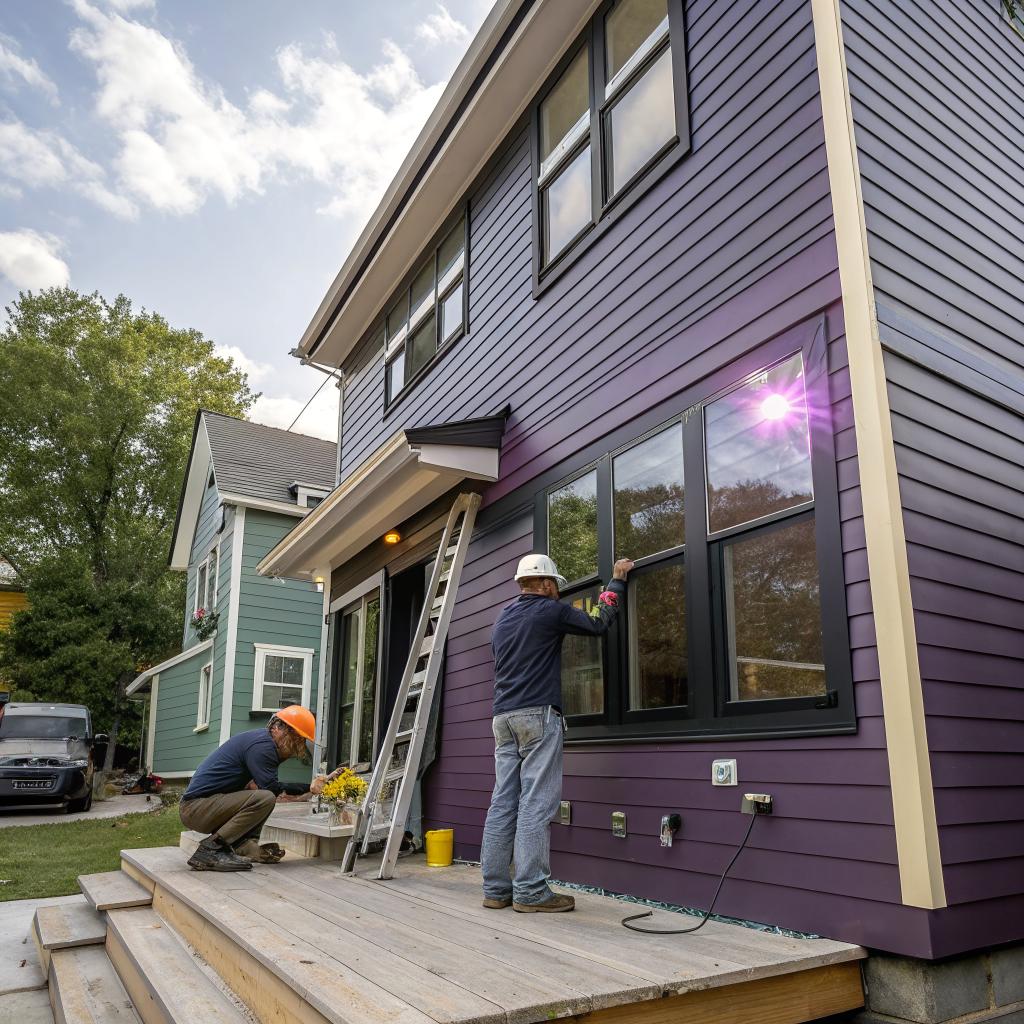
I used to think smart homes started with apps and Wi‑Fi plugs. Then I bought an old New England house and realized the real tech problems started outside, in the walls, long before any sensor or smart lock came into play.
If you live around Boston and care about tech, energy data, and smart devices actually working as promised, you start with the shell of the house. That usually means talking to siding contractors Boston MA who understand insulation, air sealing, and how modern materials interact with smart systems. The siding is not just cosmetic. It shapes your power use, indoor comfort, noise level, and even how long your gear survives New England weather. Everything else in the home tech stack is built on that.
Why a “smart” home starts on the outside
I know it sounds backwards. Smart bulbs, smart thermostats, AI assistants, all that lives inside. Siding is just… outside stuff, right?
Not really. Think about how most smart home gear works. It tracks, controls, and adjusts:
- Temperature
- Humidity
- Air quality
- Security
- Energy use
All of those depend first on the building envelope. If your siding leaks air, soaks up water, or bridges heat and cold straight into your framing, your smart thermostats just end up overworking to fight physics.
If the shell of the house is dumb, your smart devices are just expensive band‑aids.
I learned that the dull way, watching a “learning” thermostat keep firing the boiler on a windy January night because the walls were bleeding heat through old wood siding and gaps that you could feel with your hand.
That is why siding contractors who actually understand building science have more in common with system architects than with painters. They deal with:
- Moisture control and drying paths
- Thermal bridges and insulation gaps
- Air sealing and blower door targets
- Material choice vs local weather cycles
- How long components last before they fail
Those are not “homeowner fluff” topics. If you care about data, control, and predictable behavior, you care about that list.
Boston weather, smart tech, and why siding is the bottleneck
Boston is rough on houses. You know the pattern:
- Freeze-thaw cycles
- Lake-effect style snow one week, heavy rain the next
- Hot, humid summers
- Wind that finds every weak joint in a wall
This is not a gentle climate for electronics or for building materials. Yet we load our houses with:
- Outdoor cams
- Smart doorbells
- Smart locks
- Exterior sensors
- Wi‑Fi mesh nodes
All of those interact with the skin of the house. You drill through siding. You mount boxes. You route cables. You depend on that outer wall to manage water and temperature so the device does not rot, short, or drift out of spec.
Here is where I think people get the order wrong. They often treat siding as a late-stage cosmetic upgrade, while stressing over which brand of camera or thermostat to buy first. If your walls are wet on the inside, or your sheathing is half-rotted, the specific camera model is not the urgent question.
For a real smart home, you do not start with gadgets. You start with a stable, dry, airtight envelope that your tech can rely on.
How poor siding quietly ruins your “smart” plans
Here are a few ways bad siding or bad installation quietly sabotages tech:
- False temperature and humidity readings
If air leaks around electrical boxes in exterior walls, the temperature at the thermostat or the smart sensor does not represent the room. You get draft-driven spikes and weird humidity readings. That messes with automation rules. - Unstable Wi‑Fi signal
Wet sheathing, foil-faced foam, or haphazard patch jobs around penetrations can change how signals bounce and get absorbed. Not the first thing people think about, but I have seen signal graphs that make no sense until you look at the walls. - Condensation near electronics
Poor vapor control plus insulation gaps can lead to condensation in wall cavities. That can creep into junction boxes, low-voltage lines, and little PoE supplies feeding cameras. A lot of “random hardware failures” are water problems in disguise. - Thermostat constantly fighting leaks
If your smart thermostat keeps overshooting or cycling rapidly, that is sometimes just bad tuning. Often it is simple: the house leaks too much and the walls never reach steady-state. - Noise pollution
Thin or badly installed siding with no insulation behind it makes traffic noise and street sounds much louder inside. Then people buy white noise machines and smart speakers and all kinds of sound tricks, instead of dealing with the wall assembly.
So siding is not some separate, boring topic. It is a key variable in the behavior of your smart systems, especially in a place with Boston winters.
What smart-home-minded people should ask siding contractors
You do not need to become a builder. But you can ask smarter questions.
Here are some direct, practical topics to raise when you talk to contractors. If the answers are vague, that tells you something.
1. How will you handle air sealing and insulation behind the siding?
Cosmetic jobs that just nail new vinyl over old problems are common. That might look nice from the street, but it does not solve drafts or moisture.
You want someone who can explain, in plain words:
- Whether they are adding continuous exterior insulation
- How they will tape or seal joints
- What happens around window and door openings
- How they tie into existing housewrap or create it where missing
If a contractor treats siding as only a face layer and does not talk about air and water layers, you are not getting a “smart” envelope, just a new skin.
2. What materials make sense for Boston, not just in general?
Different materials behave very differently:
| Material | Pros for a tech-focused owner | Tradeoffs |
|---|---|---|
| Fiber cement | Stable, fire-resistant, low warping, good with paint, holds mounts well | Heavier, needs careful flashing and cutting, more labor cost |
| Engineered wood | Better insulating than metal, natural look, more predictable than real wood | Needs tight moisture control, good installation critical |
| Vinyl | Low material cost, quick to install, wide style range | Can crack in cold, warps with heat, trickier for stable device mounting |
| Real wood | Classic look, easier custom work, good for retrofits | High maintenance, sensitive to moisture, risk of rot around penetrations |
| Metal (steel/aluminum) | Durable, fire resistant, can be very long lasting | Can affect RF signals, noisy in wind or rain if not done right |
You might care about:
- How well cameras, access points, and sensors can be mounted
- How often you will need repainting or repairs
- How the material handles fast temperature swings
- Interaction with your Wi‑Fi mesh or 5G signal indoors
None of these are niche questions. They affect your daily experience with the house.
3. How do you protect wiring and devices that go through the siding?
Ask directly about:
- Weatherproof boxes for cameras and doorbells
- Sealants and gaskets rated for exterior use
- Strain relief for cables so they are not stressed
- Drip paths and flashing so water does not follow the wire into the wall
If you hear “we just caulk around it,” that is not enough. Caulk fails. Water finds paths. A good contractor thinks about where water wants to go and sets up the layers so it goes outside, not in.
Energy data, smart thermostats, and why the envelope changes the numbers
Something I found interesting when I started logging energy use: improvements to the shell had more stable, predictable effects than automation tweaks.
When you tighten up walls and improve siding, three things happen that matter for tech people.
1. Thermostats and sensors see cleaner signals
Without big drafts by exterior walls, the indoor temperature curve smooths out. That gives you:
- More reliable thermostat learning behavior
- Less overshoot and cycling
- Better matches between predicted and actual usage
If you use Home Assistant, Hubitat, or another local controller, you know how much bad data can mess up automations. Air leaks are physical noise in the system.
2. Smart zoning and vents actually work
If different parts of the house behave very differently thermally, even smart systems struggle. A good siding and insulation job reduces those extreme hot-cold swings between rooms, so zoning or smart vents do not have to overcompensate.
Think of it this way: before you spend on smart vents and dampers, make the walls less chaotic. Then the tech has a chance to fine tune, not just fight the storms inside your cavities.
3. Energy tracking apps become more than guilt meters
Many people install energy monitors, then get annoyed because usage patterns feel random. The weather swings, the house leaks, so the graphs look messy, and you forget about them.
Once you tighten the envelope, patterns start to look cleaner:
- Base load becomes clearer
- Heating and cooling curves match weather more predictably
- You can see weekends, vacations, and habits in the data
It feels more like performance monitoring of a decent system, not like trying to reverse engineer chaos.
Noise, comfort, and human factors tech does not fix alone
Most smart home talk focuses on control and automation. Less on the basic experience of sitting in a room.
Siding and the wall assembly behind it affect things you notice all the time:
- How loud the street sounds inside
- Whether the wall by your desk feels cold in January
- How evenly the house heats up when the boiler or furnace kicks in
- Whether you feel drafts sitting on the couch
You can own the nicest smart speaker on earth and still not want to spend time in a room that feels leaky and noisy.
A better envelope gives your smart devices a better baseline to amplify. It is easier to tune lighting, sound, and temperature when the shell of the room is more stable.
Planning smart home wiring with siding work
One advantage of doing siding work while you are interested in smart tech: you get a rare chance to touch the structure without fully gutting the inside.
Here are a few practical things you can do, or at least plan for, while siding is off or being replaced.
Add or upgrade exterior outlets and low-voltage runs
Think ahead about:
- Future camera spots (not just the doorbell)
- Possible exterior PoE locations
- Outdoor speakers or screens
- Sensor points for weather, light, or air quality
You do not have to install all the gear now. You can still run conduit or pull lines while the wall is partly open, then leave a neat junction behind a blank plate or hidden box.
This is cheaper than fishing wires later through finished interiors.
Coordinate with your electrician or low-voltage installer
Siding contractors are not always the ones pulling wires, and that is fine. But you want the trades coordinated. Missed timing here means holes drilled twice, or lines that end up in dumb locations because someone guessed.
Ask if they are open to a short walk-through with whoever does your low-voltage work. One hour of coordination can save you many headaches.
Document everything, like you would document a codebase
After siding and related work, take way more photos than you think you need:
- Every wall where wiring passes
- Flashing details around windows and doors
- Any junction boxes or hidden enclosures
- Points where different materials meet
Store these with notes. Use a simple folder system or a note app. Later, when you add gear or troubleshoot moisture, you will be grateful. It is like having internal docs for a system you inherited.
How to tell if a siding contractor “gets” smart homes
You probably will not find many contractors who brand themselves as “smart home aware.” That label would be nice, but for now you rely on cues.
Here are a few green flags:
They talk about layers, not just the outer look
If you hear them discuss:
- Weather barrier vs air barrier
- Drainage planes and drying
- Continuous insulation
- Thermal bridges and ways to reduce them
that is closer to the way good system engineers talk. They see the house as a set of interacting layers, not just surfaces.
They are comfortable with penetrations for tech
Ask how they would handle:
- A future camera midway along a wall
- A change from Wi‑Fi to wired at the front door
- Swapping one device brand for another with different mounting
You want answers that include the words “flashing,” “gasket,” and “maintain the water plane” more than “we can always punch a hole later.” Holes are cheap. Controlled, durable holes are less cheap, but worth it.
They do not rush past moisture questions
Good siding contractors in Boston think about water a lot:
- Ice dams at the roofline
- Wind-driven rain
- Splash-back near grade
- Shaded walls that dry slowly
Moisture is also the biggest long-term threat to your wiring and devices that live in or on the wall. If someone downplays water worries, I would be cautious.
Money, ROI, and the boring math of the envelope
People ask if it is “worth it” to put money into siding when they want smart home features. That question is a bit backwards.
It is not that you “buy siding” and then “also buy smart devices.” You are building a system that will:
- Consume energy daily
- Need repairs over decades
- Hold a lot of gear that you will probably upgrade every few years
The shell is the longest-lived part, usually. Smart gear is closer to peripherals. So the budget ratio should reflect that.
Here is a rough way to think about it:
| Thing | Typical life before major change | Example budget range |
|---|---|---|
| Siding and envelope work | 20 to 40 years | High, but rare and structural |
| Heating/cooling equipment | 12 to 20 years | High, but periodic |
| Smart devices, sensors, hubs | 3 to 7 years | Smaller chunks, more frequent |
You can argue about the exact numbers, but the pattern is clear. If you geek out about a thermostat and skimp on the walls it tries to control, the payback logic is a bit off.
Better siding and insulation can cut heating loss far more predictably than another round of “algorithm updates” to a thermostat.
Retrofitting older Boston homes for smart living
Many Boston houses are old. Triple-deckers, brick fronts, wood frames from another century. They were not built for cable runs, POE cameras, or dense insulation.
Still, a thoughtful siding project can move them closer to modern performance while keeping the character. It just needs planning.
Respect the original structure, but do not freeze it in time
I know some people feel guilty changing the look of an old place. I get it. But you can:
- Match original trim profiles with modern materials
- Keep window proportions while improving flashing
- Use vented details that preserve the look but improve drying
There is a middle path where you keep the character and still treat the house like a system you want to perform well.
Use the siding project as a “checkpoint”
If your house is older, a siding job is a rare moment when you can:
- Check sheathing condition
- Spot old, hidden wiring sins
- Add insulation where there was none
- Seal random gaps and critter paths
It might feel boring compared to unboxing new gear. But this is the kind of hidden work that leads to fewer weird problems later.
Common mistakes tech-minded homeowners make around siding
I am not trying to talk down to anyone here. I have done a few of these myself.
1. Treating siding as a separate cosmetic project
People schedule siding without looping in whoever handles:
- HVAC upgrades
- Electrical and low-voltage runs
- Window replacements
Then they end up doing things twice. Or cutting into brand new siding to route wires that could have been hidden earlier.
It makes more sense to treat envelope work as part of a broader roadmap for the house, not as a paint job.
2. Ignoring the RF side of material choice
Most houses are not Faraday cages, but materials matter. If you are planning a mesh network or a few access points, it is worth thinking about:
- Metal-heavy siding and roofing combinations
- Foil-faced rigid insulation in certain locations
- Where you place APs relative to exterior walls
You can still get coverage right with these in place. You just want to know what you are building, so you do not blame the router for what the wall is doing.
3. Overtrusting caulk and undertrusting gravity
Caulk is like tape in IT: useful, but not a structural fix. Long term water management relies more on:
- Proper flashing
- Overlaps in the right direction
- Clear drainage paths
This matters for every penetration for tech. A bad detail here slowly soaks the sheathing around your devices, then one day you are troubleshooting a “mysterious” failure in that area.
So, where do you actually start?
If you care about building a smart home in Boston that works well for a long time, a simple path could look like this:
- Review how your house behaves now
Spend a week just paying attention:- Which rooms feel drafty?
- Where do you see condensation on cold days?
- Which walls feel cold to the touch?
- Where have you had water stains or peeling paint?
- Audit your smart gear pain points
List where your tech actually annoys you:- Unreliable exterior cameras
- Weird thermostat behavior
- Dead spots in Wi‑Fi near certain walls
- Devices that die early on the windward side
- Talk to siding contractors with both lists in mind
Instead of just asking for a quote, walk through:- Your comfort issues
- Your current smart gear setup
- Where you expect to add more devices later
- Plan wiring and mounting at the same time
Decide now where you want:- Conduit runs for future low-voltage
- Reinforced mounting points for devices
- Extra exterior outlets
You do not have to solve everything in one go, but you can avoid painting yourself into a corner.
Q & A: Common questions people quietly have
Q: Is it overkill to think about smart home tech while choosing siding?
A: I do not think so. You are not redesigning a data center. You are just acknowledging that your devices live on and in that shell. A few thoughtful choices now can save you from ripping into finished work later.
Q: What if I rent or cannot touch the siding?
A: Then you focus inside: drafts, interior insulation, and local device placement. You probably cannot control the envelope, but you still benefit from understanding its limits. It explains a lot of “my thermostat is weird” stories.
Q: Should I delay buying smart gear until after siding work?
A: If you know major exterior work is coming soon, I would hold off on permanent exterior devices and complex automations. It is annoying to remount everything. For interior gear, go ahead, but keep your setup flexible.
Q: How do I know if my siding is really the problem?
A: Put your hand near exterior walls and outlets on a cold or windy day. Feel for drafts. Watch humidity and temperature sensors near those walls. If you see big swings that do not match the rest of the room, the envelope is at least part of the story.
Q: Is a smart home still “smart” if most of the work is in the walls no one sees?
A: I would argue that is the smartest version. You get the comfort, control, and stable behavior without having to constantly babysit the tech. And the outside of your house starts quietly doing its job as part of the system, not just as decoration.