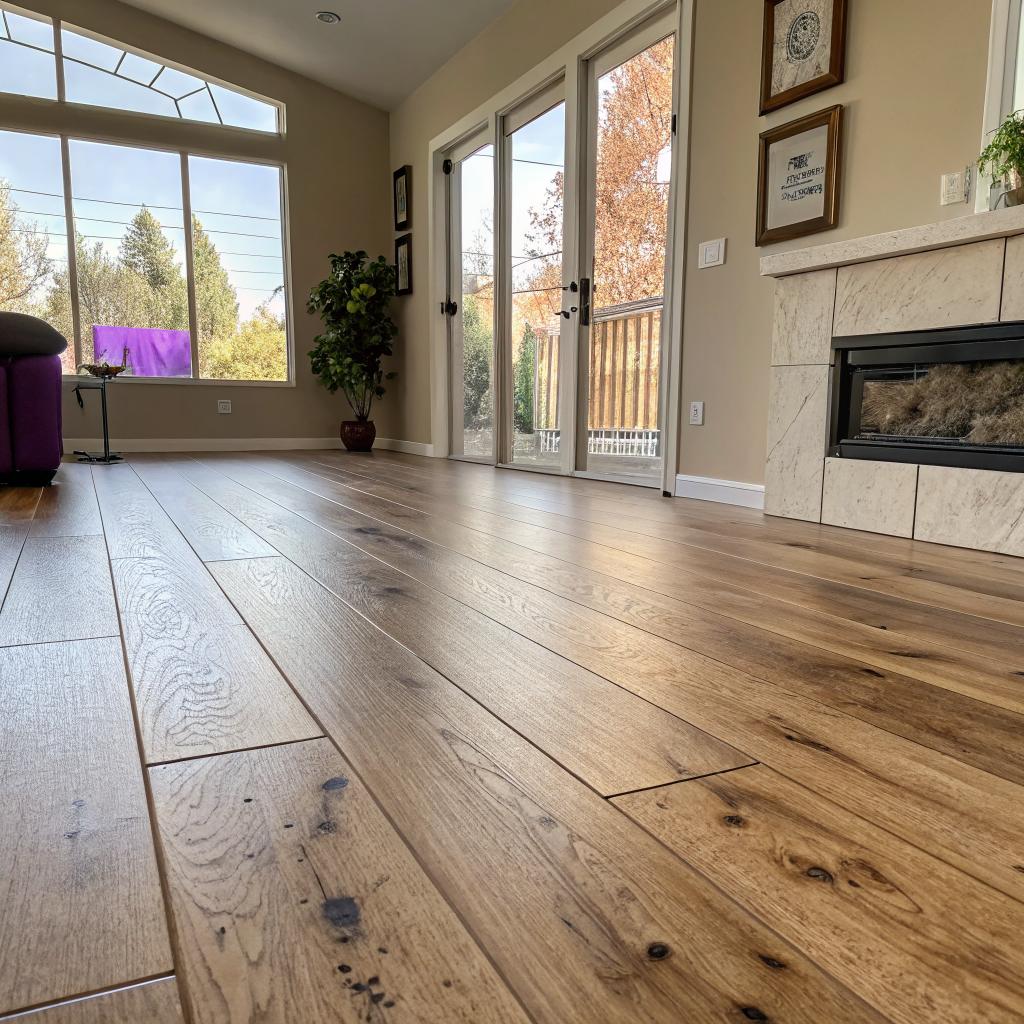
I used to think smart homes started with voice assistants and fancy thermostats. Then I moved into a place with old, creaky floors, and suddenly all the tech felt less smart and more annoying.
If you want a smart home that actually feels smart, you start from the floor. For a lot of people in Denver, that means choosing laminate flooring Denver CO because it is stable, easier to maintain, friendly to smart home gadgets, and far more practical than many people expect.
Why the floor matters more than your gadgets
When people think about a smart home, they jump straight to Wi‑Fi cameras, smart speakers, or maybe a robot vacuum. The floor just feels like a background detail.
But your floor does at least three quiet, unglamorous jobs that affect how well your tech works every single day:
- It sets the physical base for sensors, robots, and cables.
- It controls a lot of sound, comfort, and temperature.
- It shapes how often you clean, repair, or replace things.
If you are in Denver, you also have to deal with dry winters, huge temperature swings, and people tracking in snow, dirt, and road chemicals. All of that hits your floor first.
So when you pick something like laminate, you are not just choosing a look. You are choosing how your smart home ages, how noisy it is, and how often you will be messing with repairs instead of enjoying your gadgets.
A smart home that feels chaotic under your feet will never feel fully smart, no matter how advanced the tech is.
That is why starting with the floor is not just some design flex. It is a practical choice.
What laminate flooring actually is (and why tech people tend to like it)
Laminate has a bit of an image problem. Some people still think of the cheap-looking stuff from decades ago that scratched if you looked at it wrong.
Modern laminate is not that.
At a simple level, laminate is a multi-layered board that clicks together over a subfloor. No hidden magic. Just layers that each do a job:
| Layer | What it is | Why it matters for a smart home |
|---|---|---|
| Wear layer | Clear, tough surface that resists scratches and stains | Handles robot vacuums, desk chairs, pet claws, and dropped gadgets |
| Design layer | Printed image that mimics wood or stone | Lets you match your tech style without the risk of real wood everywhere |
| Core layer | High-density fiberboard or similar material | Gives stability in Denver’s dry air and seasonal changes |
| Backing layer | Moisture resistant base | Helps protect against vapor from below and extends life |
If you like tech, you probably appreciate things that are predictable and repeatable. Laminate is like that. You are not rolling the dice on each plank the way you might with natural wood.
The patterns are controlled. The tolerances are tight. The click systems are designed to fit. That predictability translates into:
- Cleaner installs with less random gaps.
- More reliable results when you add area rugs, sensors, or baseboard lighting.
- A surface that behaves the same way in every room.
It is not perfect. It can still swell with standing water, it can chip if you abuse it, and cheap products can still look cheap. But compared to a lot of alternatives, it gives you a stable baseline.
How laminate flooring works with smart home tech
This is where things get more interesting if you are the kind of person who worries about Wi‑Fi signals, cable placement, or whether the robot vacuum will wedge itself between a rug and a floorboard.
Robot vacuums and mops
Hard floors are usually better for robots than carpet. Laminate has some simple wins here:
- Flat, predictable surface, so robots are less likely to get stuck or confused.
- Edges around transitions are usually cleaner than old warped hardwood.
- Dust and hair are easier to see and collect.
If you use a robot mop, there is a small catch. Many laminate products do not like heavy, standing water. Light mist mopping is usually fine, but flooding is not.
So if you run a robot mop, you need to:
- Check that your specific laminate is rated for light mopping.
- Use very low water settings.
- Avoid leaving puddles from leaks or spills.
This is one of those tradeoffs where tech people sometimes get carried away with features, then forget the floor has limits. If you want to go wild with water-based cleaning robots, laminate might not be perfect in every room, especially near entry doors where melting snow can pool.
Smart thermostats, sensors, and comfort
Your thermostat does not care what your floor looks like. But you do.
A hard, smooth surface behaves differently from carpet when it comes to:
- How quickly the room feels warm or cold.
- How much dust stays visible.
- How air from vents moves around.
In a Denver home with dry winter air, laminate paired with area rugs can hit a nice balance. You get:
- Cleaner air than thick wall-to-wall carpet, which locks in dust.
- A surface that works well with air purifiers and standalone sensors.
- A predictable base if you ever add smart vents or underfloor sensors.
You can also pair laminate with radiant heating systems in some setups, but this is where you should be careful. Not all laminates are happy over heated floors, especially if temperatures go too high. Some are rated for it, some are not.
If you are thinking about underfloor heating plus laminate plus smart thermostats, that is one of those cases where you should talk to an installer and check the exact product specs. Otherwise you may end up chasing weird expansion issues, and no smart sensor will fix a floor that is buckling.
Smart lighting and cable routing
Low profile floors like laminate give you more freedom for subtle lighting and wiring tricks:
- LED strips along baseboards look cleaner when the floor is flat and consistent.
- Cable covers for Ethernet or speaker lines sit more evenly.
- Thresholds between rooms can hide small runs of cable.
You cannot run power lines inside the laminate itself, obviously. But if you plan early, you can:
- Place conduit near the edges before the floor goes in.
- Mark anchor spots for floor lamps or charging stands.
- Decide where you want permanent gear vs. movable gear.
A lot of smart home setups look messy not because the gear is bad, but because the foundation was never planned. The floor is part of that base layer of planning.
Think of your floor as the “hardware layer” of your house. If that layer is unstable, every “software” upgrade on top of it feels harder than it should.
Laminate vs hardwood in a Denver smart home
People in Denver love hardwood. There is a certain pride in saying your place has real oak or walnut floors. And they can look great, no argument there.
But from a tech-minded, practical point of view, laminate can win in more categories than many people expect.
Here is a simple comparison:
| Factor | Laminate | Hardwood |
|---|---|---|
| Upfront cost | Usually lower material and labor | Higher, especially for quality wood |
| Durability vs scratches | Good to very good surface resistance | Can scratch easily, needs refinishing |
| Refinishing | Cannot really refinish, usually replace | Can be sanded and refinished multiple times |
| Water tolerance | Short term spills usually fine, standing water is bad | Sensitive to moisture and spills, warping risk |
| Consistency | Uniform pattern and thickness | Natural variation in color and grain |
| Smart robot friendliness | Very good surface for vacuums and mops (with care) | Good, but finish may wear faster in traffic lanes |
| Dry Denver climate response | Stable if installed right and acclimated | Can shrink or gap with low humidity |
If you are a purist, hardwood still wins on long term character and the ability to refinish. A well kept hardwood floor can be sanded and renewed after decades, while laminate is more of a “when it is worn, replace it” choice.
But if your brain works in terms of cycles, costs, and uptime, laminate starts to look like a reasonable trade.
You spend less upfront.
You accept that replacement is the path instead of refinishing.
You get a surface that works well with your day to day devices.
It is not that one is better in every way. It is that for a tech heavy home where things move, roll, and get updated often, laminate plays nicer with that lifestyle.
Denver specific challenges for smart-friendly flooring
Living in Denver means your floor deals with conditions that are not always kind:
- Dry winter air that can drop indoor humidity below 25 percent.
- Big daily temperature swings, especially in older homes.
- Snow, slush, and de-icing chemicals tracked in on boots.
- Strong sun that can fade some flooring over time.
Each of these matters if you want your smart home setup to feel reliable.
Humidity and expansion
Both hardwood and laminate respond to changes in humidity. Wood swells in moisture and shrinks in dry air. Laminate has a stable core, but it is not immune.
If the floor swells or contracts too much, you get:
- Gaps between boards.
- Edge lifting that can trip robot vacuums.
- Noise when you walk or roll chairs.
The fix is not very high tech:
- Acclimate the laminate in the home before installation.
- Leave the right expansion gaps at walls.
- Keep indoor humidity in a reasonable range, often around 35 to 50 percent if possible.
Using smart humidifiers or connected HVAC controls can actually help here. You are not just making the air more comfortable for you. You are reducing stress on the floor and by extension, on anything sitting or rolling across it.
Snow, moisture, and entryways
If you live in Denver and you do not protect the entryway, no floor will be happy, laminate or otherwise.
A realistic setup if you care about both flooring and smart gear:
- Use strong doormats outside and inside.
- Place a water tray or boot mat near the door.
- Keep a small towel or mop handy for melted snow.
This is not glamorous, but it is what prevents those “we had a puddle near the door for 6 hours and now the planks are swelling” issues.
If you use smart locks, smart cameras, and other tech at the entry, it is easy to get focused on the electronics and ignore the puddle under your shoes. That puddle is what will quietly destroy your nice laminate if you do not deal with it.
Sunlight and fading
Some laminates have good UV resistance. Some do not.
If you are planning a room full of screens, monitors, and smart blinds, you can actually use automation to protect both your eyes and your floor:
- Program blinds to close partially during peak sun hours.
- Move rugs or furniture occasionally to reduce obvious fade lines.
- Pick laminate that advertises strong fade resistance, especially for south-facing rooms.
Again, this is not about chasing perfection. It is about reducing long term wear in simple ways, helped by tech instead of fought by it.
Planning laminate floors around tech-heavy spaces
If you are the kind of person who has a home office with two or three monitors, a dock, a printer, maybe some IoT gear tucked in a corner, the floor under that setup matters a lot more than people think.
Home offices and rolling chairs
Rolling office chairs can eat through soft surfaces. Even real hardwood can show groove lines from constant rolling, especially without mats.
Laminate tends to handle chair wheels better because of its wear layer. Still, a few practical tips:
- Use soft casters on your chair instead of hard plastic ones.
- Add a chair mat if you work long hours in the same spot.
- Keep dust and grit cleaned up so it does not act like sandpaper.
You might think, “But that ruins the look of the floor.” Maybe a little. On the other hand, it trades a bit of visual purity for many more years of smooth function.
That trade feels familiar if you work with tech at all.
Server corners, racks, and heavy gear
If you run a small rack, a NAS stack, or anything heavy in a room with laminate, you do not want all that weight focused on sharp feet.
Simple fixes:
- Use pads or wider feet on stands and racks.
- Avoid dragging heavy towers across the floor.
- Plan where permanent heavy gear will live before the floor goes in.
You do not have to turn your living room into a data center, but a lot of tech people end up with more gear than they expect. It is easier to plan for that when the floor is still on the drawing board.
Media rooms and acoustics
Hard floors can make rooms more echoey. Laminate is no exception.
If you set up surround sound on a bare laminate floor with bare walls, it will sound sharp and harsh. That is not the floor being “bad,” that is just basic acoustics.
You fix it with:
- Area rugs in front of the TV or speakers.
- Soft furniture that absorbs some sound.
- Bookshelves or panels that break up reflections.
The nice part is that laminate gives you a clean, flat base, then you tune the sound with rugs and furniture. It is similar to starting with a neutral chassis and customizing components.
A smart home should not only respond to your commands. It should feel good to move through, sit in, and listen to. The floor is part of that feeling.
Common mistakes people make with laminate in a smart home
There are a few repeating patterns that cause headaches. None of them are very glamorous. They are all very avoidable.
Ignoring the subfloor
People focus on the pretty top surface and forget what is underneath.
If the subfloor is uneven, your laminate will:
- Flex or bounce in spots.
- Click loudly when you walk.
- Confuse robot vacuums if edges shift.
Tech people often obsess over “layers” in software but do not always think about the literal layers under their feet. An installer who pays attention to leveling, underlayment, and moisture barriers prevents a lot of future noise, both physical and mental.
Mixing cheap product with expensive gear
It is a little strange to see a room with thousands of dollars in smart lighting, speakers, and displays sitting on the cheapest possible laminate.
You can do that. It works. But it also sets you up for:
- Chips at the edges from small impacts.
- Surface patterns that repeat so often they look fake.
- Click joints that loosen sooner.
You do not need the most expensive option. You just need something that matches the level of everything sitting on top of it. The floor is not a throwaway part if you care about the rest of the system.
Skipping transition planning between rooms
Smart homes rarely stay confined to one room. Sensors, hubs, and automations cross boundaries.
If you have different flooring heights or weird transitions, you end up with:
- Robot vacuums that cannot cross certain thresholds.
- Cable channels that catch feet or wheels.
- Trip spots right where people pass most often.
When you plan laminate, think in zones, not just isolated rooms:
- Can a robot move from living room to hallway to bedroom smoothly?
- Do you need different floor types in kitchens or baths, and how will those meet the laminate?
- Where will your main hub and routers sit relative to those paths?
This is not fancy design theory. It is just “will this floor get in the way of the tech I keep adding.”
When laminate is not the best choice
I do not think laminate is perfect. There are cases where it is not the smartest pick, even if you love tech.
Situations where you might want something else:
- Rooms with frequent standing water, like certain basements or some bathrooms.
- Spaces where you want the long term patina and repairability of real hardwood.
- Historic homes where laminate would clash badly with the existing style.
Also, if you already have solid hardwood in decent shape, ripping it all out just to put in laminate usually makes no sense. You can refinish, repair sections, and still run all your smart gear on top of it.
That is one place where people go too far. They get into a “new is better” mindset and forget that smart can mean “use what is already good and integrate around it.”
How to think about cost vs benefit like a tech project
If you approach flooring like a tech person, you start asking questions that sound less like interior design and more like project planning.
Some practical questions:
- What rooms have the highest traffic, both human and robot?
- Which areas will see the most cables, stands, and mounts?
- Where are your current routers, hubs, or control panels located?
- How often are you realistically willing to redo floors?
Then you look at the trade:
- Laminate has a lower install cost and holds up well for 10 to 20 years if treated right.
- Hardwood costs more, can last much longer with refinishing, but needs more care.
- Tile is tough in wet areas, but hard on feet and sometimes on gadgets that get dropped.
You can mix types by zone.
For example:
- Laminate in living rooms, halls, and bedrooms where tech and traffic mix.
- Tile in bathrooms and entry areas with more water exposure.
- Possibly keep or add hardwood in a main level if your home already leans that way.
The key is to pick something that matches not only how the space looks, but how you actually live in it with your devices.
If your floor choice ignores your daily habits, your smart home will feel a little dumb around the edges again.
Q & A: Common questions about laminate flooring in a tech-heavy Denver home
Q: Will laminate flooring mess with my Wi‑Fi or signals?
A: No. Laminate is not metal and does not block signals like that. Your walls, layout, and router quality matter much more. The floor mainly affects how you place routers and devices, not the signal itself.
Q: Is it safe to use a robot mop on laminate?
A: Often yes, if you use light water settings and quick drying. Pooling water is the real risk. Check your laminate product guidelines, avoid heavy soaking, and wipe up any spills. If you want aggressive wet mopping, consider using it only on tile areas.
Q: Does laminate feel cold underfoot with smart thermostats?
A: It can feel cooler than carpet but often similar to hardwood. Area rugs fix this in high-use spots. Smart thermostats and some radiant systems can help, but you must pick laminate that is approved for heated floors if you go that route.
Q: How long does a good laminate floor last in a busy, gadget-filled home?
A: Quality laminate, installed well, can easily handle a decade or two of normal use in Denver, even with robot vacuums and rolling chairs, as long as you manage moisture and grit. Cheap laminate or poor installation tends to fail much sooner.
Q: Is laminate a bad choice if I might sell the house later?
A: Not automatically. A clean, modern laminate floor can appeal to many buyers, especially in starter homes or condos. In some higher-end markets, buyers still prefer real hardwood, but a worn, noisy old floor is worse than a neat laminate floor in nearly any price range.
Q: If I am starting from scratch, what is one simple way to think about this?
A: Ask yourself: “Do I want a floor that behaves like reliable hardware I can trust for a long stretch, or do I want something more like a long-term investment that I am willing to service and refinish?” If you lean toward the first, laminate in Denver makes sense. If you lean toward the second and do not mind extra care, hardwood might be worth it.