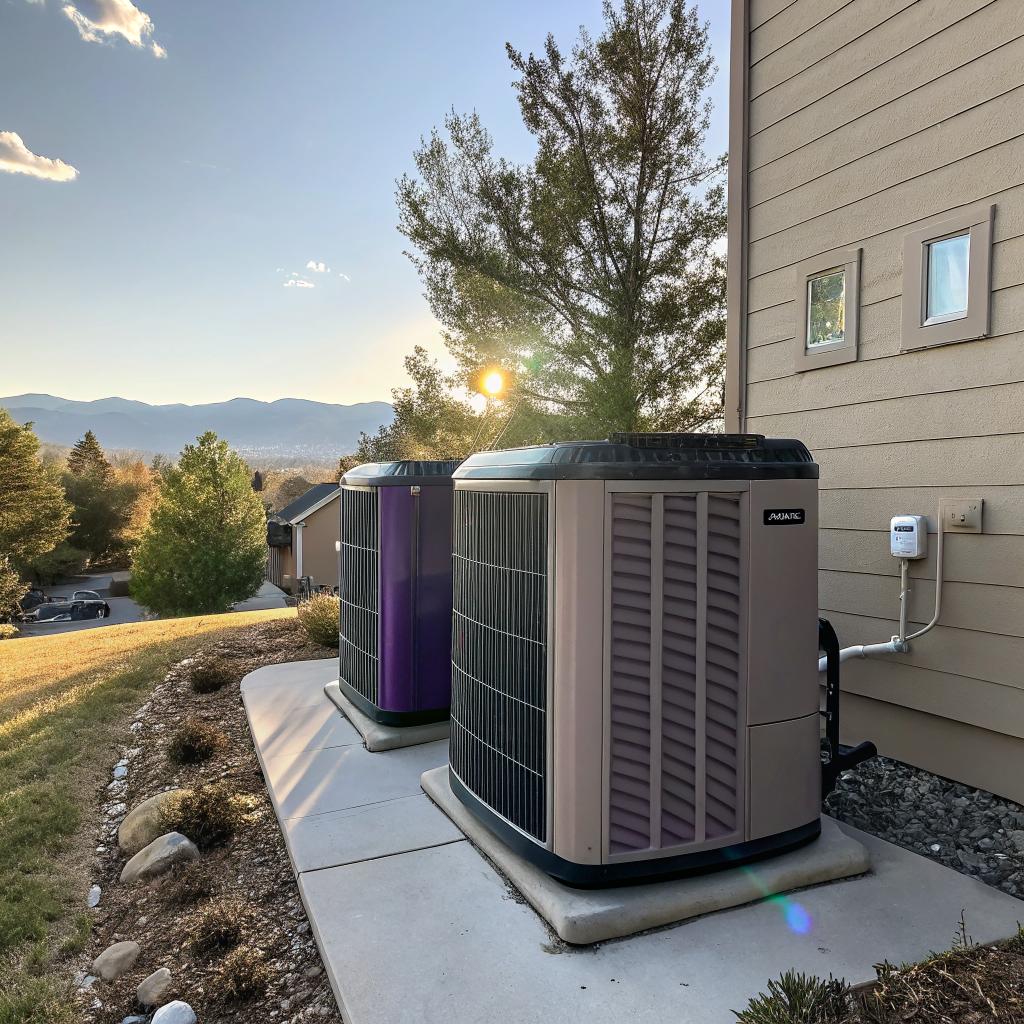
I used to think a furnace was just a furnace and that was the end of the story. Then I moved somewhere with wild temperature swings and realized heating and cooling can get a lot smarter than just “on” and “off.”
If you live in Colorado Springs and want a plain answer: dual fuel heat pumps are usually worth it if you care about comfort across big temperature swings, want lower energy bills over time, and like tech that actually does something useful in your house. A dual fuel setup pairs an electric heat pump with a gas furnace. The system runs the heat pump when outside temps are moderate, then switches to gas when it gets really cold. In a climate like Colorado Springs, that means you use cheaper, cleaner heat most of the year, and still have strong, reliable heating when winter snaps. If you want to go straight to a local pro that deals with this stuff every day, you can look at dual fuel heat pumps Colorado Springs CO for specific options and pricing.
Now, if you are still reading, you probably want the “how” and the “why,” not just the sales pitch. So let us unpack this a bit.
What a dual fuel heat pump actually is
A lot of people hear “heat pump” and picture some experimental gadget that only works in warm states. That is not quite right anymore.
A dual fuel system is basically:
- An electric heat pump that can both heat and cool
- A gas furnace that steps in when it is too cold outside
- A smart controller or thermostat that decides which one runs
In cooling mode, it acts like a regular central AC. In heating mode, it pulls heat from outside air and moves it indoors. When outside air gets very cold, the heat pump has to work harder, and at some point your gas furnace can heat the house more cost effectively.
The cool part, at least for people who like tech, is the control logic:
A dual fuel heat pump watches outdoor temperature and sometimes energy prices, then automatically switches between electric and gas heat to keep your comfort up and your bills down.
So instead of you guessing which system to run, the controller makes the call based on rules and sensor data.
Is it perfect? No. It is still limited by your utility rates, by how your house is built, and by the quality of the install. But it is a lot smarter than a single-stage furnace that blasts on and off with no nuance.
Why Colorado Springs is almost built for dual fuel
Colorado Springs has a kind of awkward mix of weather:
- Cold nights, sometimes very cold in winter
- Plenty of mild, sunny days even in colder months
- Dry air that makes temperature shifts feel sharper
- Elevation that can push systems a bit harder
If you only have a gas furnace, you are paying for gas even on those mild 40 to 60 degree days where a heat pump could handle everything at a lower cost.
If you only have a standard heat pump with electric backup strips, your winter bills can jump when it dips below freezing, because electric resistance heat is not cheap.
Dual fuel tries to land in the middle:
In Colorado Springs, a dual fuel heat pump tends to use electric heat on mild days, then hand things off to gas in deeper cold, which fits the climate pattern pretty well.
You are not forced into a single energy source that is always “on duty” no matter the conditions. The system picks the stronger player for the situation.
Is this always cheaper? That depends on gas vs electric prices in a given year. Sometimes gas is low, sometimes electric is more stable. Dual fuel gives you a bit of flexibility and some resilience if one fuel cost spikes.
How the switching logic usually works
This is the part many tech-minded people care about: how does the system decide when to run which heat source?
At the simplest level, most dual fuel controls are based on:
- Outdoor temperature (from a sensor)
- Indoor temperature and setpoint
- How fast your house loses heat
- System capacity and balance point
The key term many installers talk about is the “balance point.” That is the outside temperature where your heat pump can just barely keep up with your heating needs without help.
Above the balance point:
The heat pump can supply enough heat on its own. It runs like a normal heat pump. No gas.
Below the balance point:
The heat pump struggles. The system either adds gas heat or switches completely to the furnace.
Modern thermostats, especially smart ones, make this less manual and more data driven. Some will:
- Track how often your heat pump runs at different outdoor temperatures
- Notice when it cannot maintain setpoint without running almost non-stop
- Adjust when to swap to gas based on that pattern
Think of the balance point as the “break even” point where the system decides the gas furnace can do the job with less effort and maybe lower cost than the heat pump.
This logic is not perfect from day one. It can need some tuning. That is where a good installer actually matters.
Dual fuel vs traditional HVAC: a quick comparison
To keep this simple, here is a basic comparison of three common setups:
| System Type | How it Heats | How it Cools | Strengths | Tradeoffs |
|---|---|---|---|---|
| Gas furnace + standard AC | Natural gas furnace only | Conventional AC condenser | Strong heat in very cold weather; familiar tech | No flexible fuel use; no electric heating option for mild days |
| Electric heat pump (no gas) | Heat pump + electric resistance backup | Heat pump in cooling mode | Single fuel source; can be clean if grid mix is clean | Can get expensive in deep cold; may feel weaker at low temps |
| Dual fuel heat pump | Heat pump for mild temps, gas furnace for deep cold | Heat pump in cooling mode | Fuel flexibility, better match to variable weather, often lower seasonal costs | Higher install cost; more setup choices; more to maintain |
This table is simplified on purpose. It does not cover every nuance, but it should help you place dual fuel in your mental map of HVAC options.
What “smart comfort” actually feels like day to day
The phrase “smart comfort” is thrown around a lot. So, what changes in real life when you have a dual fuel system?
You might notice some of this:
- More even temperatures in rooms that used to swing hot and cold
- Shorter, quieter heating cycles during shoulder seasons
- Less of that blast of very hot air followed by a chill when the furnace cycles off
- Better control with a smart thermostat that knows which equipment is connected
On mild days, the heat pump often runs longer, lower intensity cycles. That can feel more stable and less “on/off.” When a cold front drops temperatures hard, the gas furnace comes in and raises the indoor temperature faster.
So you get a mix of:
- Steady, gentle heat from the heat pump
- High-output heat from gas when you really need it
If you like graphs and logs, you can connect certain thermostats to an app and see the runtime of both systems. For some people, watching that is half the fun.
Is it possible you will not notice much difference? Yes. If the system is sized badly or ductwork is poor, smart controls cannot fully cover that. Comfort always starts with good design, not just better equipment.
Cost, savings, and the payback question
Most people eventually get to: “Does this actually save me money or is it just a clever gadget?”
The honest answer is “it depends on your house and rate structure,” and I know I am slightly breaking your rule there, but that is the truth. Still, we can break it down in a more useful way.
Upfront cost vs operating cost
In general:
- A dual fuel system usually costs more up front than a basic furnace + AC combo.
- It can save money on your gas bill by shifting some heating to electricity.
- Your electric bill will go up in winter, but the combined cost can be lower over the year.
The real question is how many years it takes for the lower operating cost to catch up to the higher install cost.
Rough example just to give shape:
| System | Approx Install Cost | Typical Annual Heating Cost (very rough) |
|---|---|---|
| Furnace + AC | Baseline | Medium |
| Electric heat pump only | Baseline or slightly higher | Medium to high, depending on winter temps |
| Dual fuel heat pump | Higher than baseline | Low to medium, depending on usage and pricing |
These values are not meant as real quotes. They just show the direction of things.
Energy tariffs and grid mix
If your electricity is partly from wind or solar, then:
- Running the heat pump more can lower your carbon footprint.
- Time-of-use rates might reward heating during off-peak hours.
Gas, on the other hand, tends to have:
- High heat output per dollar of energy
- Less exposure to short-term grid issues
Dual fuel lets you hedge a bit. You are not fully stuck on one source. If power prices jump, the gas side still works. If gas jumps, you can lean on the heat pump more.
For many Colorado Springs homes, the “win” of dual fuel is not only lower bills, but not being locked into a single energy source as prices shift year to year.
How dual fuel heat pumps tie into smart home tech
If you like connected devices, a dual fuel system is not just a mechanical upgrade. It is a new node on your home network.
Smart thermostats and control logic
Most dual fuel systems pair well with:
- Learning thermostats that track your habits
- Wi-Fi thermostats that allow remote access
- Home automation hubs that can react to other sensors
Examples of what you can do:
- Use geofencing so the system preheats before you arrive home.
- Lock in a lower setpoint when your security system is in “away” mode.
- Switch to a more aggressive gas heating profile during a cold snap warning.
None of this is required. You can run a dual fuel system on a more basic thermostat. But if you are reading a tech-focused site, there is a good chance you will enjoy poking at the settings and data.
Monitoring energy use
If you add an energy monitor or use a thermostat that exposes data, you can:
- See the runtime split between the heat pump and the furnace.
- Track approximate kWh and gas usage over a month.
- Test small changes to your balance point to see how bills react.
This makes heating feel less like a black box and more like a tunable system.
I will say though, many people over-tweak at first and then get tired. The best setup is often one you adjust a few times, then leave alone for months.
Key design choices for a Colorado Springs dual fuel install
Not every dual fuel setup is the same. Some choices matter more than others.
Choosing the heat pump capacity
The heat pump should be sized for:
- Your home’s heat loss at moderate winter temps
- Reasonable cooling performance in summer
- Noise and cycling behavior
Bigger is not always better. An oversized system can:
- Short-cycle, which feels less comfortable
- Use more power than needed
- Wear parts faster
A right-sized or slightly smaller heat pump might run longer, but more steadily, which often feels better indoors.
Balance point strategy
Installer A might set your balance point at, say, 35°F.
Installer B might set it at 25°F.
Which is better? That depends on:
- How well insulated your home is
- Your tolerance for slightly cooler supply air from the heat pump
- Your local rates for gas vs electric
You can ask your installer what balance point they are targeting and why. If they cannot explain it in plain words, that is a mild red flag.
Thermostat selection
You do not need the most expensive smart thermostat, but you do want:
- Explicit support for dual fuel systems
- Control of outdoor balance point or at least adjustable staging
- Clear information on which heat source is currently active
This helps avoid situations where the furnace runs too often when the heat pump could have handled it.
Comfort quirks and what to expect
No system is magic. There are a few quirks that catch people off guard.
Supply air temperature feels different
Gas furnaces usually push out hot air that can feel toasty at the register.
Heat pumps, in heating mode, often:
- Deliver air that is warm but not hot
- Run longer to gradually maintain room temperature
Some people think “the heat pump is not working” because the air does not feel as hot as a furnace blast. But if the room temperature is steady, it is doing its job.
The dual fuel setup softens this because:
- You get the gentle heat pump feel in mild weather.
- You get the hot furnace feel in deep cold.
You just need to know that the system is designed that way so you do not misjudge it.
Defrost cycles in winter
Heat pumps in cold air can collect frost on the outdoor coil. The system sometimes runs a defrost cycle to clear that.
During defrost, you might notice:
- A brief pause or shift in sound outside
- Supply air inside feeling cooler for a short time
With dual fuel, the gas furnace can sometimes help during defrost in very cold weather, so the indoor impact is less obvious. Still, it is one of those details that surprises new owners.
Dual fuel vs ground source heat pumps in Colorado Springs
You might have also heard of ground source (or geothermal) heat pumps. They pull heat from the ground instead of air.
In a simple comparison:
| Feature | Dual Fuel (Air Source + Gas) | Ground Source (Geothermal) |
|---|---|---|
| Heat source | Outdoor air + gas backup | Underground loop |
| Install complexity | Moderate, similar to typical HVAC with some control tweaks | High, with drilling or trenching needed |
| Upfront cost | Higher than basic furnace + AC | Much higher, especially with loop field |
| Operating cost | Low to medium | Very low once installed |
Ground source systems can be very cheap to run, but the install cost and yard disruption are non-trivial. Dual fuel offers a middle path that fits more existing homes without large outdoor work.
If you like the idea of electrification but are not ready for a full geothermal project, dual fuel is a kind of step in that direction, while keeping gas as a backup.
When a dual fuel system might not be the right choice
I do not think dual fuel is perfect for everyone, and this is where I will push back a bit against the usual “it is always great” narrative.
Cases where it might not make sense:
- Your gas prices are very low and likely to stay low in your area.
- Your existing furnace and AC are fairly new and still in good shape.
- Your home is very leaky or poorly insulated, so any system will struggle.
- You do not care about smart controls or tinkering at all.
In some of these cases, spending on better insulation, air sealing, or simple upgrades to existing equipment may give more benefit per dollar than jumping straight to dual fuel.
There is also the maintenance angle. Two heating methods mean:
- Two sets of components to check
- More possible points of misconfiguration
If you never service equipment and rarely replace filters, a more complex system can become more of a headache. That is not the system’s fault, but it is real.
Questions to ask an HVAC contractor before you commit
If you are thinking about a dual fuel install in Colorado Springs, here are some practical questions to ask. These can help you separate someone who just wants to sell equipment from someone who has thought through the setup.
1. How did you size the heat pump and furnace?
Look for an answer that mentions:
- A heat loss / heat gain calculation, not just “same size as your old one”
- Consideration of insulation, windows, and air leakage
If the answer feels vague, press again. The load calculation is boring but central.
2. What balance point are you planning, and why?
You should hear something like:
- A specific outside temperature range
- A reason tied to local climate and your house
- Willingness to adjust this later if usage data suggests a change
If they say “we just set it to factory default,” that is not ideal.
3. Which thermostats do you support for dual fuel, and what will I see on the screen?
Good answers include:
- Models with clear indication of which stage or fuel is running
- Access to runtime history or at least status logs
- Explanation of lockout temperatures or automated fuel switching
You want to know how much control and visibility you will actually have.
4. What maintenance schedule do you recommend?
Look for basic, clear steps:
- Filter changes
- Outdoor unit cleaning
- Gas furnace safety checks
If the contractor cannot outline a simple plan, that does not inspire confidence.
A short real-world style scenario
Consider a typical Colorado Springs home:
- 2,000 square feet
- Existing gas furnace and older AC
- Owner works from home part time and likes a steady 70°F
They replace the AC with a dual fuel heat pump and keep a compatible gas furnace.
What changes across the year?
- Spring and fall: The heat pump handles most heating. Bills are modest. System runs quietly in longer cycles.
- Summer: The heat pump runs as an efficient AC. Nothing dramatic, maybe a bit better humidity control.
- Cold snaps in winter: Furnace runs more hours. The owner sees a brief spike in gas use but less than in previous years, since many milder days are handled by the heat pump.
After a couple of seasons, they adjust the balance point slightly lower based on utility bills. That shifts more heating to the heat pump. They accept a bit cooler supply air for the trade of slightly lower gas usage.
It is not a dramatic story. There is no grand moment of revelation. It is more like a gradual “oh, this feels better and costs a little less.”
Q & A: Common questions about dual fuel heat pumps in Colorado Springs
Q: Will a dual fuel heat pump keep my house warm during a really harsh cold snap?
A: If sized correctly and paired with a capable gas furnace, yes. During very low temperatures, the system will lean on the gas furnace, which is usually stronger at those extremes. The heat pump may still run, but the furnace carries most of the load.
Q: Do I need a smart thermostat, or can I keep something basic?
A: You do not need a fancy thermostat, but you should use one that supports dual fuel logic. If you go very basic, the system might not switch between heat pump and furnace in the most sensible way. A mid-range Wi-Fi thermostat that understands dual fuel is often a good balance.
Q: Is the noise level higher than a normal furnace and AC?
A: Often it is the opposite. Many modern heat pumps are quieter than older AC units, especially in low or medium stages. Indoors, the furnace sound is similar to what you already know. The main difference is that the heat pump might run more often at low speed, which some people actually prefer because it blends into the background.
Q: What happens if there is a power outage in winter?
A: Both the heat pump and the furnace need electricity for controls and fans, so neither will run in a full outage without a backup power source. Gas alone does not save you if the furnace cannot power its blower. If outages worry you, it can be worth looking at a small backup generator sized for your HVAC and some lights.
Q: Will I really see a big drop in my energy bills?
A: “Big” is the tricky word. Many homeowners see noticeable savings compared to old, less efficient equipment, especially if they had outdated AC and a low-efficiency furnace. If you already have modern high-efficiency gear, the savings may be smaller. The main gains come from using the heat pump during those many mild days when gas heat would be overkill. The more moderate weather you have, the more the dual fuel approach tends to pay off.