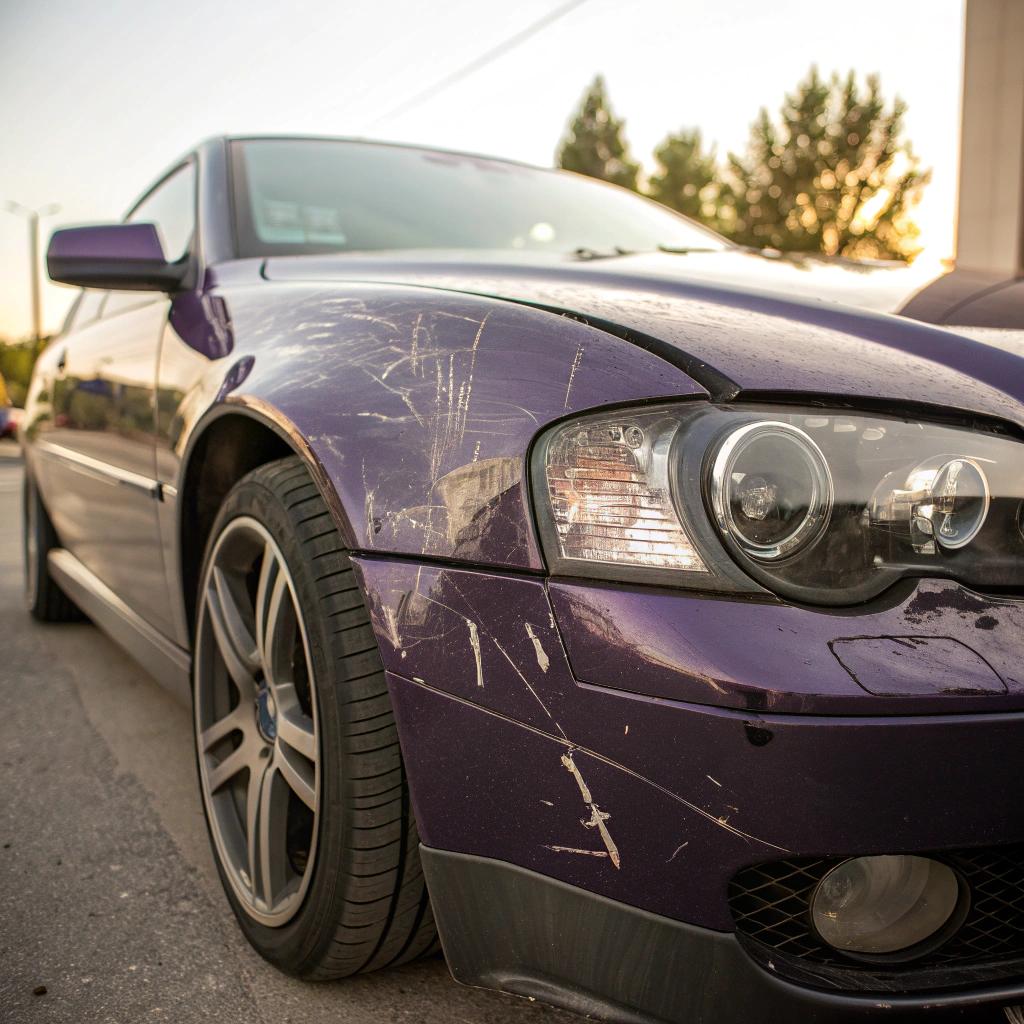
I used to think a scratch on my car was just cosmetic, something I could ignore until it really bothered me. Then I saw what a neglected chip did to a friend’s Tesla door after one winter and a lot of road salt, and I changed my mind pretty fast.
If you want the short version: treat scratches and dents like you treat a cracked phone screen. Small damage is manageable and relatively cheap if you fix it early, but it can spread, cost more, and quietly ruin the “system” under the surface if you leave it alone. For most drivers, the smart path is a mix of quick DIY for tiny flaws and professional auto scratch and dent repair from a trusted shop once the damage gets deeper, wider, or involves sensors, lights, or panels near safety tech.
Why tech drivers should care about small damage
Cars are not just mechanical anymore. Your car is closer to a rolling computer with metal and paint wrapped around it. And that means scratches and dents are not only an appearance issue.
If you drive a modern car with driver assist features, sensors, cameras, and a lot of electronics, you need your body panels to stay in good shape. That thin layer of paint and clear coat does more than look nice. It protects metal, prevents rust, and keeps sensor alignment and radar surfaces consistent.
Tiny scratches turn into big bills when they expose bare metal or sit near sensors, cameras, or trim pieces that house electronics.
So, yes, that scratch on your bumper is annoying. But it can also affect how well your car holds value, how your radar or parking sensors behave, and how long your car can go without deeper body work.
If you are not sure whether your damage is small enough to handle at home, or already in “shop territory”, a professional service like auto scratch and dent repair is usually the safest route once you see metal, cracks, or misaligned panels.
Understanding the different types of scratches and dents
Not every scratch is the same. The smart way to approach repair is to first figure out what kind of damage you are dealing with.
The layers of your car’s paint
Think of your car’s surface like a very simple stack:
| Layer | What it is | Why it matters for repair |
|---|---|---|
| Clear coat | Transparent protective layer on top | Most light scratches stay here and can be polished out |
| Color coat | Paint that gives your car its color | If scratches reach this layer, they usually need touch up paint |
| Primer | Base coat that helps paint stick to metal | Visible primer means deeper damage and more careful repair |
| Metal or plastic | Body panels, bumper covers, etc. | If you can see or feel bare material, you should not ignore it |
When you look at a scratch, try to answer three questions:
- Can I feel it with my fingernail?
- Can I see another color under the main paint?
- Is the area near sensors, cameras, lights, or charging ports?
If your fingernail barely catches and you only see a white scuff on dark paint, it is probably in the clear coat. If you see a different color, grey primer, or silver metal, the damage is deeper.
Types of scratches
Here is a simple way to think about scratch types.
| Type of scratch | How it looks | Typical fix | DIY friendly? |
|---|---|---|---|
| Surface scuff | White or colored mark that sits on top of paint, often from another object rubbing | Polish or rubbing compound, sometimes just cleaner | Usually yes |
| Clear coat scratch | Visible line, nail catches lightly, same color underneath | Wet sanding (light), polishing, re-sealing | Yes, for careful users |
| Paint layer scratch | You see primer or different shade of paint | Touch up paint, blending, maybe filling | Sometimes, but results vary |
| Deep scratch to metal or plastic | Metal, grey plastic, or rust is visible | Filler, sanding, repainting panel | Better left to a shop |
Types of dents
Dents are more about shape than color.
You will typically see:
- Soft dents with no paint damage, often fixable with paintless dent repair.
- Dents with cracked paint, where moisture and rust risk increase.
- Creased dents along body lines, which can be tricky even for a good tech.
- Impact dents near seams, doors, or bumpers that may hide structural shifts.
The general rule: if the dent has no paint damage, no sharp crease, and is small, a paintless dent repair specialist can often fix it. If paint is cracked or missing, you are back in scratch repair territory as well.
DIY vs professional repair: what is smart and what is risky
A lot of tech-savvy drivers like to tinker with their own gear. You may fix your own laptop, build your own PC, or swap your own phone battery. Car paint feels like it should be in the same category. Sometimes it is. Sometimes it is not.
If you would not try to re-solder a microscopic chip on a $1,000 GPU without the right tools, treat deep body damage the same way: some things are better for specialists.
Good candidates for DIY
DIY makes sense when:
- The scratch is in the clear coat only.
- The area is small, not in a highly visible spot, and not near sensors.
- You are okay with “better than before” instead of “factory perfect”.
Common DIY options:
- Scratch removal compounds
- Polishing kits with foam pads
- Touch up pens matched to your car’s color code
- Simple suction tools for small, smooth dents with no paint damage
These are like simple phone repairs: swapping a case, adding a screen protector, or polishing out a smudge. They are low risk if you follow instructions and stay patient.
Where professional repair makes more sense
Professional repair is smarter when:
- You see bare metal or plastic.
- The dent has a sharp crease or is on a body line.
- The damage sits near sensors, cameras, radar units, or headlamps.
- You plan to sell or trade in the car in the next year or two.
In a body shop, the techs do more than “make it shiny again”. They:
- Check if the panel is still aligned correctly.
- Match paint color under different lighting conditions.
- Test for rust, hidden damage, or panel stress.
- Use proper curing, sanding, and sealing steps so the repair holds up.
If you care about resale value or about how your car’s systems behave, that level of detail makes a difference.
Smart tools and tech that improve scratch and dent repair
Since you are reading a tech focused site, it is fair to ask: what is actually “smart” about this kind of repair now?
Quite a bit, actually. Repair work is not just sanding blocks and spray guns anymore.
Digital color matching
Old style paint matching relied heavily on visual judgment and skill. That still matters, but many shops now use digital tools to scan paint and match color code better.
How it often works:
- The tech reads your factory paint code from the door jamb or build data.
- A spectrophotometer scans your actual paint, including fade and tint.
- Software suggests mix formulas adjusted to your car’s current condition.
- The paint system dispenses exact ratios for a repeatable match.
For metallic, pearl, or special finishes, this level of accuracy matters. Without it, repaired panels can look slightly off in daylight or under street lights.
Paintless dent repair tools
Modern paintless dent repair uses:
- Special rods and levers that reach behind panels.
- Glue pullers that pull dents outward from the surface.
- LED reflection boards that highlight tiny distortions in reflections.
The LED boards are simple but very clever. They help the tech see even small waves in the metal that your eye might miss. It is a bit like how you might use grid patterns to see dead pixels on a monitor.
3D measurements and calibration for sensors
For cars with ADAS (advanced driver assistance systems), some body shops use 3D measurement systems and calibration rigs.
These can:
- Measure if a panel or frame point moved from factory position.
- Help reposition cameras and radar units to correct angles.
- Verify that sensors still “see” correctly after a repair.
If a slight shift in a camera mount means your lane keeping system reads lines wrong, a cosmetic repair suddenly becomes a safety issue. This is why smart repair is not just about polish and filler.
How tech drivers can “triage” damage like a pro
When you see a scratch or dent, try to treat it the same way you might handle a glitch on your main laptop. You would not panic, but you would not ignore it either.
Here is a simple triage approach.
Step 1: Inspect closely in good light
Move the car to a well lit area. Sunlight works, but it can also hide some defects. A bright overcast day or a garage with strong LED lights is ideal.
Look from different angles and distances. Run your fingernail across the scratch.
Ask yourself:
- How wide and long is it?
- Can you feel depth?
- Is it isolated or part of a group of scratches or a dent?
Step 2: Check what is under the paint
Try to see if you are only in the clear coat or if there is another color.
Signs of deeper damage:
- Grey or white showing under bright paint.
- Dark shadow or metal color under dark paint.
- Chipping or flaking edges, not just a line.
For dents, check if the paint is cracked. If there is any cracking, treat it as a scratch problem too.
Step 3: Notice what is around the damage
This is where tech drivers have to be a bit more careful.
Look around the area for:
- Parking sensors or round circles in the bumper.
- Camera lenses, especially in bumpers, grilles, or side mirrors.
- Radar panels, often behind plain plastic surfaces on the front.
- Charging ports on EVs and PHEVs.
If the damage is near these, or directly on a sensor housing, do not try to “pull it out” aggressively at home. You might fix the dent and break the sensor mount.
DIY scratch repair: a careful guide
You can fix some scratches yourself without turning your car into a patchwork experiment. The key is to stay realistic about what success looks like.
A smart DIY repair should make the damage less obvious, protect the surface, and avoid creating new problems. It does not have to erase every trace from every angle.
Surface scuffs and light clear coat scratches
For very light marks and scuffs, a simple process works:
- Wash the area with a gentle car shampoo and dry it with a soft microfiber towel.
- Use a clay bar or synthetic clay pad with lubricant if the surface feels rough.
- Apply a small amount of scratch remover or mild rubbing compound to a clean microfiber pad.
- Work it into the scratch area in small circles with light to medium pressure.
- Wipe clean and check your progress.
- Finish with polish and a wax or sealant to re-protect the clear coat.
Do not rush and do not press as hard as possible. You are slowly removing a thin layer of clear coat, not scrubbing a sink.
Touch up paint for deeper marks
Touch up paint can look great or terrible. Results depend more on patience than product price.
Basic steps:
- Find your exact color code from the car’s information sticker or manual.
- Buy touch up paint from the manufacturer or a trusted paint supplier.
- Clean the area and remove rust if any. For tiny rust spots, gently sand with very fine sandpaper.
- Use a fine brush or needle applicator, not the thick brush that often comes in the bottle.
- Apply thin layers, letting each layer dry fully before the next.
- Once level with the surrounding paint, very lightly wet sand and polish if needed to smooth edges.
This process is slow and requires a steady hand. If the scratch is in a highly visible place or you are picky about looks, a shop will likely get a better finish with blending and spray equipment.
Smart dent repair choices for tech heavy cars
Dents feel more dramatic than scratches, and they often are. A tight little door ding in a parking lot is one thing. A crushed corner on your bumper is another.
When paintless dent repair is a smart option
PDR (paintless dent repair) is good when:
- The paint is not cracked or missing.
- The metal or plastic is not sharply creased.
- The dent is not at a structural seam or very close to panel edges.
PDR is often faster and can be less costly than full body work. It also keeps original paint thickness and factory finish, which can matter for resale.
But there are limits. Very tight, deep dents or ones that stretch the metal too far cannot always be restored perfectly with PDR alone.
Dents in bumpers and smart bumpers
Many bumpers now carry:
- Parking sensors
- Rear cross traffic sensors
- Radar units for adaptive cruise control
- Wiring harnesses and control modules
So a “simple” bumper dent can involve a lot more than plastic.
When that happens, a shop may:
- Remove the bumper cover entirely.
- Check all inside mounts, retainers, and wires.
- Scan the car for fault codes after reassembly.
- Perform sensor calibration if mounts were disturbed.
It may sound like overkill for what looks like a parking lot tap, but with modern systems, small alignment errors can create weird behavior that shows up weeks later.
Cost, insurance, and timing: making smart financial choices
Money is part of the decision too. Some people ignore damage because they assume repair will cost a fortune. Sometimes that is true. Sometimes it is not.
Typical cost ranges
These are rough ideas. Actual prices vary by region, car model, paint type, and the shop itself.
| Type of repair | Example damage | Rough price range (USD) |
|---|---|---|
| DIY scratch kit | Light clear coat scratch on door | $20 – $60 in materials |
| Professional buffing / polishing | Multiple light scratches, no metal showing | $100 – $300 |
| Small touch up by shop | Single narrow scratch to primer or paint layer | $150 – $400 |
| Panel repaint | Door or fender with deep scratches or chips | $300 – $800 per panel |
| Paintless dent repair | 1 – 3 small dents with no paint damage | $100 – $300 per dent, often less in bundles |
| Bumper repair / repaint | Scraped, cracked, or dented bumper corner | $300 – $1,000 depending on sensors and materials |
These are not hard rules, but they give you an idea of scale. Compare those numbers to your insurance deductible and your own tolerance for cosmetic flaws.
When to use insurance and when to pay yourself
Using insurance for smaller repairs can be a mixed decision.
On one hand:
- If damage is tied to a covered collision, your policy might help.
- Larger repairs with frame or sensor work can quickly pass your deductible.
On the other hand:
- Multiple small claims can affect premiums over time.
- If cost is close to your deductible, paying out of pocket may be simpler.
So you need to think a bit like you would with phone or laptop insurance. Not every cracked corner is worth a claim, but serious, expensive damage often is.
Keeping your high tech car looking good with less effort
Prevention is boring, but it works. A few simple habits can reduce how often you deal with scratches and dents in the first place.
Parking choices that actually help
This is not about parking far away from everyone every time, although that can help if you are patient. There are smaller changes that matter:
- Avoid tightly packed spots next to large SUVs with wide doors.
- Watch for shopping cart zones and windy corners in parking lots.
- Pick end spots where only one car can park next to you.
- Skip spots near crowded entrances if there is more space further out.
These little choices can cut door dings and mystery scratches quite a bit.
Simple protection for high contact areas
For tech heavy cars, some panels take more abuse:
- Front bumpers and hood from road debris.
- Door edges in tight garages.
- Rear bumper lip where luggage slides in and out.
You can protect these areas with:
- Paint protection film (PPF) on front clip, mirrors, and high impact zones.
- Clear door edge guards.
- Rear bumper and trunk sill guards.
These are often clear and not very visible, and they reduce the number of deep chips that reach the paint layer or metal.
Regular washing and basic care
Dirt, salt, and grime act like sandpaper on your paint over time. For tech drivers, this can also affect cameras that rely on clean lenses.
A simple routine helps:
- Hand wash or touchless wash regularly, especially in winter or dusty areas.
- Use two buckets and a microfiber mitt if you wash by hand.
- Dry with clean towels to avoid water spots and extra micro scratches.
- Add a quality wax or sealant every few months.
You do not need to be obsessive. Just treating your paint with the same respect you give your best monitor or phone screen is enough to reduce wear.
How to choose a body shop that makes sense for tech-heavy cars
Not all body shops are identical. For cars with a lot of electronics and sensors, you should ask a few more questions than just “How much will it cost?”
Questions to ask before you book
Here are some practical questions:
- Do you have experience with my brand and model, especially with ADAS systems?
- Can you handle calibration for cameras and sensors, or do you work with a partner?
- What type of paint system do you use, and how do you match colors?
- Do you provide before and after photos or measurements for structural work?
- What kind of warranty do you offer on paint and repair work?
You do not need perfect answers on all of these, but you want to feel that the shop understands modern cars are not just sheet metal.
Certifications and tools that can matter
Some shops have:
- Manufacturer certifications for certain brands.
- OEM approved repair procedures and access to factory data.
- Advanced measuring systems for alignment.
- In house calibration equipment for cameras and radar.
These are extra layers of confidence, especially if your car is newer or has features like lane keeping, blind spot monitoring, and automatic braking.
Common myths about scratches and dents that tech drivers should drop
People sometimes treat body damage like a minor bug in a software release. “If it does not affect performance, we can ignore it.” That mindset does not always hold up.
Myth 1: “It is just cosmetic, I will fix it later”
Small cosmetic flaws can turn into structural faults if they let moisture reach metal or if they sit in high stress areas.
Rust under paint does not stay in place. It expands, lifts paint, and spreads. If you keep the car long enough, this matters.
Myth 2: “All scratch repair is the same”
Touching up a thin swirl in clear coat is not the same thing as fixing a deep gouge across a body line.
Different problems need different tools:
- Compounds and polish for clear coat.
- Touch up kits or respray for deeper cuts.
- Dent tools and panel reshaping for crashes.
Treating them all with one cheap “magic pen” is like trying to fix every computer issue with a single registry cleaner. It will not work and might create more problems.
Myth 3: “New cars are tougher, so small damage is no big deal”
Newer cars are often lighter, with thinner metal, more plastic, and more electronics behind panels. That means:
- Bumpers and panels might deform more easily.
- More parts rely on precise alignment.
- A cosmetic impact can hide sensor damage behind the surface.
So while materials and engineering have improved in many ways, you cannot assume small scrapes and dents are harmless.
Q & A: Smart scratch and dent repair for tech drivers
Q: If I have one small scratch with metal showing, do I really need a shop?
A: Not always, but you should at least cover the exposed area quickly. A simple rust preventing primer or touch up paint applied carefully can slow damage. If the scratch is short, away from body lines, and you are not very picky, DIY can work. If it is long, deep, or on a very visible part of the car, getting a quote from a shop is sensible, even if you decide to wait.
Q: Will a cheap scratch repair pen from an online ad fix everything?
A: It might hide lighter marks for a while, but these pens are often thick, hard to control, and do not match every paint well. They can look worse than the original scratch if used on large areas. They are not magic. Careful prep, correct color, and patient layering matter more than the brand of pen.
Q: My car has cameras and sensors everywhere. Should I avoid DIY entirely?
A: Not entirely. You can still wash, clay, and lightly polish areas away from sensors, mirrors, and bumpers. You can also use touch up paint on small chips on the hood or roof. Just be cautious around any part that looks like it might house a sensor. For dents or deeper scratches near those zones, a professional who understands calibration is the safer path.
What kind of damage are you dealing with now, and how confident do you feel about fixing part of it yourself before handing the rest to a shop?