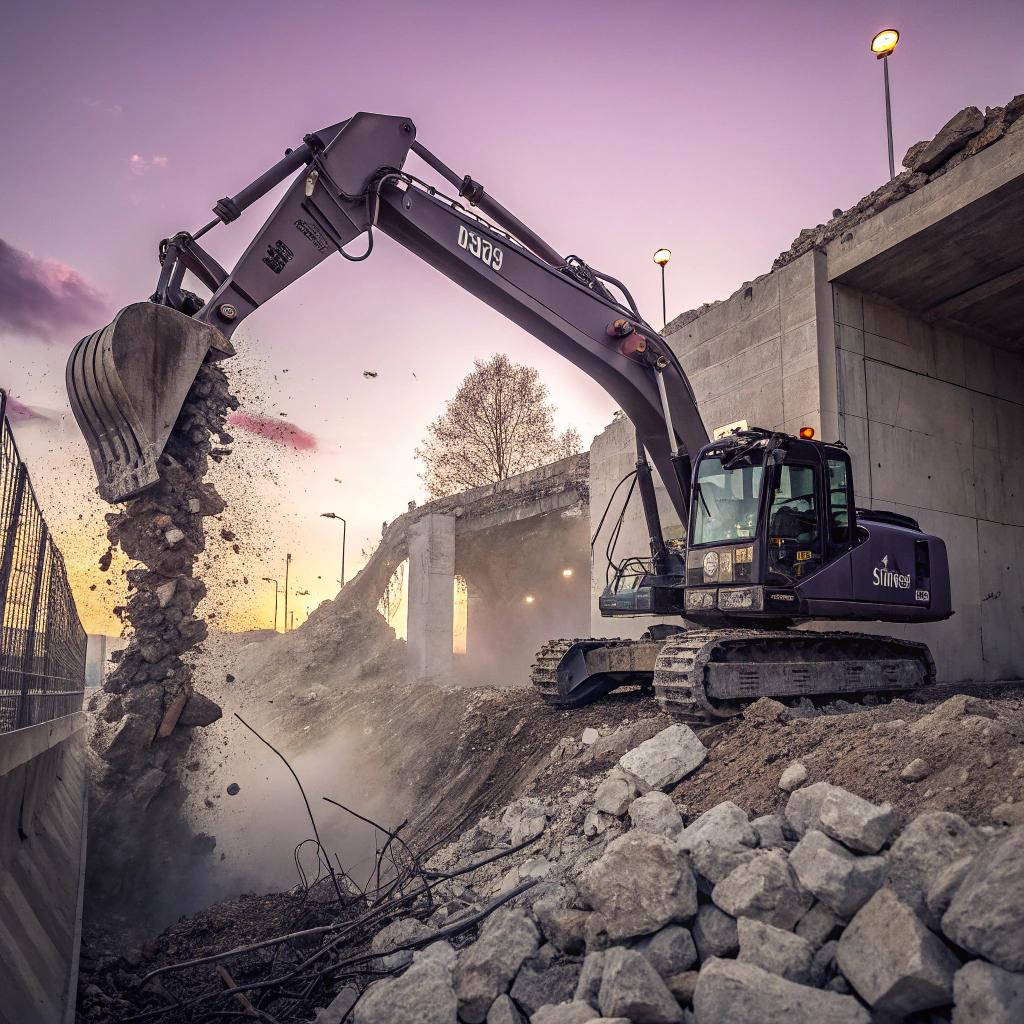
I used to think demolition was just big machines smashing concrete and dust clouds on the evening news. Then I watched a crew take down a four‑story building next to a busy café, and the tech they used felt closer to a construction site mixed with a control room.
The short answer is that modern demolition uses sensors, drones, 3D models, and smart machines to plan and carry out work with more precision, less waste, and better safety than in the past. If you look closely at current demolition services, you will see careful digital planning, data from the field, and remote tools replacing a lot of guesswork and manual risk.
How digital planning changed demolition from guesswork to strategy
Old demolition work relied heavily on paper drawings, visual checks, and experience. That experience still matters. But now, digital planning sits on top of it and often guides the whole project.
The biggest shift is simple to state but powerful: crews can see, measure, and test a building virtually before they touch it in real life.
3D scanning and BIM: demolishing a building that exists on screen first
Most serious projects now start with some mix of 3D scanning and building information modeling, even if the contractors do not use the full BIM buzzword.
Crews use tools like laser scanners or LiDAR to capture the exact shape of a structure. That point cloud then goes into a 3D model. From there, engineers and planners can:
- Check where structural elements are actually located, not just where old drawings say they are
- Plan which walls can go first without triggering a collapse
- Estimate the volume of concrete, steel, and other materials for recycling
- Map utilities, shafts, and weak spots before cuts start
It sounds dry, but the effect on risk is huge. When you have a realistic model, decisions about what to remove, what to support, and where to cut can be tested on screen rather than through trial and error.
Digital models turn demolition from “break and react” into “plan, simulate, then remove.”
Some crews pair these models with structural analysis tools. They run simple scenarios: remove this beam, what happens to the load path. It is not a perfect mirror of reality, and people still argue on site, but it narrows the unknowns.
For tech minded readers, this is not so different from how software teams use staging environments. You create a safe place to test changes before you touch production. The difference is that here “production” is a five ton concrete beam over a sidewalk.
GIS, site data, and smarter site selection
Beyond the building itself, planners now rely more on geospatial data for surroundings.
Typical questions are:
- What utilities run under the site or nearby streets
- Where are schools, hospitals, or sensitive labs nearby
- How will traffic, dust, and noise affect neighbors
GIS tools pull in city data, underground utility maps, and sometimes even cell tower data for communications planning. You hear less of “we will figure it out once we get there” and more of “here is the risk map for this block.”
Again, this is not perfect. In many cities, underground records are partial or wrong. Tech helps, but it still lives on top of human checks and some cautious digging.
Drones, cameras, and remote eyes on site
One of the most visible changes is in the sky and on the edges of the site. Cameras, drones, and remote sensors are becoming standard.
Drones for inspection and progress tracking
Drones bring a few practical gains that are hard to ignore:
- They inspect roofs, façades, and tall sections without lifting a person in a basket.
- They capture photos and video from multiple angles for planning and documentation.
- They help confirm if a blast or controlled drop went as expected.
With photogrammetry tools, those images can be turned into 3D surface models. You can compare “before” and “after” scans and see if a wall leaned a bit more than planned.
A drone flight that takes ten minutes can replace hours of manual inspection on ladders or lifts.
I once watched a crew debate whether a high parapet wall was safe to work under. Instead of sending someone close, they flew a drone, zoomed in on cracks, and made a call based on high‑res video while standing well back. It felt almost casual, but the safety gain was real.
There is a side effect as well: clients and city inspectors now expect visual records. Drones give them frequent, clear snapshots without stopping work for a tour.
Fixed cameras and computer vision on the perimeter
Around the site, you often find fixed cameras. Some only record for later. Others feed into simple computer vision tools that count trucks, track entry points, or flag if someone walks into a restricted area.
These are not always high end AI systems. Sometimes it is basic motion detection and simple classification. But even that helps:
- Security alerts if someone breaks in during off hours
- Automatic capture of license plates for trucks hauling debris
- Check if workers are wearing helmets and high visibility gear
There is a risk that people overtrust automation here. A camera can misclassify PPE or miss someone in a blind spot. Good crews treat these systems as helpers, not as substitutes for a safety officer who actually walks the site.
Smart machines: from wrecking ball to precision tools
Many people still imagine a swinging ball when they hear “demolition.” That does still exist for certain jobs, but the center of gravity has moved to more precise machines.
High reach excavators and attachment tech
Modern high reach excavators extend several stories up, with booms that can swap tools quickly. The real tech story is in the attachments and controls:
- Hydraulic shears cut steel beams like scissors.
- Concrete crushers and pulverizers chew up slabs and separate rebar.
- Rotating grapples pick and place material with surprising accuracy.
Operators now work with better sensors, joysticks, and sometimes semi‑automated movements. Many machines have:
- Load sensing to prevent tipping
- Height and reach limits to avoid power lines
- Assisted control modes for fine movements
Modern demolition machines are less about brute force and more about controlled removal of very specific pieces.
This precision matters in tight urban sites. If there is a historic façade two meters away, you cannot swing a ball at full speed. You need to nibble away the structure layer by layer.
Remote controlled and robotic demolition
In dangerous environments, remote controlled machines and robots are often the first line in.
Typical cases:
- Fire damaged buildings with unknown stability
- Industrial sites with chemical or radiation risk
- Confined spaces where fumes or dust build up fast
These machines are usually tracked units with arms and small attachments. Operators stand at a safe distance, using cameras and controls. It feels a bit like a slow video game, but the stakes are real.
Some more advanced systems now include:
- Semi autonomous patterns for floor scraping or concrete removal
- Collision avoidance sensors
- Pre programmed limits on reach and force
There is still a lot of hype around “construction robots.” Many current robots are rugged remote tools rather than fully autonomous workers. But the trend is clear: more risky, repetitive tasks will move toward remote or semi automated machines over time.
Emerging use of exoskeletons and assistive gear
On the more experimental side, some crews test wearable exoskeletons or power assist suits for tasks like holding heavy power tools or carrying awkward items. Results are mixed.
On one side, these tools can reduce strain on workers, especially during overhead demolition or long shifts with jackhammers. On the other side, they add weight, cost, and some learning curve.
For readers interested in tech, this space feels similar to early VR or AR years ago: promising, sometimes clumsy, and still searching for the right fit. I think it will settle into specific niches, not blanket use.
Sensors, IoT, and data from the rubble
Demolition sites now host a quiet layer of networked sensors. They track what the human eye cannot easily judge in real time.
Dust, noise, and vibration monitoring
Cities and neighbors are less patient about dust clouds and shaking walls. Sensors help crews keep work within agreed limits.
Common measurements:
- Dust concentration at the site edge
- Noise levels near property lines
- Ground vibration near nearby buildings
These sensors send data back to a simple dashboard. If dust spikes, crews can boost water sprays or adjust work patterns. If vibration nears a threshold, they can slow heavy hits or change methods.
Sensors turn a vague complaint like “too much dust” into a number that teams can control and report on.
There is also a legal side. When neighbors claim cracked walls or broken windows from vibration, a clear data log can show whether limits were exceeded or not. It does not end every dispute, but it gives both sides something firmer than feelings.
Wearables and worker safety
Some companies issue simple wearables to track worker location, falls, and sometimes vital signs.
Use cases include:
- Fall detection alerts sent to supervisors
- Geofencing to keep workers out of zones marked as unsafe
- Heat stress alerts in hot weather
These tools can feel intrusive if handled badly. Workers may worry about micromanagement or tracking beyond the site. The tech alone does not solve that. Clear rules and trusted managers matter more.
From a pure tech view though, the direction is clear. Data about where people are and what they face in real time can help prevent or respond to accidents quicker than old radio calls.
Structural health monitoring during partial demolition
When a building is partly occupied or attached to another structure, crews sometimes mount strain gauges or crack monitors on key elements.
These small sensors watch for:
- Unexpected movement as walls or columns are removed
- Crack growth in shared walls
- Drift or tilt beyond safe ranges
Paired with simple alerts, this gives engineers early warning if their model was off. It is not common on every job, but on complex ones it can be the difference between a controlled project and a nasty surprise.
Software on site: from whiteboards to tablets
Away from physical tech, site management has shifted toward software in very visible ways. Clipboards still exist, but they share space with tablets and cloud apps.
Project management, scheduling, and coordination
Demolition often has more constraints than new construction. You have to work around utilities, neighbors, road closures, and follow on trades.
Project tools help teams track:
- Permits and inspections
- Crew schedules and shift planning
- Equipment availability and maintenance
- Trucking and disposal or recycling slots
Many apps now run on phones or tablets, so foremen can adjust plans from the field. Does this fix every scheduling issue? Of course not. People still get sick, trucks still break, and weather still ruins plans.
But compared to trying to reschedule a whole week from a paper chart in a site trailer, the new tools reduce friction. They also give owners more frequent, clearer updates instead of rare status meetings.
Field reporting, photos, and checklists
Digital tools let crews capture checklists, site logs, and photos as they go. That might sound boring, but it has a few real gains:
- Faster safety checks at the start of the day
- Clear proof when a section was cleared, capped, or made safe
- Easy sharing of problems with engineers or managers off site
From a tech reader’s view, this is similar to logging and monitoring in software. When events are captured in near real time, patterns emerge, and root causes are easier to find.
Estimating software and cost modeling
Bidding on demolition work is tricky. You are often guessing about hidden conditions, contamination, or buried surprises.
Modern estimating tools draw on:
- Historical data from past projects
- 3D quantities from models and scans
- Recycling rates and hauling distances
Some use simple machine learning models to predict costs based on building size, type, age, and location. Are these perfect? Not really. They can still be thrown off by odd site conditions.
Still, they improve on back of the envelope estimates that ignore hidden variability. A better forecast can be the difference between a fair bid and a painful loss later.
Recycling, sorting, and the push to cut waste
Tech is not only about safety and planning. It also shapes what happens to the pile of material once a building is down.
On site sorting and material tracking
Many projects now aim to divert a large share of material from landfills. That means sorting and tracking:
- Concrete for crushing and reuse as aggregate
- Steel for scrap yards
- Non ferrous metals like copper and aluminum
- Wood, bricks, and glass where recycling makes sense
Tech plays a role through:
- Scanner tags and simple RFID on large loads
- Scales tied to software to track tonnage
- Bar code systems for hazardous waste drums or containers
Material tracking tools turn debris from “junk in a pile” into a set of measurable streams with value and rules.
There is also interest in material passports, where data about steel or other components is stored for future reuse. That is more common on new construction, but demolition is part of that loop.
Concrete crushing, steel processing, and higher value reuse
On site or nearby crushers turn old concrete into aggregate that can be used under roads or new slabs. Sensors in these crushers measure throughput, adjust feed rates, and protect from overload or uncrushable items.
Steel is cut and processed with shears and torches, then weighed and sent to mills. Tracking software logs where each batch went, which helps with both billing and compliance.
There is room to argue here. Some people feel the current recycling levels are still low. Others say the extra sorting work and transport emissions sometimes offset gains. The truth is likely somewhere in between, varying by site and region.
Safety culture shaped by tech, but not replaced by it
If you ask most demolition crews what tech changed the most, many will still say “nothing replaces experience.” That is partly defensive, but it is also true.
Training with VR and simulations
Virtual reality tools now show up in some training programs. New operators can:
- Practice with excavator controls in a virtual city block
- Run through blast timing scenarios
- See how a building might collapse if cuts are made in the wrong places
This does not make them experts overnight. But it gives them a safe, repeatable way to experience rare or risky events before they face them on a live site.
Compare that to the old model where you watched senior workers, then learned mostly by doing. There is real value in adding safe practice reps before real world actions.
Procedures supported by tech, not driven by it
Safety procedures often live in checklists and briefings. Tech can make those easier to track, but it should not turn them into blind button clicks.
Some crews now run:
- Digital toolbox talks with attendance tracked
- QR coded stations where workers confirm checks on gas, power, or confined spaces
- Incident logs tied to analytics to spot patterns
The good version of this uses data to push real learning. The bad version turns safety into a compliance game, where people rush through taps on a screen without thinking.
Tech minded readers will recognize this pattern from many fields: more data and forms do not guarantee better outcomes. The human side still decides what that data means.
How all this tech changes cost, schedule, and quality
If you bring this back to basics, the usual questions apply: is all this tech worth it, and where does it actually help?
Cost and schedule tradeoffs
Here is a simple comparison of some tech tools and their typical impact. It is not exact, and real values vary, but it gives a rough sense.
| Tech / Tool | Main benefit | Cost impact | Schedule impact |
|---|---|---|---|
| 3D scanning & modeling | Better planning, fewer surprises | Higher upfront cost, lower rework later | Slight delay at start, gains during execution |
| Drones | Fast inspections, records | Low to medium cost, often shared across jobs | Speeds decisions, less downtime |
| Remote controlled robots | Safety in high risk spots | Higher unit cost, cheaper than accidents | Sometimes slower task by task, but avoids shutdowns |
| IoT dust/noise sensors | Compliance, fewer complaints | Modest cost, low per day | Helps avoid forced stops from neighbors or inspectors |
| Project & field apps | Coordination, documentation | Subscription and devices | Cut delays from miscommunication |
You can probably spot a pattern. Many tools slow things slightly at the start while saving time and risk later. If you have short, simple jobs, maybe the overhead is not worth it. For complex urban work, the gains are clearer.
Consistency and quality of work
Technology also tends to push toward more consistent processes. When tasks are modeled, logged, and measured, crews develop habits that repeat more easily from site to site.
This is not always positive. It can also make teams rigid, less able to improvise when reality does not match the plan. The best crews, in my view, mix structured methods with a bit of respectful skepticism.
A model says a wall can go, but a foreman sees something odd in the cracks? Pause, recheck, maybe scan again. Tech should be a second brain, not the only one.
Where tech in demolition might go next
Looking ahead a bit, a few trends stand out. Some might fizzle, some may stick.
More autonomy, but in narrow tasks
It is tempting to imagine fully autonomous demolition robots. I think the near future looks more like:
- Automated floor scrapers that clear surfaces once boundaries are set
- Self guided saws that follow a planned cut path while a human supervises
- Haul trucks that move on fixed routes inside closed sites
These are “narrow” tasks with clear rules. The messy judgment about sequence, safety, and neighbors will stay with humans for longer.
Deeper data integration from design to demolition
New buildings increasingly carry more digital information from day one. If that information survives decades, future demolition teams could know:
- Exactly which alloys are in steel members
- Where hazardous materials were used
- How elements were originally stressed and loaded
That would change planning again. In practice, though, data often gets lost or stored in unreadable formats. For this future to work, we need better long term data habits, not just better tools.
Closer connection between tech and regulation
As tech enters demolition, regulators and cities start to expect its use. You already see that with:
- Required dust or noise monitoring in some zones
- Mandated recycling rates for certain projects
- Drone survey reports for sensitive demolitions
There is a risk this pushes out small firms that cannot afford new tools. On the other hand, some low cost sensors and shared services may help level the field. The balance will vary by region, and it is not always fair.
Common questions about tech in demolition
Is all this tech only for huge projects?
Not only, but adoption is uneven.
Large urban demolitions tend to use the full stack: scans, drones, sensors, advanced machines. Smaller jobs may pick a few tools that clearly pay off, like drones for inspections or apps for reporting.
If you are a homeowner or small business owner, you can still ask contractors how they plan, what safety tech they use, and how they track waste. You might not get a full digital twin, but you can push for more than “we will just bring a machine and see.”
Does tech actually make demolition safer?
On balance, yes, but only when used with care.
Remote machines, better planning, and real time sensors clearly reduce some classic risks. At the same time, tech can create new risks when people overtrust screens or ignore simple signals like cracking sounds or shifting dust.
The safest operations use tech as a tool to support human judgment, not to replace it.
Why should a tech oriented reader care about demolition?
Demolition sits at an interesting intersection:
- It has clear, physical risks where tech can help or hurt.
- It turns data about old, messy buildings into concrete decisions.
- It touches recycling, urban life, and long term planning.
Also, there is a quiet lesson here. Many of the same tools that show up in software or logistics now show up in dust, mud, and broken concrete. If you work with models, sensors, or automation in a different field, watching how they play out here can give you fresh ideas, and maybe a bit of healthy doubt.
If there is one question to keep asking, it might be this:
When we add more tech to demolition, are we really reducing risk and waste, or just moving them somewhere harder to see?
That question does not have a simple answer, but it is worth keeping in mind the next time you walk past a site where an old building is quietly disappearing behind a forest of sensors, drones, and bright orange machines.