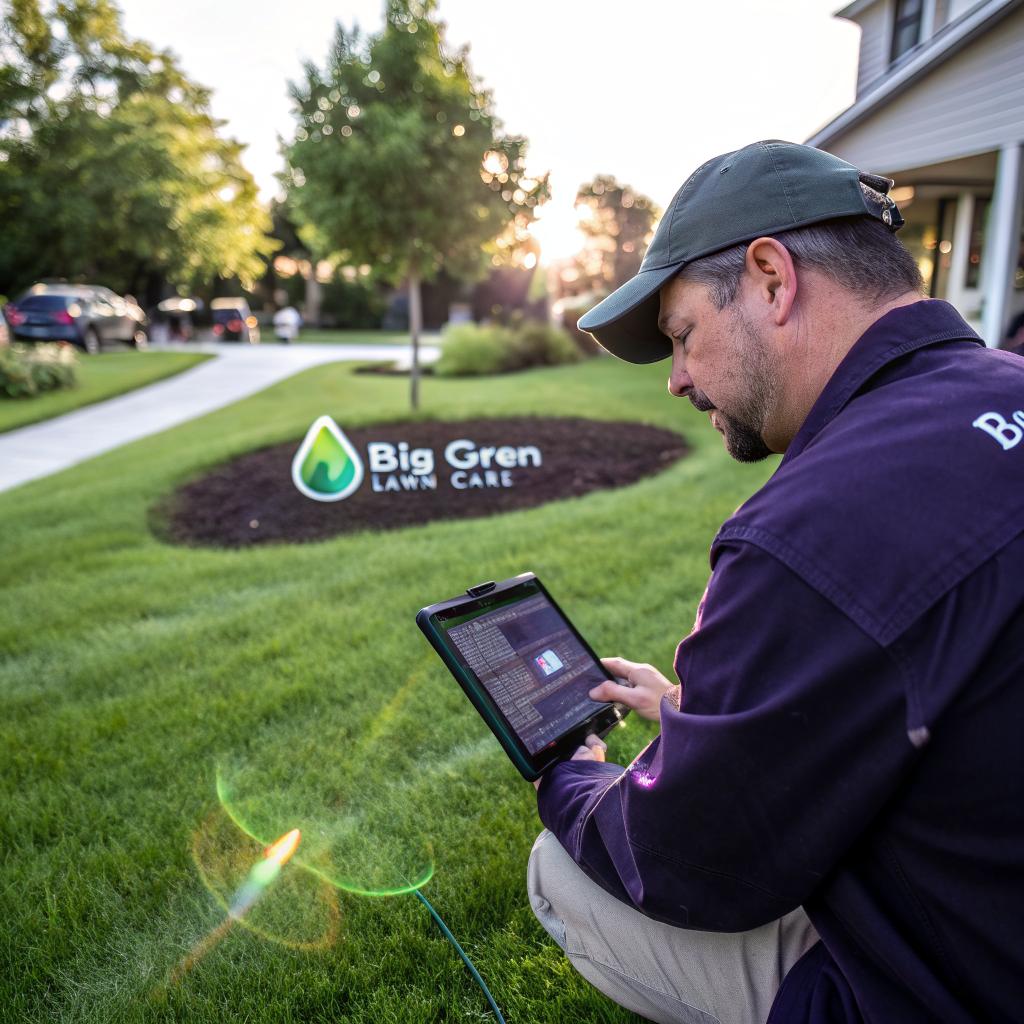
I used to think lawn care was just mowing in straight lines and hoping the grass stayed green. Then I started reading what companies like Big Green Lawn Care were actually doing behind the scenes, and it felt more like a simple, quiet version of DevOps for dirt and plants.
So, here is the short version: Big Green Lawn Care uses tech to collect data on your yard, automate the boring parts, and time treatments better. They use tools like soil sensors, satellite and drone images, route planning software, and digital logs so every visit is based on data instead of guesswork, which means less waste, fewer chemicals, and yards that react more predictably to heat, pests, and weather swings.
Why tech even belongs in lawn care
If you are used to thinking about code, servers, or hardware, lawn care might feel like the opposite world. Dirt, water, grass, bugs. It sounds very analog.
But lawns have a lot of the same problems that tech people care about:
- Limited resources: water, fertilizers, time on site
- Unpredictable environment: weather, pests, soil differences
- Need for repeatable results across many locations
- Pressure to reduce waste and costs
That is where tech quietly fits in.
Big Green Lawn Care is not writing machine learning models for fun, but they do use tools that feel very familiar if you work with data, mapping, or scheduling.
The main idea is simple: measure more, guess less, and let software handle what humans are bad at, like timing things to weather and juggling hundreds of yards at once.
They still pull weeds by hand when needed. They still push mowers. The tech does not replace that. It supports it, so the person on your lawn has better context than “this lawn looks a bit dry, I think.”
Data behind a “simple” green yard
When a yard looks clean and healthy, you usually do not see the work that went into it. Especially the data work. The first real step toward a “smart” yard is collecting information and actually using it, not just walking around saying “the grass looks thin over there.”
Initial property scan and “profile” building
When Big Green Lawn Care starts working with a new property, they treat it less like a random patch of grass and more like a new “system” that needs basic profiling.
They might:
- Map lawn size and shape using satellite or aerial maps
- Note shady vs sunny areas
- Check slopes and drainage zones
- Identify plant types, grass varieties, and trouble spots
Most of this starts as a digital record. It is not just written on a clipboard that disappears in a truck.
Think of it a little like setting up a new server monitoring dashboard. At first, you simply list what exists. Then, over time, you add metrics, notes, and alerts.
Soil testing with actual numbers, not vibes
A lot of homeowners and even some small lawn crews guess when it comes to soil. “It probably needs fertilizer.” That kind of thing.
Big Green Lawn Care uses soil tests that give clear numbers. That usually means:
- pH level
- Phosphorus, potassium, and nitrogen levels
- Organic matter content
- Sometimes salt and micronutrient data
That data goes into their system. So if your lawn has a low pH and thin soil, they can plan a different schedule and product mix than the yard next door.
Soil tests turn a “my lawn looks sad” complaint into a set of measurable problems that can be tracked over time, just like performance metrics on a server.
Without this, they would have to rely on generic treatment programs that waste product and sometimes actually damage grass.
Digital history for each yard
Over months and years, they keep a digital record for each property.
That record usually includes:
- What treatments were applied, and when
- Weather conditions leading up to and after treatments
- How the lawn responded, including photos
- Changes in soil test numbers
From a tech mindset, this feels like a tiny event log plus metrics, tied to a single “host” (your lawn). If something goes wrong later, they are not guessing in the dark. They can trace back: “Oh, last summer we had back-to-back heat waves after a seeding visit, which slowed germination.”
Smart scheduling: timing treatments to weather and growth
Most of the gains from tech in lawn care are not very visible. One of the big ones is how they schedule work and treatments.
Weather linked planning
Weather apps are not exactly new, but combining them with lawn care scheduling software saves a lot of waste.
Big Green Lawn Care connects their work calendar to weather data so they can:
- Avoid fertilizing right before heavy rain that would wash nutrients away
- Plan weed control when wind is lower, to keep spray on target
- Shift seeding when nights are still warm enough for germination
That may sound obvious, but you would be surprised how many yards get treated on auto-pilot without any of this.
The difference between good and bad lawn results is often not “what product” they use, but “did they apply it on the right day, at the right time, in the right conditions.”
For a homeowner, it is hard to track all this while you work a regular job. For a lawn care company that runs software tied into hourly forecasts, it becomes a manageable scheduling problem.
Route planning and time savings
Tech also helps on a more boring but real level: getting crews from property to property with less wasted time and fuel.
They use route planning tools to:
- Cluster nearby lawns on the same day
- Avoid traffic when possible
- Cut back on drive time and idling
Is this part visible in your yard? Not directly. But fewer hours on the road means more consistency and less pressure on techs to rush through visits.
From a systems view, if they treat fewer lawns in a frantic day and instead treat the right lawns at the right time, quality improves quietly in the background.
Seasonal “playbooks” based on data, not tradition
A lot of old-school lawn care is seasonal habit.
Spring: fertilize and control weeds
Summer: water and more weeds
Fall: seed and maybe aerate
Big Green Lawn Care still follows seasons, but they refine that plan based on their local data:
- How early soil warms in your area
- How often certain pests appear
- How quickly cool-season grasses bounce back in fall
Over time, they adjust the timing of specific treatments. For example, if they have a multi-year record that crabgrass breaks through early one year when the soil warms fast, they can preempt that pattern in future years rather than waiting to see it again.
Hardware on the ground: tools, sensors, and machines
This is where the “tech” becomes more visible. You can actually see some of it in the yard.
Soil moisture tracking and smarter watering
Water is the biggest waste in most home lawns. People overwater or water at the wrong time, then complain that the lawn has fungus or shallow roots.
Big Green Lawn Care sometimes uses soil moisture sensors and handheld tools to check water levels below the surface. They then adjust their recommendations.
For example, if the top of the soil is dry but deeper layers are still moist, they might tell a client to cut back on watering, not increase it.
Here is where I think some homeowners push back too quickly: “I know my yard, I can feel if it is dry.” You might be right some of the time. But roots live under the surface, and human eyes are not great at sensing what is happening 4 inches down.
Some properties go a step further with smart irrigation controllers that connect to Wi‑Fi and weather data. Big Green Lawn Care can help configure:
- Shorter, deeper watering cycles
- Automatic pauses when rain is predicted
- Different settings for shady vs sunny zones
When watering is controlled by both soil readings and weather, you usually get thicker roots, fewer fungal problems, and lower water bills at the same time.
It is not perfect. Smart controllers can be misconfigured. Sensors can fail. But the general direction is more precise than a simple timer that runs every day at 6 a.m. no matter what.
Better equipment for consistent cuts
It is very easy to underestimate how much the mower itself changes the look and health of the lawn.
Modern commercial mowers and trimmers often have:
- Height adjustment settings that are repeatable down to fractions of an inch
- Bagging or mulching options that can be tuned based on season
- Engines with lower emissions and less noise than old units
Big Green Lawn Care uses those settings with intention. For example, cutting cool-season grass too short in summer can stress it badly. Using the same default height all year is lazy, to be blunt.
They adjust heights by season and grass type, and they track those settings so that different crews stay consistent. It might feel like a small detail, but consistency is where tech and process shine.
Drones and aerial views for bigger properties
On larger sites or more complex properties, sometimes a ground view is not enough.
Drones with cameras can help spot:
- Drainage issues after heavy rain
- Patchy growth patterns you cannot see from the ground
- Shaded zones that change across seasons
The images are usually fed back into their digital records. Over time, you can compare before and after aerial photos to see progress or to pick up new problems early.
For a single small yard, this might feel like overkill. For multi-acre properties or commercial sites, it is actually practical.
Software behind the scenes: planning, logging, and communication
Hardware in the field is only half of the story. The other half lives on screens: phones, tablets, and office computers.
Service management platforms
Big Green Lawn Care uses service management software, which is like a mix of CRM, ticketing system, and scheduling tool.
From a tech perspective, you would recognize concepts like:
- Customer records with history
- Upcoming “jobs” or “tickets” linked to a schedule
- Status updates after each visit
For lawn care, this translates to:
- Knowing which treatments are due for each property
- Logging photos or notes after each visit
- Tracking follow-ups if a problem persists
It might sound simple, but without software, things fall through the cracks fast. A missed grub treatment or a late weed control round can wreck a season.
Mobile apps in the field
Techs on the ground use mobile apps on their phones or tablets.
They can:
- See the day’s route and tasks
- View notes specific to your property
- Add new photos or comments
- Log products used and exact time spent
That means the person in your yard is not guessing who you are or what was done last time. They have it in their hand, which is a better workflow than hoping someone remembered to print the right sheet that morning.
Sometimes, these apps also support quick customer communication. For example, sending a recap of what was done that day with simple language like “We treated for broadleaf weeds today. Expect some yellowing in 7 to 10 days.”
Customer portals and notifications
For the tech audience, the “front end” of lawn care tech is actually a bit underwhelming right now, and I think that is an area that still needs work.
Big Green Lawn Care may offer:
- Email or text reminders before a visit
- Digital invoices and online payment
- Basic service history you can view
Some systems go further, with portals showing upcoming treatments, soil test results, and watering recommendations. When done well, this turns lawn care from a black box into something you can track.
But here is where I will be a bit critical: not all companies do a great job making the data readable to normal people. A page full of numbers with no context is not helpful. The better setups explain what those numbers mean in plain language and tie them to clear actions: “Increase watering to three times per week for the next 2 weeks.”
Using tech to reduce chemicals and waste
One of the biggest practical benefits of tech in lawn care is using fewer chemicals and using them more precisely. Not just for “green marketing” reasons, but because it tends to work better.
Targeted treatments vs blanket spraying
A common problem in basic lawn care is spraying herbicides over an entire yard to catch a few weeds. That is faster in the moment but worse long-term.
With better data and records, Big Green Lawn Care can target only the areas that actually need that level of treatment:
- Mapping frequent weed hotspots by location
- Marking thin or stressed turf that should not be hit hard
- Adjusting product choice per zone, not the whole property
Over time, as the lawn thickens and soil improves, they can dial back how much they spray. That is where the tech meets actual results: less guesswork, more “just what this area needs.”
Integrated pest management approach
Tech also supports a wider strategy for pests.
Integrated pest management (IPM) is a structured approach that focuses on:
- Monitoring pest levels regularly
- Using cultural practices first, like better mowing and watering
- Only using chemicals when thresholds are passed
Big Green Lawn Care uses records and regular inspections to avoid “pre-spraying” for everything. For example, they may track grub activity across a neighborhood over several seasons and adjust treatment timing based on when damage actually peaks.
This is another area where data matters more than product choice. Two yards can use the same insect control product, but if one applies it 3 weeks before grubs are active and the other applies it at peak feeding time, the results will be very different.
Fertilizer efficiency and runoff reduction
Fertilizer that does not get absorbed by plants is lost. In many places, it washes into storm drains and streams.
With soil test data, moisture readings, and weather-linked scheduling, Big Green Lawn Care can:
- Use lower doses where soil already has nutrients
- Avoid fertilizing right before thunderstorms
- Pick slow release products when they make sense
Water quality rules in many cities are getting stricter. That pressure is pushing lawn care companies to be more precise, and the ones that lean on tech have a clearer path to handle that change instead of guessing and hoping.
Tables: how tech changes common lawn problems
To make this a bit clearer, here are a few side-by-side examples.
| Problem | Traditional response | Tech-supported response |
|---|---|---|
| Brown spots in midsummer | Water more, spray fungicide “just in case” | Check soil moisture and history, adjust watering pattern, use fungicide only if disease signs match |
| Thin grass after heavy rain | Throw down more seed and fertilizer | Review drainage, use aerial photos, test soil compaction, aerate or adjust grading, then seed |
| Weeds appearing every spring | Spray weeds once they appear across the yard | Use previous years’ records to time pre-emergent, spot treat only problem zones |
| High water bills | Set sprinkler to run less often, hope for the best | Install smart controller, use moisture readings and weather data for dynamic watering schedule |
If you work with monitoring or logging tools in tech, this structure will feel familiar. Notice the pattern: observe, record, then act, not the other way around.
Where human judgment still matters
All this talk about sensors, apps, and schedules can make it sound like the lawn just “runs itself” like some sort of auto scaling group. It does not. There are many parts that still need people to think.
Reading patterns that software does not see well yet
Software can show that:
- Soil pH is too low
- Moisture is inconsistent
- Fertilizer was applied 30 days ago
But it cannot, at least not with common tools today, walk across your yard and notice that a section near the driveway is compacted from parking, that kids’ toys are blocking sprinkler patterns, or that a dog regularly uses the same corner, burning the turf.
Tech helps surface clues. Humans connect them.
Sometimes, I worry that people want tech to “solve” their lawn without them needing to care at all. That is not realistic. Even with a good service like Big Green Lawn Care, homeowners still play a role: mowing height, heavy traffic, where they place furniture or plastic pools. No amount of software overrides those physical choices.
Balancing cost, time, and perfection
There is also a practical trade-off. Perfect data collection would mean spending too much time measuring every little thing. That would make lawn care unaffordable.
So the trick is to collect enough data to make better decisions without killing the budget. Big Green Lawn Care strikes a middle line:
- Soil tests on a reasonable schedule, not weekly
- Moisture checks in key areas, not every square foot
- Drone passes only where it gives actual benefit
Is this perfectly scientific? No. But it is far better than the old model of “this is how we always do it.”
Explaining trade-offs to homeowners
Another human piece is explaining trade-offs clearly. For example:
- Going chemical free everywhere may mean more weeds and higher cost hand work
- Skipping aeration this year saves money but slows long-term soil improvement
- Watering less will save money but may stress the lawn in a heat wave
Tech can show the likely impact, but humans still need to decide what they care about more: cost, appearance, or strict environmental limits. There is no single right answer here, and any company that pretends otherwise is overselling.
How a “tech minded” homeowner can work with Big Green Lawn Care
If you are reading this on a tech site, there is a good chance you like data and patterns. You might even be the sort of person who enjoys a good home dashboard.
Here are ways you can use that mindset with a service like Big Green Lawn Care without becoming a full-time lawn manager.
Ask for actual numbers and history
Do not accept vague statements like “your soil is a bit low on nutrients.” Ask:
- What are my recent soil test numbers?
- How have they changed over the last 2 or 3 years?
- What specific problems are we solving this season?
A good lawn care company should be able to show at least basic records. If they cannot, that is a red flag.
Track your own small dataset
You do not need a full agricultural lab. Even a simple notebook or spreadsheet with:
- Watering days and duration
- Any visible problems or changes
- Photos every month from the same angle
can be very helpful. When you share this with the lawn care team, they can correlate it with their own data and scheduling. Together, you see patterns faster.
If you use home sensors, like a weather station or soil moisture probes, mention that. It can help fine-tune watering advice.
Use your skepticism in a good way
Healthy doubt is useful. If someone suggests an extra service, ask how they decided it is needed. Ask what data they used: visual inspection, history, a test result, or just habit.
At the same time, avoid assuming everything is a scam. Some services really do hinge on timing and conditions that are not obvious at a glance, like pre-emergent weed control. Your own bias might be wrong sometimes. That is part of being human.
What might come next for “smart” yards
We are not at a point where lawns self-manage with full autonomy, and I hope we never get too obsessed with that idea. Grass is still a living system, not just an IoT lab.
But if you like to think a bit ahead, here are some directions where tech may grow in lawn care, at least in a practical sense.
More affordable permanent soil sensors
Right now, good soil sensors that stay in the ground are still a bit pricey or fiddly for wide use. As costs come down and reliability goes up, you might see:
- Permanent moisture probes in key zones
- Automatic alerts for drought stress before you see it
- Auto-adjusted watering without manual tweaks each season
The trick will be getting sensors that do not fall apart after a couple of winters or get chopped by an aerator.
Simpler homeowner dashboards
There is room for improvement in how lawn care data is shared with clients. I can imagine more user-friendly portals that show:
- Recent treatments, with plain language explanations
- Watering recommendations for the coming week based on weather
- Soil progress over time, maybe as a couple of simple charts
Nothing fancy, just enough that you can understand what is going on without reading a manual.
Better integration with city rules and water restrictions
Many cities have watering rules that change over time. If lawn care software plugs into those rules, yards can be managed without constant worry about fines or violations.
That could look like:
- Auto adjusting watering days in smart controllers
- Scheduling treatments so they do not clash with bans
- Helping clients get rebates for certain upgrades, like better nozzles
This part is less about new tech and more about connecting existing tools in a thoughtful way.
Common questions about tech in lawn care
Q: Does all this tech mean lawn care costs more?
A: Not always. Some tools save enough time and reduce enough waste that they balance out. For example, better routing and reduced product waste can offset the cost of soil tests or smart controllers. There may be an upfront cost for certain devices, but the long-term effect can be neutral or even cheaper, especially if you avoid big failures like dead patches or full reseeding jobs.
Q: Can smart sprinklers and sensors replace a lawn care company?
A: They can help, but they do not replace experience. Sensors do not aerate soil, pull weeds by hand, diagnose disease visually, or decide which grass type fits your yard. A mix of automated watering plus human visits covers far more ground than either one alone.
Q: What if I do not care about tech and just want my lawn to look good?
A: That is fine. You do not need to understand the software for it to help you. Tech sits in the background. If Big Green Lawn Care uses data to time visits better and apply fewer chemicals, the practical result is a healthier yard with fewer surprises. Whether you enjoy reading the numbers or not is up to you.