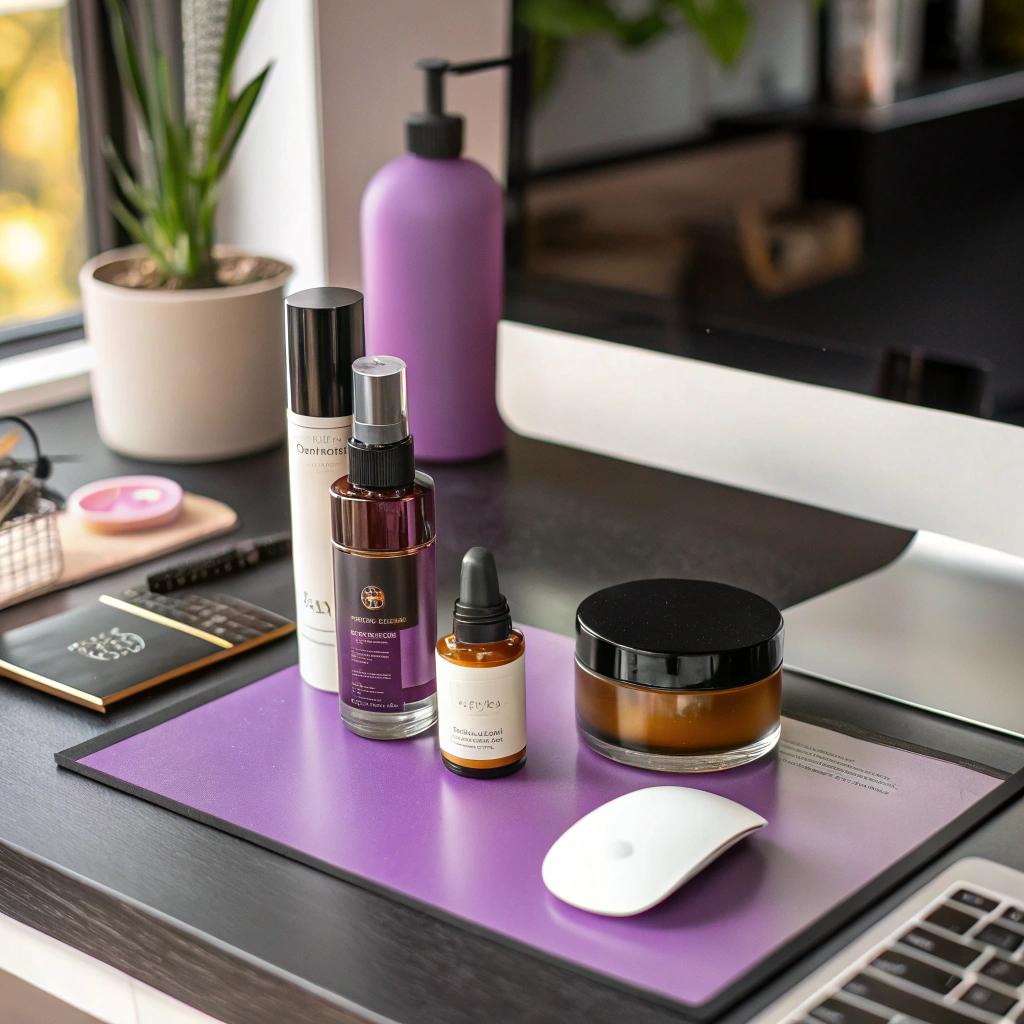
I used to think skincare was for people with time, not people with 40 open tabs and a half-written pull request. Then my camera turned on during a surprise standup, and I realized my skin looked as tired as my browser.
If you live online, the simple answer is this: your skin is dealing with blue light, dry office air, late nights, and stress, so you need barrier-focused, hydrating products that are quick to use, work on textured or melanin-rich skin, and play well with your screen-heavy routine. That is where black owned skincare brands come in, because many of them are already built around concerns like hyperpigmentation, ingrown hairs, uneven tone, and sensitivity, which are common if you are Black and also constantly on devices.
I am not saying only Black people should use these brands. Plenty of products work on all skin tones. But founders who have grown up seeing their own dark spots ignored by mainstream lines usually approach formulas a bit differently. And that matters if your daily light source is more monitor than sunlight.
Why tech people need to think about skincare at all
I know the usual pushback: “I code, I am not a skincare person.” But your skin does not care what your job title is. It just reacts to your habits.
Here is what is going on when you live online:
- Hours of blue light from screens
- Dry indoor air from AC or heating
- High stress and irregular sleep
- Delivery food, lots of coffee, not enough water
- Random lighting on video calls highlighting every dry patch
None of that is special or dramatic. It just slowly wears down your skin barrier.
Your “tech stack” for skin should do three simple things: protect, hydrate, and repair. Anything more advanced is bonus, not the base.
If you are human, you need:
- A gentle cleanser that does not strip your skin.
- A moisturizer that supports your skin barrier.
- Daily sunscreen, even if you are mostly indoors.
If you are Black, brown, or have melanin-rich skin, you probably also want:
- Help with dark spots from acne or shaving.
- Products that do not leave a grey or purple cast.
- Care for textured or combination skin, which many Black founders design around by default.
None of this requires a 10-step routine. Think of it more like a minimal setup script: 3 to 5 steps, then back to your keyboard.
What makes black owned skincare especially useful for screen-heavy lives
This is where it ties back to tech, not as a gimmick, but as a pattern.
A lot of Black founders come from engineering, medicine, product, or data backgrounds. They approach skincare like a build: test, iterate, fix real problems. They are not just chasing trends, at least in many cases.
Here are a few patterns I keep seeing.
1. Formulas built around hyperpigmentation and irritation
If you get one breakout, you might deal with a dark mark that lasts months. Melanin-rich skin creates pigment more easily. A lot of mainstream brands still treat dark spots as an afterthought.
Many Black owned brands put that concern first. You see ingredients like:
- Niacinamide for calming redness and oil.
- Azelaic acid for tone and texture.
- Vitamin C for brightness that does not bleach the skin.
- PHAs or gentle AHAs for slow exfoliation.
If your skin marks easily, the real “hack” is prevention and gentle care, not burning everything off with the strongest acid you can find.
This matters when you are always on camera. You may not care about a single pimple, but you might care about the shadow it leaves for half a year.
2. Better experience for melanin-rich skin on camera
You probably know this from makeup, but it shows up in skincare too.
Heavy white-cast sunscreens, weird pilling under tinted moisturizers, greasy finishes that turn your forehead into a reflection of your monitor. That is what many of us grew up with.
A lot of Black owned lines test:
- How products look under studio or phone light.
- How they sit under makeup for photos or content creation.
- Whether SPF leaves a purple or grey cast on brown skin.
This is not just “beauty industry” stuff. If you are giving talks on Zoom, recording tutorials, or streaming on Twitch, your face is part of your interface. It is not vanity to want it to look like you slept.
3. Simple routines that respect low mental energy
After a long sprint, the last thing most people want is a 12-step bathroom session.
Many Black owned brands build sets or “systems” that are easy to follow:
- 1 cleanser
- 1 treatment or serum
- 1 moisturizer
- 1 SPF
Some even label steps as “AM / PM” or “Step 1, 2, 3” right on the bottles, which sounds silly until you are half asleep and about to put exfoliating acid on your eyelids.
If your skincare routine feels like another task in your ticket queue, you will not stick to it. Reduce steps until it feels boring and almost too easy.
Connecting your skin routine to your tech habits
You already have habits based on your devices. The easiest way to care for your skin is to attach small actions to those habits.
Think of it like adding lightweight hooks to workflows you already follow.
Set skincare triggers instead of “finding time”
You probably will not “find” time. You can, however, tie skincare to things you already do.
- After your first coffee: quick cleanse and moisturizer.
- Before you open your IDE or main tool: apply sunscreen.
- After your last commit or save: wash face and use night product.
- During a long deployment or build: drink some water and reapply lip balm or hand cream.
This sounds trivial. It works. The less you leave care to “whenever I remember,” the more consistent it becomes.
Use your tech brain: track what actually works
Not in a neurotic way, but a practical one.
You do not need a full Notion wiki for your face, unless you like that. A simple log helps:
| What to track | Why it matters | Simple way to do it |
|---|---|---|
| Products you use | So you know what caused irritation or improvement | Photo of the bottle + date in your notes app |
| Skin “events” | Links breakouts to stress, food, or sleep | Short note like “3 new spots on chin, 4 hours sleep” |
| Routine changes | Prevents you from changing 5 variables at once | Note: “Started using vitamin C every morning” |
| Monthly photos | Shows real progress, not just daily judgment | Same mirror, same light, once a month selfie |
Your brain is used to debugging. Treat your skin like a system you are trying to stabilize, not “fix” overnight.
The core routine for people who basically live on devices
Here is a simple routine that works for most skin types, with or without melanin, that you can fill in with products from Black owned brands.
Morning routine (5 minutes or less)
1. Cleanse
Use a gentle cleanser. If your skin feels tight afterward, it is too harsh.
2. Hydrate
Apply a light hydrating serum or toner if you like that step. If not, skip straight to moisturizer.
3. Moisturize
Choose a cream or gel that matches your skin type:
- Oily or combination: gel or light lotion.
- Dry: cream with ceramides or butters like shea.
- Normal: something in the middle, not too heavy.
4. Sunscreen
This matters more than any fancy serum, including for Black skin.
Look for:
- SPF 30 or higher.
- No white cast on brown skin.
- Comfortable finish: not too greasy, not too dry.
If you are working near a window or in a room with aggressive lighting, SPF helps with dark spots and general aging, not just burning.
Night routine (5 to 7 minutes)
1. Remove the day
If you wore sunscreen or makeup, cleanse twice:
- First with an oil or balm cleanser.
- Second with your usual gentle cleanser.
2. Treatment
This is where Black owned brands focused on hyperpigmentation can really help.
You might use:
- Niacinamide serum for oil and redness.
- Azelaic acid for dark marks and texture.
- Retinol or retinal a few times a week if your skin tolerates it.
3. Moisturize
At night, a slightly richer moisturizer is fine, especially if you sleep in AC or heated air.
If your routine feels too long, drop the hydrating serum. Keep cleanser, 1 treatment, moisturizer. That is usually enough.
Common screen-related skin issues and how Black owned brands often approach them
To make this less abstract, here are typical problems I hear from people in tech, and how the right products can help.
1. “My skin is dry, but I still get breakouts”
This is more common than people think, especially if you are indoors all day.
What is happening:
- Dry air and screen time dehydrate your skin.
- Your skin overcompensates with more oil.
- Oil + clogged pores = breakouts, even on dry-feeling skin.
Look for products that:
- Use gentle acids (like mandelic or lactic) instead of harsh scrubs.
- Include humectants such as glycerin or hyaluronic acid.
- Have barrier ingredients like ceramides or shea butter, but not in a way that feels greasy.
Many Black owned founders are familiar with this “dry but acne-prone” pattern because it is common in their own communities. So they tend to avoid formulas that are too stripping or too pore-clogging.
2. “My dark spots never fade” (especially after shaving or acne)
Melanin does its job well. Maybe too well.
If you pick at acne, ignore ingrown hairs, or shave without protection, the mark can last much longer on deeper skin.
What helps:
- Consistent sunscreen, every day.
- Gentle exfoliation a few times a week, not every day.
- Targeted serums with ingredients like vitamin C, azelaic acid, licorice root, or tranexamic acid.
A lot of Black owned skincare lines build entire ranges for razor bumps, ingrowns, and post-inflammatory hyperpigmentation. They test how long it takes for dark marks to lighten on melanin-rich skin, not only on lighter tones.
3. “My face looks dull on camera, even when my skin is clear”
Some of that is lighting. Some of it is texture and dehydration.
You may need:
- More water and fewer energy drinks. Yes, boring, but it helps.
- A non-greasy oil or balm at night if you are dry.
- A gentle exfoliant once or twice a week.
- Moisturizer that actually sinks in, not just sits on top.
Black owned products that focus on “glow” are often designed with photo and video in mind. That can mean less flashback, smoother finish, and better performance on darker skin, which tends to show ashiness right away.
If you care about ethics and representation too
This part is less about skin and more about where your money goes.
A lot of people in tech like building things. Many founders behind Black owned skincare are doing that in their own way: formulating, testing, shipping, learning from community feedback. The energy feels familiar.
You are not saving the world by buying a serum. But you are:
- Funding founders who understand your skin concerns from personal experience.
- Helping keep diverse shade testing in the conversation.
- Supporting small teams that cannot outspend giant beauty companies on ads but can out-focus them on specific needs.
If you already think about what tools you support, which projects you sponsor, or where you host your code, it is not such a stretch to think about who you support when you rest your face at night.
Building a low-effort, high-value setup
If you want a clearer path, imagine you are setting up a small, maintainable project, not launching a huge app.
Step 1: Define your “requirements”
Ask yourself:
- What actually bothers me about my skin? Is it dryness, oil, texture, dark spots, sensitivity, or just general tiredness?
- How much time am I willing to give morning and night? Be honest, maybe it is 3 minutes.
- What textures do I hate? Thick creams, sticky gels, strong scents?
If you skip this, you will buy products based on trends and then never use them because they annoy you.
Step 2: Start with three non-negotiables
You can think of this as your “MVP”:
- Gentle cleanser
- Moisturizer that suits your skin
- SPF 30 or higher that does not leave a cast
Once that is stable for a few weeks, add one treatment based on your main concern:
- Dark spots: vitamin C or azelaic acid serum.
- Acne: salicylic acid or a gentle retinoid (if your skin can handle it).
- Sensitivity: niacinamide and barrier-repair products.
Step 3: Keep a simple schedule
Try a rhythm like:
| Day | Morning | Night |
|---|---|---|
| Mon | Cleanser, moisturizer, SPF | Cleanser, treatment, moisturizer |
| Tue | Cleanser, moisturizer, SPF | Cleanser, moisturizer only |
| Wed | Cleanser, moisturizer, SPF | Cleanser, gentle exfoliant, moisturizer |
| Thu | Cleanser, moisturizer, SPF | Cleanser, treatment, moisturizer |
| Fri | Cleanser, moisturizer, SPF | Cleanser, moisturizer only |
| Sat | Cleanser, moisturizer, SPF | Cleanser, hydrating mask or thicker cream |
| Sun | Cleanser, moisturizer, SPF | Cleanser, treatment or rest, depending on how skin feels |
You do not need to follow this exactly. The idea is: do not hammer your skin with actives every single night, especially if you are new to them.
Common myths tech people have about skincare
I hear some of these a lot, and I used to believe some myself.
“If a product tingles, it is working”
Not really. Tingling can mean irritation. Some acids tingle a little, but burning, redness, or tightness are not goals.
More does not equal better. Stronger acids or retinoids do not automatically mean faster progress, especially on melanin-rich skin where damage often shows as more dark spots.
“I am indoors, so I do not need sunscreen”
If you sit near a window or under bright office lights, your skin still gets hit. Plenty of studies are mixed on screens and blue light, but we know UV through windows is real.
For darker skin, SPF is less about burning and more about:
- Preventing dark spots from getting darker.
- Slowing signs of aging like fine lines.
You do not have to become obsessive. Just use SPF as part of your normal morning stack.
“Only women, or only ‘beauty people,’ need skincare”
Skin is an organ, not a hobby. If you have a face, you have skin to care for.
If you are a guy in tech who uses 12 tools to manage code quality but washes with the same bar soap for body and face, that is your choice, but it is not exactly a “neutral” one. That bar is probably drying and can make irritation worse, especially if you shave.
Black owned lines often design ranges for men too, including for beards, razor bumps, and ingrown hairs. So this is not just a “beauty blogger” thing.
Bringing it back to your day-to-day
You do not need to turn skincare into a new hobby. In fact, it is better if you do not.
Try this for one month:
- Pick one gentle cleanser, one solid moisturizer, one SPF that does not annoy you.
- Add one treatment for your main concern.
- Attach your routine to existing tech habits: first coffee, first commit, last shut down.
- Take a selfie on day 1 and day 30 in the same light.
If you choose products from Black owned brands, you get an extra benefit: formulas built by people who understand things like hyperpigmentation and ashiness from lived experience, not as an afterthought.
Your code quality will not improve because you used a nice serum. Your pull requests will not close faster. But you might feel a bit better when the camera flips on without warning. And that is not nothing.
Quick Q&A to wrap this up
Q: I am lazy and busy. What is the absolute minimum?
A: At night: cleanse, moisturize. In the morning: cleanse if you feel oily, moisturize, SPF. That is it. If you cannot do that, start with just moisturizer at night and build from there.
Q: Do I really need products made for Black skin if I am Black?
A: Need is a strong word. You can use many products. But brands created by Black founders often: avoid white cast, target dark spots more carefully, and test on a wider range of tones. So it often feels easier and less frustrating.
Q: How long until I see changes?
A: Hydration and texture can look better in a week or two. Dark spots take longer, often 8 to 12 weeks. If a product is hurting your skin, do not “tough it out.” Stop, simplify, and reintroduce slowly.
Q: Is blue light from screens actually ruining my skin?
A: The science is mixed. Screens probably are not the main villain. Indoor air, lack of sleep, stress, and no sunscreen matter more. If you cover the basics, you are already ahead.
Q: How do I pick between different Black owned brands?
A: Look at your main concern first, then your texture preferences, then your budget. Do not buy a full set right away. Start with one or two items. Treat it like testing a new library: small proof of concept, then scale if it works.