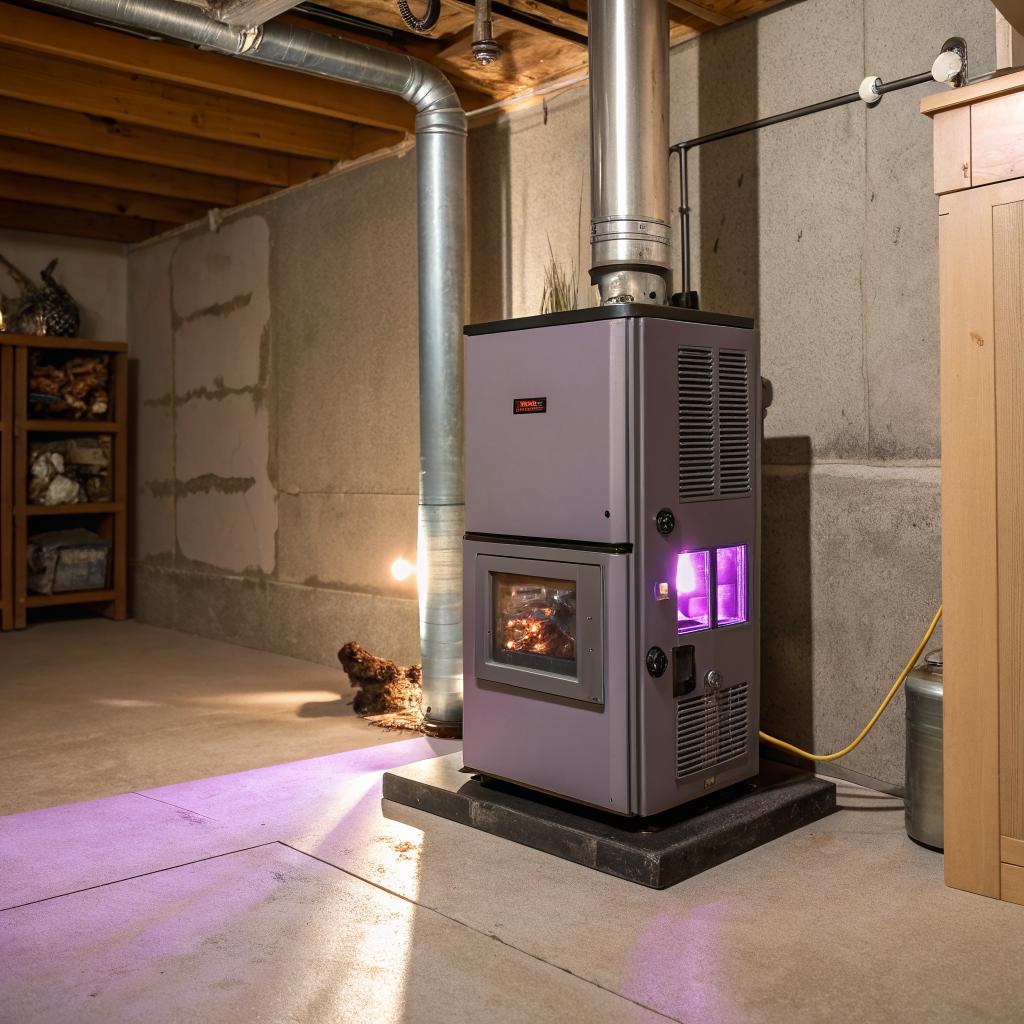
I used to think a furnace was just a box that made hot air and loud noises in the winter. Then I tried to connect mine to a smart thermostat and realized how much tech is actually hiding in that metal cabinet.
If you live in Castle Rock and you want a heating system that plays nicely with smart thermostats, Wi‑Fi, and maybe some home automation routines, the short answer is this: when you plan a furnace replacement Castle Rock project, choose a modern, compatible furnace, match it with the right thermostat, and work with an installer who understands both HVAC and smart home gear, not just one or the other.
Everything else is detail. But the details matter if you do not want to fight with error codes and random disconnects every time the temperature drops.
What “smart home ready” really means for a furnace
I think this is where many people get confused. We hear “smart” and imagine an app full of charts and colorful graphs, but a lot of the tech happens at a pretty boring electrical level.
When you say you want a “smart home ready” furnace, you usually mean at least three things:
- It works with a modern smart thermostat without adapters.
- It can support schedules, remote control, and maybe geofencing.
- It does not break your existing Wi‑Fi or automation setup every season.
You do not always need a furnace with a Wi‑Fi chip inside. In fact, many “smart” systems are just a good quality high efficiency furnace plus a smart thermostat that acts as the brain.
Smart home ready does not always mean a “smart furnace.” It usually means a compatible furnace paired with the right control system.
So when you shop for a new furnace in Castle Rock, think in terms of a system:
Furnace + thermostat + wiring + ductwork + smart home hub (if you use one)
Everything has to work together. If even one part is off, you end up with a clunky setup, or worse, one that your installer refuses to support.
Castle Rock climate and why it shapes your furnace choice
Castle Rock has that classic Front Range attitude. Mild one day, sharp cold the next. Fast temp swings are normal. This matters more than you might think for smart control.
Why climate matters for smart control
Smart thermostats are pretty good at “learning” your patterns. But in this area, they also need to deal with:
- Quick drops in temperature at night
- Sunny afternoons that warm the house faster than expected
- Dry air, which makes 68°F feel colder than it sounds
A basic single stage furnace just blasts on or off. It works, but it can overshoot setpoints a bit and feels rough when outside temps jump around. A smarter setup with a modulating or two stage furnace plus a decent thermostat can adjust output more gradually.
If your home swings from “too cold” to “too hot” all winter, the problem is often control, not capacity.
This ties directly into comfort and energy use. And it is where tech fans usually start to care. Higher resolution control feels nicer and gives the thermostat more flexibility to run smarter schedules.
Smart thermostat compatibility: the make or break detail
This is where many projects go wrong. Someone picks a furnace brand, then later decides to add a smart thermostat without checking if the two are a good match.
There are two broad categories here:
1. Furnaces that use standard 24V controls
Most traditional gas furnaces use standard low voltage wiring. If you have these, common smart thermostats like Google Nest, Ecobee, or Honeywell smart models usually work fine.
Typical wires:
- R (power)
- C (common, often the one missing in older homes)
- W (heat)
- G (fan)
- Y (cooling, if you have AC)
For smart thermostats, that C wire matters. If your old thermostat does not have it, your technician often needs to:
- Run new thermostat cable
- Use an add‑a‑wire kit
- Use the furnace control board’s spare terminals, if available
If you plan a furnace replacement, this is actually a good time to tidy the wiring. It is easier when the unit is already open and someone is running cables anyway.
2. Furnaces that need proprietary or communicating thermostats
Some higher end furnaces use proprietary communication between the unit and thermostat. These are often branded “communicating” systems. They can be powerful, but they may require:
- The manufacturer’s own thermostat
- Extra equipment to work with common smart thermostats
In these setups, you can still have “smart” features, but the control often lives in the brand’s thermostat or app. That may or may not fit with your existing smart home.
Before you sign a contract, ask one direct question: “Which thermostats is this furnace compatible with, and will it support the smart thermostat I want without ugly workarounds?”
If the installer hesitates or gives a fuzzy answer, push for specifics or a different configuration.
Key smart-friendly furnace features to look for
You do not need every feature on this list, but a few of them can make your life easier down the line.
Variable speed blower
A variable speed blower motor lets the furnace fan run at different speeds instead of just high or off. For a tech‑minded homeowner, that brings a few nice things:
- Smoother temperature control, since the system can run longer at lower speeds
- Better pairing with smart thermostats that use algorithms for comfort rather than hard on/off cycles
- Quieter operation, which is underrated when you work from home or game late at night
Two stage or modulating heat
Single stage furnaces run at full power whenever they are on. Two stage or modulating units can ramp up and down. That can help your thermostat fine tune comfort, especially during shoulder seasons where you do not need full blast heat.
Some smart thermostats can control stages directly. Others just send a call and let the furnace handle the logic internally. Either way, the result is more precise.
Clear diagnostic codes
Not the most glamorous feature, yet very useful. Many newer furnaces have:
- LED error codes on the control board
- Simple diagnostics visible on the thermostat
This matters if you like to understand what is going on before you call for service. You still should not open gas lines yourself, but you can at least see if the issue is a pressure switch, ignition problem, or something simpler.
Energy efficiency with real numbers, not hype
Furnace efficiency is usually listed as AFUE, for example 80 percent or 96 percent. Higher AFUE means more heat from the same amount of gas.
Smart tools help you use that efficiency, but they cannot fix a poorly matched furnace. A simple way to think about it:
| AFUE rating | Typical type | Fit for Castle Rock tech users |
|---|---|---|
| 80% | Basic, non condensing | Budget setups, rental properties, less tech focus |
| 90% – 94% | Condensing, mid tier | Good mix of comfort and cost, works well with smart thermostats |
| 95% – 98% | High efficiency, often variable speed | Best match for smart home owners who watch energy usage |
You do not always need the top tier, but pairing a mid to high efficiency furnace with smart controls usually gives the best long term result.
Planning your furnace replacement as a “tech project”
If you like home tech, planning a furnace replacement feels a bit like planning a new PC build, but with gas and code requirements. There are some constraints you cannot ignore.
Step 1: Start with your smart home stack
Before you pick hardware, map what you already use:
- Do you run Google Home, Alexa, Apple Home, or something custom?
- Do you want voice control for temperature settings?
- Do you already own a smart thermostat?
If you own a thermostat like Nest or Ecobee and you like it, tell the HVAC company you want the new furnace wired to support that device. Do not let them talk you into something that breaks your existing setup unless there is a good reason.
Step 2: Match furnace type to your home
Tech readers sometimes focus on features first and ignore basics like duct sizing or insulation. That is a mistake.
Size and type should match:
- Square footage and layout of your home
- Age and insulation level
- Existing ductwork conditions
If the contractor does not do a load calculation and just “matches what you had,” that is a red flag. Homes often change over time with new windows, finished basements, or added insulation.
Step 3: Confirm wiring and power needs
Smart friendly setups usually need:
- A proper C wire run to the thermostat
- A furnace control board with enough terminals for future add‑ons
- Correct electrical supply and a shutoff that meets current code
Ask to see the low voltage wiring plan. It should not look like a random knot of cables. Clean wiring now saves you headaches when you add another device later.
Step 4: Treat ventilation and combustion as non negotiable
Smart controls are nice, but safe combustion and ventilation are non optional. For high efficiency units, this often means:
- New PVC venting run to outside
- Proper combustion air intake
- Condensate drainage with a clear path and maybe a pump
This part is less about tech and more about safety. Still, if it is done well, it also protects your expensive equipment and anything else you are connecting to it.
How a smart thermostat actually talks to your furnace
If you like to know what is going on behind the scenes, this part is interesting. The basic idea is simple: the thermostat sends low voltage signals that tell the furnace which mode to run.
Simple on/off control
In older or simpler systems, the thermostat just closes a circuit between R and W to request heat. The furnace does the rest. Smart thermostats can mimic this behavior.
The “smart” work in that case is all about:
- When the thermostat chooses to call for heat
- How far it lets temperature drift from the setpoint
- Whether it pre heats before you wake up or arrive home
Staged or modulating control
With more complex furnaces, the thermostat can:
- Request low or high stage heat
- Adjust fan speed indirectly
- Communicate through a data link in some communicating systems
Here, the thermostat and furnace are closer to a mini network. That is where brand compatibility and firmware updates can start to matter.
It is a good idea to ask installers about how firmware updates for the thermostat and any connected modules are handled. You do not want an update from a big tech company to break your heating in January.
Smart home routines that actually make sense with a furnace
People in tech circles sometimes go overboard with automation. I have seen flows where heating, blinds, lights, and music all adjust together just because the sun moved 5 degrees.
For heating, simpler routines often work better and cause fewer surprises.
Useful automations
- Geofencing: Set the home to a lower temperature when everyone leaves, then warm back up when you are on your way home. This saves gas without constant manual tweaks.
- Sleep schedules: Lower temps at night automatically, then wake up to a warmer house. Most smart thermostats handle this nicely.
- Vacation modes: A long term away setting that still protects pipes from freezing during cold snaps in Castle Rock.
- Fan circulation: Light fan runs to keep air mixed, which can help even out hot and cold spots.
Automations that often cause problems
- Constant rapid setpoint changes from multiple automations. This can confuse comfort algorithms and might wear on components more than needed.
- Voice routines that different family members trigger with different preferences, leading to a tug of war on the thermostat.
- Automations that shut the system off completely too often, which can be risky in very cold weather.
You can still experiment, of course, but keep a simple baseline schedule that works if your more complex automations fail.
Common furnace replacement mistakes in smart homes
People who like tech sometimes focus on the wrong parts of the project. I say this as someone who has done it.
Overvaluing fancy apps, undervaluing installation quality
A clean install with correct duct transitions, sealed connections, and proper gas and vent work matters more than an extra app feature. No thermostat can fix a furnace that short cycles because of poor airflow.
If you have to choose between a slightly simpler thermostat and a better installer, pick the better installer almost every time.
Ask to see photos of previous jobs. Look at how the duct connections and wiring look, not just the shiny furnace shell.
Ignoring static pressure and duct issues
Smart thermostats sometimes show runtime data that reveals hidden problems. Short rapid cycles, loud whistling, or certain error codes can point to air restrictions.
In Castle Rock, there are plenty of homes where the original ductwork was sized for an older, less efficient furnace. When adding a high efficiency unit with new blowers, pressure can become a problem.
If your installer never measures static pressure or talks about duct sizing, that is a concern. Even some minor duct fixes can help the whole system, including your smart control.
Forgetting about backup heat and outages
Smart devices all need power and, often, internet. Winter storms can make both less reliable.
Ask yourself:
- What happens if the Wi‑Fi is down?
- Does the thermostat still control heat locally?
- Is there a way to reach basic settings from the unit or a simple backup thermostat?
Most good smart thermostats can still run the furnace locally without cloud access, but it is worth confirming. You do not want to learn this during an outage.
Questions to ask an installer in Castle Rock
You do not need an engineering degree to have a useful conversation with an HVAC contractor. A few targeted questions can quickly show how comfortable they are with smart setups.
Tech focused questions
- Which smart thermostats do you install most often with this furnace model?
- Will this setup support common platforms like Google Home or Alexa?
- Do you run a C wire as standard for smart thermostats?
- If my thermostat firmware updates, will it affect the furnace operation?
Quality and safety questions
- Do you perform a load calculation for my home before sizing the furnace?
- How do you handle venting for high efficiency units in Castle Rock homes?
- What static pressure range are you targeting for my duct system?
- What kind of warranty do you provide on labor, not just parts?
If the answers are vague, rushed, or full of buzzwords, that is not a good sign. You want someone comfortable talking about both airflow and apps.
Rough cost expectations and tradeoffs
Prices move a bit over time, but the pattern stays similar. Smart home ready usually lines up with mid to high tier systems.
Here is a simplified way to think about ranges, just as a ballpark:
| Tier | What you get | Fit for smart home users |
|---|---|---|
| Basic | 80% furnace, single stage, standard blower, simple thermostat | Works with some smart thermostats, but limited comfort features |
| Mid | 90%+ furnace, two stage, better blower, smart thermostat ready | Good comfort and tech integration for most Castle Rock homes |
| High | 95%+ furnace, variable speed, advanced thermostat, communicating options | Best comfort and control, but sometimes more complex to integrate |
The jump from basic to mid tier often gives more value than the jump from mid to high tier. Especially if you are careful with your thermostat settings and air sealing in the home itself.
How to prepare your home for a smart furnace install
There are a few simple steps you can take before the crew arrives that make the project smoother and reduce surprises.
Clear physical access
This sounds boring, yet it matters:
- Clear a path to the furnace and electrical panel
- Move storage away from the furnace area
- Make sure attic or crawlspace access is reachable if relevant
It is not just about being nice. Better access often means the installer has more room to run clean wiring and venting, which is good for your future tech tweaks.
Document your existing tech
Before install day:
- Take photos of your current thermostat wiring
- Write down your Wi‑Fi network info if your thermostat will need it
- List your current smart devices that tie into heating (sensors, hubs, etc.)
This makes it easier to bring everything back online once the hardware is in place.
Think about future add ons
Even if you are not ready to add them now, consider:
- Will you add central AC or a heat pump later?
- Do you want more smart sensors in other rooms?
- Are you planning solar or battery backup that might interact with HVAC loads?
Mention these plans to your installer. They can sometimes size and wire things in a way that leaves doors open instead of closed.
Q & A: Common smart furnace questions from Castle Rock homeowners
Q: Do I really need a smart thermostat, or is it just a gadget?
A: You do not have to use a smart thermostat, but in many Castle Rock homes it makes sense. With big swings in outdoor temperature, a decent smart thermostat can reduce wasted run time and keep comfort steadier. If you like data and remote control, it becomes more than a toy. If you prefer simple, a programmable non connected thermostat can still work fine with a new furnace.
Q: Will a smart thermostat save enough to justify the cost?
A: Savings depend on your habits. If you already adjust temps manually and are careful, the gain might be modest. If you tend to leave the heat at one setting all winter, automation can trim wasted heating hours, especially during times when nobody is home or at night. For many people, the bigger benefit is comfort and control, with savings as a bonus, not the only goal.
Q: Can my new furnace break if the Wi‑Fi goes down?
A: No, a properly set up system should keep running with local control even if your network or internet is offline. The thermostat can lose remote features, but basic heat requests still pass through the low voltage wires. If an installer proposes a setup that only works with cloud access, I would be very skeptical.
Q: Is a communicating furnace worth it for a tech focused home?
A: Sometimes. Communicating systems can fine tune operation better and share more data between the furnace and thermostat. But they can also lock you into one brand and make third party smart thermostat use harder. If you like open choices and frequent gadget swaps, a high quality non communicating furnace with a good smart thermostat might fit your style better.
Q: What is the single most important choice if I want a smart home ready furnace?
A: Pick an installer who understands both HVAC basics and smart controls, and be clear about your current and future tech plans. The model number matters, but the way it is sized, wired, and configured in your Castle Rock home matters more.