I used to think solar in Pennsylvania was either way too expensive or basically free once you got some magic tax credit. It took a few real quotes, a spreadsheet, and one slightly awkward call with a local installer for me to realize the truth sits somewhere in the middle.
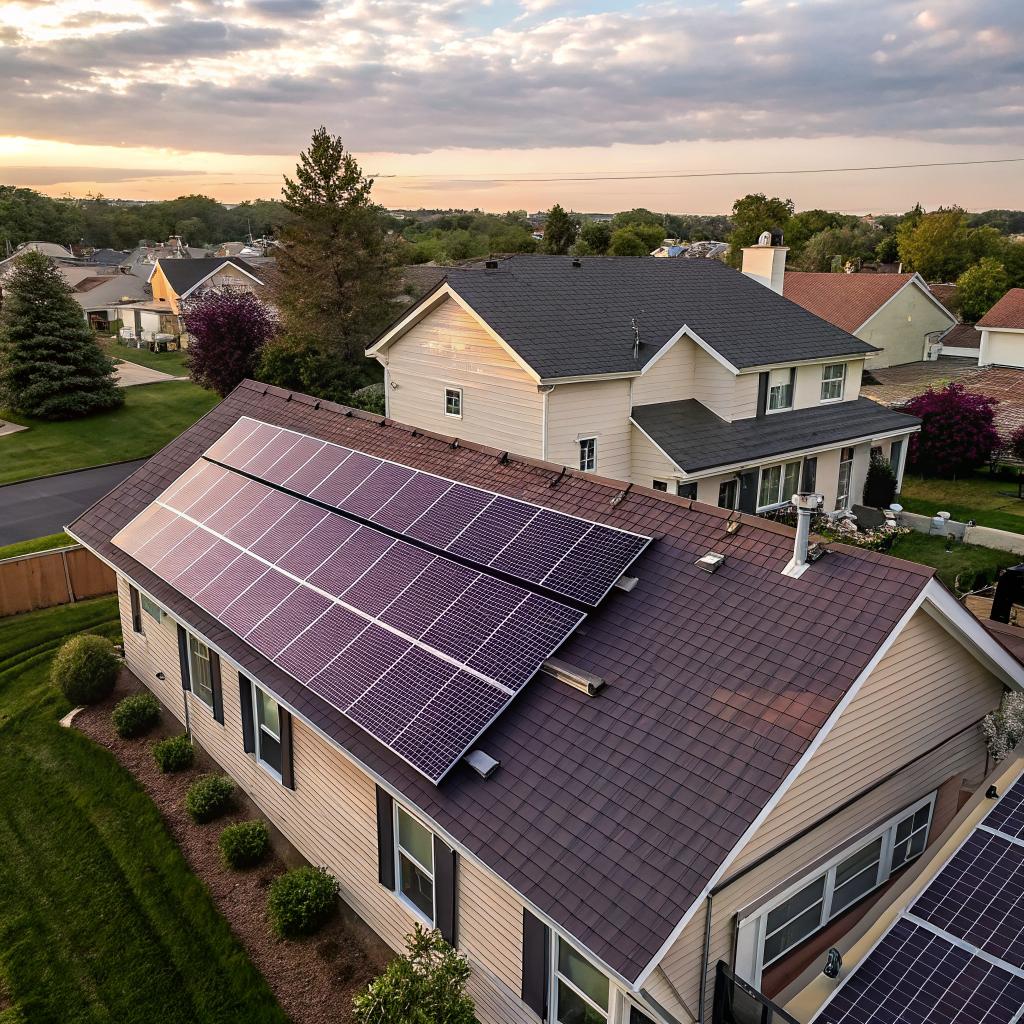
If you just want numbers: the typical installed residential solar panel cost PA homeowners see today is around $2.50 to $3.25 per watt before incentives, which means a 7 kW system often lands between $17,500 and $22,750 before the federal tax credit, and roughly $12,250 to $15,925 after that credit. Your final price depends on your roof, electric usage, hardware, and incentives in your utility area. You can check current ranges and offers for your area here: solar panel cost PA.
How much do solar panels cost in PA right now?
For tech minded homeowners, the easiest way to think about solar pricing is cost per watt.
Here are realistic ranges for Pennsylvania as of this year, based on industry data and recent quotes I have seen:
| System size | Typical price per watt (before credit) | Approx total cost (before credit) | Approx net cost (after 30% tax credit) |
|---|---|---|---|
| 4 kW (small home) | $2.70 | $10,800 | $7,560 |
| 6 kW (average home) | $2.80 | $16,800 | $11,760 |
| 8 kW (larger usage) | $2.85 | $22,800 | $15,960 |
| 10 kW (high usage / EV) | $3.00 | $30,000 | $21,000 |
None of those numbers include batteries, main panel upgrades, or fancy monitoring beyond what installers usually bundle in.
For most PA homes that use an average amount of power, you are usually looking at something in the $14,000 to $20,000 net range after the federal credit, if you buy the system.
If that range feels vague, that is because solar pricing really does move when any of these change:
- Your yearly kWh usage
- How much shade your roof has
- Roof material and layout
- Panel brand and inverter type
- Whether you add a battery
- Local labor and permit costs
You will also see some installers rolling everything into a single monthly payment, which hides the real cost. I will get to that later, because some of those offers are fine, and some are not great.
How to estimate your own solar cost in PA in 5 minutes
If you like numbers, you can get a pretty close estimate yourself before talking to anyone.
Step 1: Check your yearly usage
Pull up your electric bills from the last 12 months. Most PA utilities show your total kWh over the year somewhere on the bill or in your online account.
If you cannot find it, just add up 3 or 4 months and take an average.
Example:
- Average monthly usage: 900 kWh
- Yearly usage: 900 × 12 = 10,800 kWh
Step 2: Decide how much you want to offset
Most people aim to offset 80 to 100 percent of their yearly usage with solar. Net metering in PA lets you send extra power to the grid and get credit, so aiming high is usually fine.
Let us say you want 95 percent coverage:
- Target kWh from solar: 10,800 × 0.95 = 10,260 kWh per year
Step 3: Translate kWh into system size
In Pennsylvania, one kW of solar panels tends to make about 1,150 to 1,350 kWh per year, depending on roof direction, tilt, and shading. A safe middle value is 1,250 kWh per year.
So:
- Needed system size = target kWh / production per kW
- 10,260 / 1,250 ≈ 8.2 kW system
Round that to 8 or 8.5 kW.
Step 4: Apply a price per watt
Take a mid range price per watt for PA, such as $2.85.
- 8.2 kW = 8,200 watts
- 8,200 × $2.85 ≈ $23,370 before incentives
- Federal tax credit (30 percent) = about $7,011
- Estimated net cost: $23,370 − $7,011 ≈ $16,359
That is how you jump from “I have no idea” to “I am probably in the mid $16k range” with simple math. Quotes will still vary, but you at least know the ballpark, which keeps you from falling for something wild.
If a quote comes back way below $2.40 per watt or way above $3.40 per watt, take a step back and ask a lot of questions about what they are including, who is doing the install, and how the warranty works.
What actually drives solar panel cost in PA?
Installers like to talk about panel brands and efficiency, but for your wallet, a few items matter more.
1. System size vs your usage
This is the main cost driver. Bigger system, higher cost, simple as that.
A tech friendly way to think about it is matching “supply” (solar output) to your “load profile” (your actual daily usage). If you know you are adding an EV in a year or two, a heat pump, or a second fridge, it is often cheaper to size slightly higher now rather than pay for another install later.
Still, going huge “just in case” can be a mistake. Extra capacity you never use is money you do not get back, since PA utilities credit you at retail rates during the year, but long term you do not get rich exporting tons of extra kWh.
2. Roof type and condition
Some roofs are simple. Some roofs make installers roll their eyes.
A few examples:
- Asphalt shingle, simple pitch, one main plane: cheapest to install
- Metal standing seam: often very good, clamps can reduce roof penetrations
- Tile, slate, or older roofing: cost can rise fast because of extra labor and risk
- Multiple dormers, skylights, chimneys: more layout work and wiring complexity
If your roof is near the end of its life, you are often better off replacing it before solar goes on. It hurts to add that cost, but pulling a full solar array off in 8 years and re installing it is worse.
3. Hardware choices
Solar hardware is like PC parts. There is the “good enough” tier, the “nice” tier, and the “you do not actually need that” tier.
Common choices:
- Standard 400 to 430 W panels vs premium high efficiency panels
- String inverter vs microinverters
- Integrated monitoring vs third party monitoring add ons
Premium panels from brands like SunPower or REC can push your cost per watt up by 20 to 30 cents. They can make sense on small roofs where you need every bit of power per square foot, or if you just care a lot about that extra efficiency. Otherwise, mid tier panels from solid Tier 1 manufacturers work fine for most people.
Microinverters and power optimizers increase cost a bit, but they are often worth it in PA if you have partial shade, complex roofs, or want panel level monitoring. You can actually see if a single panel fails instead of guessing.
4. Labor, permits, and “soft costs”
Soft costs are everything that is not a physical component:
- Design and engineering
- Permits with your township or city
- Interconnection with your utility
- Inspections
- Installer overhead and profit
In the US, these can be 40 to 50 percent of the total project cost. Pennsylvania is not the most expensive, but not dirt cheap either, because permitting processes vary a lot by township.
When two quotes use similar hardware, a big price gap usually comes from differences in soft costs, profit margins, or how aggressive their sales model is, not from some secret cheaper panel.
5. Battery or no battery
Many tech savvy homeowners want a battery. I get it. The idea of backing up your house and managing energy locally is appealing.
But in PA, batteries rarely pay for themselves from pure bill savings unless you have very high time of use rates or frequent outages.
Typical costs:
- Small battery (around 10 kWh usable): $9,000 to $13,000 installed
- Larger setups (two batteries): $16,000 to $24,000 installed
You can still claim the 30 percent federal tax credit on batteries if they are charged by solar, which helps. Just do not mentally group “solar cost” and “battery cost” as one thing. Treat the battery as a separate project in your head and ask: “Is this extra $X worth it to me for backup and control?”
Incentives and credits that cut solar panel cost in PA
This part changes over time, so you always need to verify. But here is the current structure in Pennsylvania that affects what you actually pay.
1. Federal solar tax credit (ITC)
Right now, the federal credit is 30 percent of the total installed cost of your solar system. That includes panels, inverters, wiring, and even batteries if they are paired with solar.
Key points:
- It is a tax credit, not a rebate. You claim it when you file your federal tax return.
- You need enough tax liability to use the full credit. If not, you can usually roll it forward.
- The credit applies to purchased systems and loans, but not to leases or PPAs you do not own.
So that earlier $23,370 example system drops to about $16,359 after the credit, if you can use all of it.
2. Net metering in Pennsylvania
Net metering is not a direct discount on system price, but it affects how much value you get from every kW you install.
In most of PA:
- Your meter spins forward when you use grid power
- It effectively spins backward when your solar sends extra power to the grid
- At the end of each billing period, you pay only for the net usage
Credits usually roll over month to month. Once a year, any leftover credits may be paid out at a lower “avoided cost” rate, which is not as good as the retail rate.
For you, this means a well sized system can cut your electric bill drastically without needing expensive batteries to store every extra kWh.
3. SRECs in PA
Solar Renewable Energy Credits (SRECs) are a bit more niche, but tech oriented readers tend to find them interesting.
Every 1,000 kWh your system produces creates one SREC. In some states, power companies buy these credits to meet renewable energy requirements.
In Pennsylvania, SREC prices have moved around over the years and are not as high as in some neighboring states, but they still matter.
Things to know:
- You need to register your system with the PJM GATS or a similar platform
- You can sell SRECs through aggregators, who take a cut
- Revenue is variable and not guaranteed long term
For a typical 8 kW system in PA, you might get 8 to 10 SRECs per year. If SRECs are selling for, say, $20 to $40 each during a given period, that is roughly $160 to $400 in extra yearly income. Not life changing, but it improves your payback.
4. Local and utility programs
Some PA utilities and local governments offer extra perks such as:
- Small rebates per watt
- Reduced permit fees
- Low interest financing programs
These vary a lot by county and utility. They also vanish once budgets run out.
This is one reason you want at least two or three quotes from installers who actually work in your county. Local installers usually know which township inspectors are picky, which utility interconnection forms are annoying, and what incentives are real for your address.
Solar financing in PA: cash, loan, lease, or PPA?
How you pay can matter almost as much as how much you pay.
Cash purchase
If you have the funds, cash is usually the cleanest option.
Pros:
- No interest over time
- You own the system fully and get the tax credit
- Best lifetime ROI
Cons:
- High upfront cost
- Harder to compare “payment vs bill” since you pay all at once
If you treat solar like buying a long lasting appliance that also produces something valuable, cash makes sense. Systems often last 25 to 30 years at useful output levels.
Solar loans
Solar loans spread the cost out, but details matter a lot.
Common structures in PA:
- Short term loans (5 to 10 years) with lower interest rates
- Longer term loans (15 to 25 years) that often have higher total interest
- Loans that assume you will pay the tax credit into the loan as a lump sum
Watch out for:
- Dealer fees that inflate the cash price if you use “0 percent APR” offers
- Automatic payment increases if you do not apply the tax credit to the principal
- Prepayment penalties
This is where reading the fine print actually matters. A 0 percent rate often hides the fee inside a higher system price. You are still paying for it, just framed differently.
Leases and PPAs
Solar leases and power purchase agreements (PPAs) are often advertised as “no cost” solar. They are not really free; you just do not own the system.
In a lease:
- The solar company owns the system
- You pay a fixed monthly fee to use the power
- They often raise that fee every year by a set percentage
In a PPA:
- The company owns the system
- You pay for the power generated at a per kWh rate lower than your utility rate
- Rates can also escalate yearly
Leases and PPAs can work for people who cannot use the tax credit or do not want any maintenance worries. For tech savvy homeowners who care about long term control, I think owning the system is usually better, unless there is some very specific reason.
Typical payback period for solar in Pennsylvania
So you pay, say, $16,000 net for a system. What does that look like over time?
You can think of it as prepaying for 20 to 30 years of electricity at a fixed “per kWh” cost.
Step 1: Estimate yearly savings
You need:
- Your current electric rate (cents per kWh)
- Your solar system yearly production (kWh)
Example:
- Electric rate: $0.16 per kWh (many PA rates sit in the $0.13 to $0.18 range, but check your bill)
- System production: 10,000 kWh per year
- Solar covers most of your usage
Yearly savings = 10,000 × $0.16 = $1,600 per year.
Step 2: Simple payback calculation
Net system cost: $16,000
Yearly savings: $1,600
Simple payback = 16,000 / 1,600 = 10 years.
That is a rough, straight line view. Real life will not be that clean. Your rates might rise, some years will be sunnier, your usage might change.
Many PA homeowners see payback times somewhere between 8 and 13 years for a purchased system, assuming they sized things reasonably and avoided very high financing costs.
After that, the system is still working and your power is effectively “near free” aside from small maintenance items that crop up over decades.
Tech angles: monitoring, data, and control
If you read a tech site, you probably care at least a little about data. Solar gives you more of it than you might expect.
System level monitoring
Most inverters come with a web portal or app that shows:
- Current power output in kW
- Daily, monthly, and yearly energy in kWh
- Basic error alerts
This is the baseline. You can check from work or on your phone to see whether the system is alive and roughly in the expected range.
Panel level monitoring
If you use microinverters or DC optimizers, you often get panel level data. That means you can see:
- Each panel’s output in real time
- Shading patterns through the day
- Degradation or failures on individual modules
For people who like debugging or tuning systems, panel level view is gold. You can see when that one tree branch starts to matter. Or spot a failing panel before it drags the array down.
Home energy monitoring and automations
Many tech savvy homeowners pair solar with:
- Whole home energy monitors like Sense or Emporia
- Smart breaker panels from companies like Span or Eaton
- Home Assistant, Hubitat, or other automation platforms
This lets you do things like:
- Shift EV charging to peak solar hours
- Run hot water or laundry when your array is overproducing
- Limit backup loads during outages to extend battery runtime
You do not have to go this far, but if you enjoy tweaking graphs and automations, solar can tie nicely into the rest of a smart home.
Practical tips before you sign a solar contract in PA
Here is where a bit of skepticism helps. Some solar sales outfits in PA are great. Some are not.
Get multiple quotes and normalize the data
When you request quotes, ask each installer to provide:
- System size in kW DC
- Total cash price before incentives
- Panel brand, model, and wattage
- Inverter brand and model
- Estimated yearly production
- Warranty details (equipment, labor, roof penetrations)
Then calculate price per watt:
- Price per watt = total price ÷ total watts (kW × 1000)
Comparing by price per watt gives you a cleaner view than listening to marketing terms.
Question oddly low or high bids
If one bid is 30 percent cheaper than the others, something is probably different:
- Lower quality hardware
- Less generous workmanship warranty
- No post install support or monitoring
- Estimated production that is unrealistically high
High bids sometimes come from big national brands with heavy sales overhead. You might pay more for the logo and sales team than for better panels.
Check shading and layout carefully
Ask for the layout drawing and shading report. Many installers use tools that simulate shade each month.
Look for:
- Panels placed under known obstructions (chimneys, trees, nearby buildings)
- Good use of the best performing roof faces (usually south, then west or east)
- Reasonable assumptions about tree growth and seasonal shading
You do not need to be an engineer, but check whether the design makes sense to your eyes. If you know there is a big tree that shadows the roof every afternoon and the plan ignores it, ask why.
Understand the warranties
There are three layers here:
- Panel warranty (usually 25 years for performance, 10 to 25 years for product)
- Inverter warranty (often 10 to 25 years, depends on brand and model)
- Workmanship warranty from the installer (labor and roof penetrations, usually 5 to 25 years)
Panels rarely fail in large numbers if they come from reputable brands. Inverters are more likely to need replacement during the system life, so make sure you know who pays for what when that time comes.
Common questions from tech savvy PA homeowners
1. Is it better to oversize my system to plan for EVs and heat pumps?
This is where opinions split a bit.
If you are almost certain you will add an EV or switch to electric heat in the next two or three years, modest oversizing can be smart. A 10 or 15 percent bump in system size often costs less than a whole small system later.
But jumping from 8 kW to 15 kW “just in case” often locks a lot of money into capacity you do not use for years. During that time, panels keep degrading slightly, and policy rules could change.
I lean toward planning for known loads within a 3 to 5 year window, not imaginary ones 10 years out.
2. Are higher efficiency panels really worth the price premium?
Sometimes, but not always.
They help most when:
- Your roof area is limited, but usage is high
- You care a lot about low profile, clean looking arrays with fewer panels
- You are trying to keep array size small for aesthetic or HOA reasons
If you have plenty of roof space, mid efficiency panels often give better value per dollar, and the total energy output difference is small for the whole system.
3. How much maintenance do solar panels need in Pennsylvania?
Very little.
Rain usually keeps panels reasonably clean in most of PA. You may see:
- Occasional debris from leaves, pollen, or bird droppings
- Snow cover in winter, which clears faster on steeper roofs
Some people like to clean panels once a year with a hose or soft brush, early in the morning when glass is cool. Just be careful about safety and manufacturer advice. For many homeowners, watching the monitoring data for drops in output is enough to know when cleaning is worth it.
4. Will solar increase my property value in PA?
Data from home sales across the US shows that owned solar systems often raise home value. The exact amount varies, but buyers tend to like lower electric bills.
Leased systems can be a bit more complicated, because the buyer needs to accept the lease transfer. This is another reason I think ownership is cleaner for long term planning.
5. What happens if policy or net metering rules change?
This is the one uncertainty people worry about, and I think they are right to ask.
Most changes to net metering or solar rules in the US apply going forward, not retroactively. That said, long system lifetimes mean you cannot predict everything.
If you size your system to roughly match your own usage and get a decent payback period under current rules, you reduce your exposure to bad changes. Oversizing wildly to sell extra energy back to the grid exposes you more, because your plan then depends on stable export credits.
So a fair closing question for yourself might be:
If net metering rules got slightly worse in 5 or 10 years, would I still feel good about this system size and cost, or did I only justify it based on perfect policy staying forever?
If your answer is “yes, I would still be fine”, then your solar project in PA is probably on solid ground. If your answer is “no, this only works under ideal conditions”, you might want to adjust your design or financing before you sign anything.