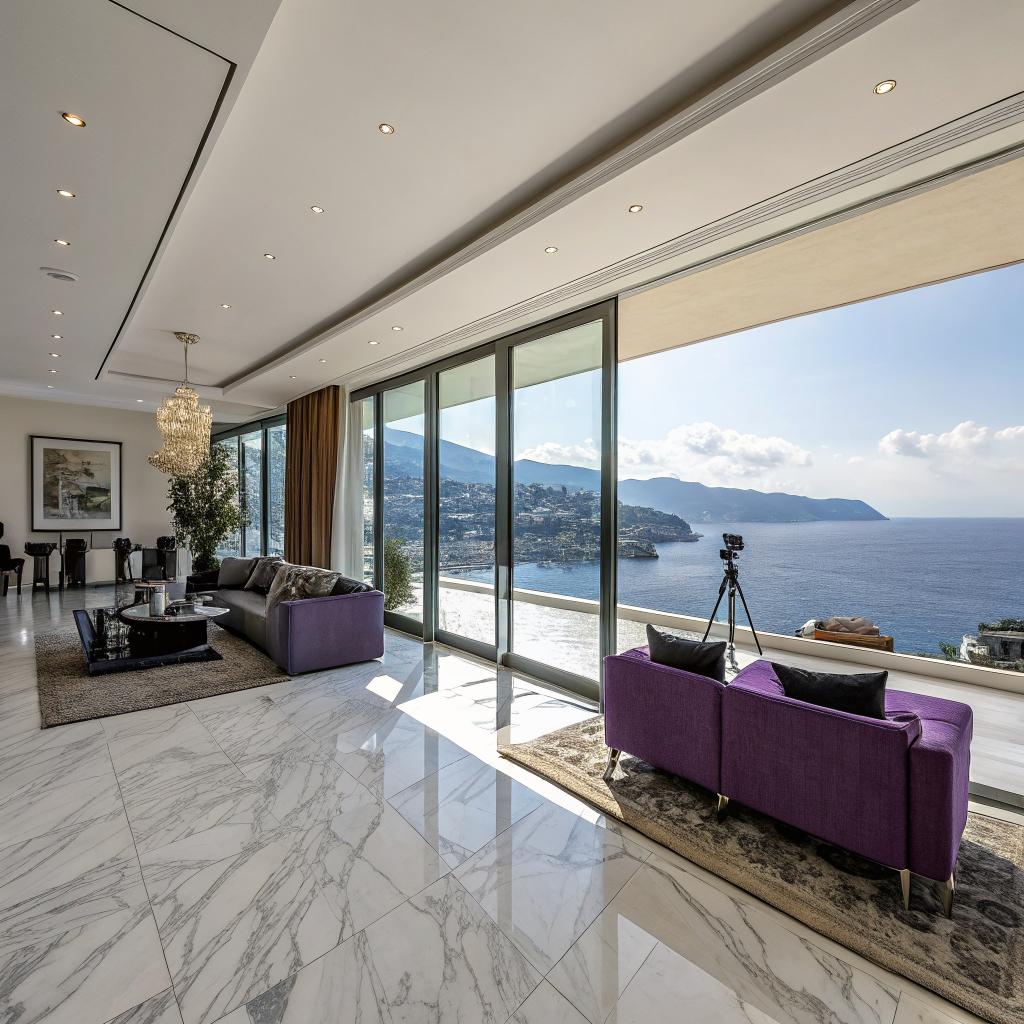
I used to think real estate in Monaco was untouched by technology, frozen in a kind of permanent luxury bubble. Then I watched someone reserve a seven-figure viewing slot from their phone, in a taxi, while streaming a 3D tour, and I had to change my mind.
If you want the short version: tech is reshaping real estate Monaco markets by changing how properties are found, viewed, priced, financed, and even lived in. Digital platforms, data tools, virtual tours, and smart building systems are pushing a market that looked very old-school into something that feels much closer to a high-end tech product. It is still exclusive, still small, still very expensive, but the way buyers, brokers, and developers interact with it is now rooted in software.
Why tech suddenly matters in such a small market
At first glance, Monaco looks like the last place that needs tech to help sell real estate. Demand is huge, supply is tiny, and there are always people waiting for the next serious listing.
So why is tech creeping in everywhere?
Because high net worth buyers behave like everyone else with a smartphone. They search online first. They want more data, more convenience, and less friction. They compare listings on their laptop on a plane. They message brokers on WhatsApp. They expect instant media, stats, and clean digital paperwork.
For people interested in tech, Monaco is a strange but interesting lab:
- The market is extremely small and dense.
- Prices are among the highest in the world, which makes even small gains quite meaningful.
- Buyers are usually busy, global, and tech-comfortable.
- Regulation is strict, so any digital step must be precise.
You can already see this in how a single search for real estate Monaco brings up modern, media-rich websites that feel closer to a tech product catalog than an old-school property page.
Tech is not changing the fact that Monaco is tiny and expensive. It is changing the experience around those facts.
Online platforms: from shop window to global interface
Walk around Monaco and you still see agency windows filled with glossy photos. Those are not gone. They are just not the main gateway anymore.
Today, most serious buyers start online. Even ones who live five minutes from Port Hercule.
Smarter listing platforms and better search
A plain list of properties is no longer enough. Buyers expect filters that work well and give them a quick feeling for:
- Exact location within Monaco, down to the street or block
- Building type, age, and reputation
- Floor level, orientation, and view type
- Noise level and proximity to main roads
- Security features and building services
This is not “nice to have” anymore. If a site is slow, or the filters do not respond the way users expect, people leave. That is harsh, but it is real, even at this price level.
Many agencies now use:
- Fast, mobile-first sites built on solid front-end frameworks
- Instant search with auto-complete and geo filters
- Saved searches with alerts by email or messaging apps
- Private areas for clients where they can see new listings before they go public
The line between “portal” and “CRM” is thinner than it looks. A lot of the tech that powers the public face of Monaco real estate actually lives behind login screens.
High quality media as a default, not a bonus
If you sell an apartment in Monaco with two dark phone photos, you are simply behind. Buyers expect:
- Professional photography with correct lighting
- Floor plans that are easy to read
- Short, stable videos showing the flow of the space
- 360-degree tours that support desktop, mobile, and VR
The tech here is not exotic. It is mostly cameras, drones, good editing, and the platforms that host the tours. The surprising part is how fast it has become standard.
Serious buyers now treat good images and floor plans as basic hygiene, not as an extra. Poor media does not create curiosity, it creates doubt.
For tech-minded readers, this is a simple user experience problem. Does the media answer the questions the user has in their head, as fast as possible, with minimal effort?
If it does, people lean in. If it does not, they move on.
Virtual tours, digital twins, and the “remote buyer”
At first, virtual tours in Monaco felt like a gimmick for people who were not serious. That view is fading fast.
When a buyer is in New York, Singapore, or Dubai, a 3D tour is often the first real contact with a property, not a toy.
3D tours and staged spaces
You can now view a five-room apartment in Monte Carlo from your laptop with:
- Clickable navigation from room to room
- 360-degree views
- Measurement tools built into the tour
- Day and night lighting versions
Sometimes you can switch between “empty” and “furnished” versions of the same space. A few developers generate rendered tours for unfinished units so buyers can see something close to the final result.
This has real effects:
A well built tour can cut the number of physical visits needed before a decision. Buyers show up to Monaco with a shortlist, not a long catalogue of “maybe” options.
People do not buy a property in Monaco from a tour alone very often, but they use tours to save time. In a small country with tight streets and complex buildings, that matters.
Digital twins for new luxury projects
For new developments, some teams build “digital twins” of the building. These are detailed 3D models linked to data. You can:
- Select a unit on a digital floor plan
- See sun exposure by month and time of day
- Check views from balconies at different heights
- Compare layouts in an interactive way
This often sits on a touchscreen in a sales office, but also online. For tech people, this is not surprising. It is basically 3D, GIS, and some simple data layers.
What is different in Monaco is the price scale. A software tweak to show more accurate sunlight angles can influence a decision worth many millions.
Data and pricing: a more transparent luxury market
Monaco always felt opaque. Private deals, quiet negotiations, very few public signals. That is still partly true, but data is slowly changing the balance.
Public stats and private dashboards
Public sources in Monaco are limited, but there are still:
- Yearly stats on transaction volume and price levels
- Some information by neighborhood or building type
- Trends over multiple years
Agencies combine this with their own internal records of:
- Asking price vs final price
- Time on market for each listing
- Number of visits and inquiries per property
- Typical negotiation ranges by area or building
That data flows into:
- Internal dashboards built on tools like Tableau or custom front ends
- Pricing models that propose a range based on what has actually sold
- Client reports that explain where a specific unit sits relative to the market
For buyers with a tech background, this is familiar: it is just basic analytics. But in a luxury context, it removes some of the guesswork.
Data does not remove emotion from Monaco real estate, but it does remove some of the excuses. You can still overpay, but it is less often by accident.
AI valuations and their limits in Monaco
Automated valuation tools are now common in many countries. You put in an address, and you get a rough price range.
In Monaco, this is more fragile, because:
- The sample size is small compared to big cities
- Each building is quite unique
- A slight difference in view or floor can change value a lot
Still, some agencies use machine learning models internally to:
- Suggest initial price ranges based on historical data
- Highlight units that are overpriced or underpriced
- Forecast the time a unit will stay on the market
The key is not to pretend the model is perfect. It is closer to a strong hint than a verdict.
Some tech readers might expect a clean, automated pricing system. That is not realistic here. Human judgment, especially local knowledge of each building, still wins many arguments with the model. And that is probably healthy.
AI in search, communication, and paperwork
AI is a buzzword you probably hear too much, but it is already sitting quietly behind parts of the Monaco property journey.
Better search and matching
Search fields on property sites used to be simple. Price, area, bedrooms, maybe a rough location.
Now, AI can enrich this by:
- Rewriting descriptions so they are consistent and clean
- Tagging listings with standard attributes extracted from text and floor plans
- Suggesting similar properties that really match user behavior, not random listings
Imagine you keep viewing family apartments near schools with three bedrooms and a sea glimpse, but you never click on ultra modern penthouses. The site can learn that intent and adjust.
For agencies, some tools can read inbound messages and:
- Classify leads into serious and casual
- Extract budget, timing, and desired area
- Propose a first answer for the agent to edit
This does not replace the broker. It just saves time.
Document automation and contracts
Monaco deals still need careful human legal review. But some parts of the process are now:
- Template based, with auto-filled fields
- Tracked in digital checklists
- Signed by secure e-sign tools, if allowed by the parties
Some teams use AI to:
- Scan contracts for missing fields or inconsistencies
- Generate summaries for clients in clear language
- Translate documents while keeping key terms accurate
This is one of those areas where tech can reduce stress without changing the law at all.
Buyers rarely enjoy the paperwork part of a Monaco purchase. Smart templates and clean digital flows cannot make it fun, but they can make it shorter and less confusing.
Smart homes, building tech, and daily life in Monaco
Once the deal is closed, tech does not stop at the front door. New and renovated units in Monaco are packed with systems that would have looked like science fiction a generation ago.
Home automation and comfort
Smart home platforms connect:
- Lighting scenes, adjusted per room and time
- Climate control with zoned heating and cooling
- Motorized blinds and shutters
- Security alarms and cameras
- Sound and media across multiple rooms
Owners can control most of this from their phone, from anywhere. Many have separate profiles for “owner”, “guests”, or “staff”.
For tech people, this is almost routine. But in Monaco, there are extra layers:
- Integration with building security and concierge systems
- Remote monitoring by property managers
- Backup setups with local control in case of network issues
There is also a growing focus on energy. Not because owners cannot pay the bill, but because regulations and awareness are slowly shifting.
Building level systems
Whole buildings now run on advanced systems that track:
- Energy use per zone
- Water consumption and leaks
- Lift performance and maintenance needs
- Access control and visitor flows
Some luxury buildings have resident apps that handle:
- Booking shared facilities like pools or gyms
- Notifying concierge about arrivals
- Parcel delivery and storage
- Service requests, from repairs to cleaning
This is all tech, even if it feels like hotel service. Sensors, APIs, databases, and UI design sit in the background.
From a privacy angle, this can be worrying. High profile owners care deeply about security. So developers and vendors have to think very hard about:
- Where data is stored
- Who has access to cameras and logs
- How long records live
This is one place where a buyer might reject some features. Not everyone wants their building to “know” when they are home.
Proptech startups and experiments around Monaco
If you look beyond Monaco itself, to the French Riviera and nearby hubs, you can see startups testing new ideas that might drip into the principality.
Examples of tech directions
Some areas where tools are emerging:
- Fractional ownership platforms for people who want partial use of a property
- Digital concierge apps that combine local services, from yachting to events
- Construction monitoring tools that provide live updates to buyers during building works
- Market intelligence products that focus on prime coastal zones
The tricky part is that Monaco has tight regulations and a small surface. Not every clever app fits, and some that sound promising are simply not realistic here.
For instance, a fully open peer-to-peer property marketplace with no brokers might work in large markets. In Monaco, trust, reputation, and discretion still matter too much for that.
I think this is where you, as someone who likes tech, need to be a bit skeptical. Not every proptech feature belongs in a micro-state with unique laws and a strong focus on security.
Foreign buyers, remote decisions, and digital trust
A large part of Monaco demand comes from people who live elsewhere. They might visit a few times each year, but much of their search and negotiation happens online.
Cross-border identity and compliance checks
Legal and banking checks are strict. Tech tools now help by:
- Scanning ID documents and verifying authenticity
- Running background checks where allowed
- Pre-filling compliance forms with secure data transfer
These systems:
- Reduce manual errors
- Speed up the early stages of a deal
- Create logs that can be audited later
It is a delicate balance. People do not like the feeling of being scanned by a machine. Good brokers explain the process clearly, instead of hiding behind “the system requires this”.
Digital trust vs human trust
You might think that smart contracts and digital signatures would rule everything by now. They help, but Monaco deals still rely strongly on personal trust.
So the current reality looks like this:
- Tech handles document sharing, signatures, and tracking.
- Video calls and messaging handle most day-to-day contact.
- In-person meetings still seal the most sensitive parts of a deal.
You see similar patterns in other high value markets. The human factor does not disappear, it just moves to fewer but more focused interactions.
Construction, sustainability, and monitoring
People often forget that tech also shapes how buildings are designed and built, not just how they are sold.
Planning and design tools
Architects and engineers working on Monaco projects use:
- BIM (Building Information Modeling) tools to create detailed models
- Simulation software for light, noise, and wind
- Energy modeling to meet local and regional targets
Because land is so limited, projects can be very complex. Think of:
- Underground levels squeezed near existing structures
- Extensions near cliffs or the sea
- Mixed use buildings that need precise service layouts
Here, software is not decoration. It is what keeps the project physically possible.
Environmental monitoring
There is a growing push toward more careful resource use, even in luxury settings. You see things like:
- Sensors for water leaks in large underground networks
- Smart meters for common areas
- Monitoring of construction impact, such as noise or dust
Results show up as:
- Lower running costs for shared areas
- Certifications or labels that buyers can compare
- Better comfort for residents over time
Tech alone does not make a building “green”. It can help track what is actually happening, instead of relying on marketing claims.
How tech changes the daily work of Monaco brokers
If you talk to agents who have worked in Monaco for a long time, many will say that their job is still based on relationships and local knowledge. I think they are right. But their tools have changed completely.
A normal day now involves more screens
A typical day might include:
- Checking a CRM that tracks all active buyers and sellers
- Replying to leads that came from website forms, chatbots, or social media
- Arranging virtual and physical tours, sometimes for people in multiple time zones
- Recording notes directly on a tablet during visits
- Sending digital packs of photos, plans, and documents after each viewing
Instead of paper folders, they use shared drives, cloud tools, and messaging apps. Instead of asking clients to visit the office for each signature, they organize secure e-sign flows.
Some brokers complain that tech steals time from human contact. Others say the opposite: it cuts repeated admin work, so they can focus on serious clients.
Both views are probably partly true, depending on how each agency sets up its tools.
Skills that now matter more
In this tech heavy context, good brokers in Monaco need:
- Comfort with digital tools, not just tolerance
- Basic understanding of data, such as interpreting price charts and trends
- Clear writing skills for email and chat, since that is where a lot of trust is built
- Awareness of privacy and security when sharing sensitive information
If someone tries to run a high end Monaco agency while ignoring tech, they can survive for a while, based on reputation. But over time, they risk losing buyers who expect simpler processes.
What might change next
Future predictions are always a bit risky, especially in a place as unique as Monaco. But some directions look likely.
Better personalization across the whole journey
We already see basic personalized alerts. It would not be surprising to see:
- Full profiles where buyers log preferences, from design style to privacy level
- Sites that show different content to different users based on behavior
- More honest “no fit” messages, where systems and humans agree that a property does not match the brief
This could reduce wasted visits and help everyone focus on properties that stand a real chance.
Closer links between real estate and other Monaco services
Tech makes it easier to connect real estate to:
- Yachting and marina services
- Private banking and wealth management
- Concierge, schools, and lifestyle providers
Not in the sense of one company owning everything, but through clean data and secure connections.
You can imagine a new resident app that, after you close a deal, helps you:
- Set up utilities
- Register for local services
- Arrange insurance, movers, and storage
All in a single, integrated flow. Some parts of this exist in fragments already.
More careful attention to digital security
Where there is money, there are attempts at fraud. Monaco is no exception. We are already seeing:
- Phishing emails pretending to be from agencies or lawyers
- Fake listings on cloned websites
- Attempts to redirect deposit payments
So tech that protects:
- Multi-factor authentication on client portals
- Verified domains and signed emails
- Strict procedures around sharing bank details
will matter as much as new shiny features.
Quick comparison: before and after tech in Monaco real estate
To make the change clearer, here is a simple table:
| Aspect | Pre-tech focus | Current tech-influenced focus |
|---|---|---|
| Property search | Walk-in agencies, word of mouth | Online platforms, filtered search, alerts |
| Property viewings | Only in-person visits | Virtual tours, videos, then targeted visits |
| Market knowledge | Private experience, rough benchmarks | Data dashboards, public stats, AI hints |
| Communication | Phone and face-to-face | Email, messaging apps, video calls |
| Paperwork | Printed contracts, courier delivery | Digital templates, secure e-signatures |
| Home features | Static systems, manual controls | Smart home platforms, remote access |
This is not perfect, but it gives a rough sense of the shift.
So what should a tech-minded buyer or observer focus on?
If you are interested in tech and Monaco property, there are a few practical angles that matter more than the latest buzzword.
Questions to ask when you look at a property or an agency
You can ask yourself:
- Does the agency site respond quickly and give clear, honest details?
- Are media, floor plans, and tours good enough to answer your basic questions?
- How do they handle your data and documents? Is the process clear and secure?
- For a specific property, how “smart” are the systems, and who supports them?
- What happens if some tech parts fail? Can you still live there comfortably?
These are concrete. They go beyond slogans and focus on how tech shapes your real experience.
One last question, and a brief answer
You might wonder: “Is tech making Monaco real estate fairer, or just fancier?”
My honest view is mixed:
Tech is making Monaco real estate more transparent and more convenient, but it is not making it cheap or equal. It smooths the process for those who are already in the game.
The barrier to entry is still money, and a lot of it. What tech does bring, for buyers and sellers at that level, is clearer information, smoother communication, and homes that feel more connected to the rest of their digital lives.
If you were in that position, which part would matter more to you: the data that helps you decide, or the smart systems that shape how you live once you have the keys?