I used to think a “smart home” was just a couple of Wi‑Fi plugs and a voice assistant arguing with me about playlists. Then I started looking at what is actually going on inside the walls, and it changed how I look at every gadget in my house.
If you want the short answer: tech homes in Colorado Springs run on much more than apps and Wi‑Fi. They run on solid wiring, upgraded panels, safe grounding, well planned circuits, and careful work from local pros. The routers, EV chargers, cameras, servers, and home labs you care about only stay online if the underlying electrical system is built and maintained correctly. That is where local EV charger installation Colorado Springs quietly keep everything alive in the background.
Why power quality matters more for tech homes
If you are into tech, you probably think first about bandwidth, CPU, GPU, or ping times. Electrical power is less visible. You just flip a switch and hope it works.
The problem is, modern homes are packed with sensitive electronics:
– Mesh Wi‑Fi and routers
– Smart thermostats and sensors
– Gaming PCs and consoles
– NAS boxes and home servers
– VR gear and multi‑monitor setups
– EV chargers and battery backups
All of these expect stable, clean power.
Old wiring, overloaded circuits, or a weak panel can cause:
– Random reboots
– Brownouts under heavy load
– Tripped breakers at the worst time
– Shortened life for expensive equipment
And in a place like Colorado Springs, you also have to think about lightning, dry air, and fast temperature swings. Those all affect the electrical system more than people realize.
Modern tech homes are not just about more gadgets. They are about building a power system that can actually support those gadgets without breaking, overheating, or corrupting the data you care about.
So when you hear “electrical work,” it is not only about lights and outlets. It is about stability and safety for your entire setup.
The hidden role of the electrical panel in a tech home
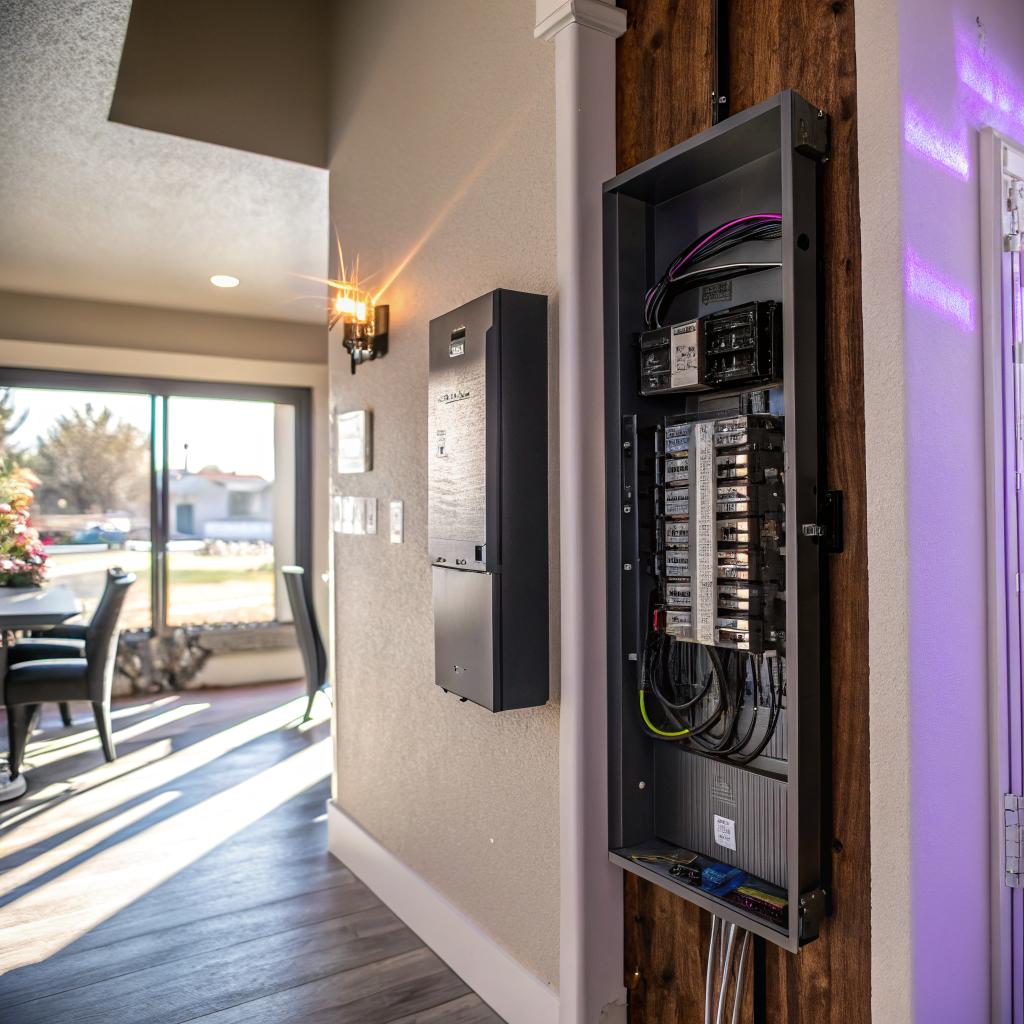
The panel is where power from the utility lines gets split into separate circuits. For a basic home, a tired old panel might be annoying but tolerable. For a tech heavy home, it becomes a real limit.
Why many tech homes outgrow their original panel
Think about everything that might be drawing power at once:
– Gaming PC, monitors, speakers
– 3D printer or lab gear
– Rack with NAS, router, switch, UPS
– Electric vehicle charging
– Electric range, dryer, microwave
– Smart lighting and automation hubs
– AC or heat pump
An older 100 amp panel was never designed for this kind of continuous load, especially when multiple high draw devices stack up.
Common signs your panel is behind your lifestyle:
- Breakers trip when the PC, AC, and microwave are on together
- Lights flicker when large loads kick in, like the dryer or AC
- You still have a fuse box or an obviously rusty, outdated panel
- Previous owners added “mystery” subpanels or multiple tandem breakers
- You run extension cords because “that outlet always trips”
For a tech person, that is not only annoying. It is a risk for data and equipment. Sudden power loss can corrupt storage, disrupt long prints or renders, or ruin firmware flashes.
If you treat your home like a small data center, you have to treat your panel like a core piece of infrastructure, not just a metal box in the basement.
What electricians actually do when they upgrade a panel
Upgrading a panel is not just about swapping the metal case. A proper job can include:
| Task | What it means for a tech home |
|---|---|
| Service size check | Confirm if you need 150A, 200A, or more to support future loads like EVs and heat pumps. |
| Load calculation | Estimate how much current your home can draw at once, including servers, PCs, and chargers. |
| Circuit reorganization | Separate high draw devices so they do not crowd one breaker or one area of the panel. |
| New breakers | Add AFCI and GFCI breakers that provide better protection for electronics and people. |
| Grounding and bonding | Improve stability and reduce risk for surges and static, which matter for sensitive gear. |
The cool part is that once this is done, your options open up. Extra capacity makes it far easier to add:
– A dedicated circuit for your home office or lab
– A 240V outlet for EV charging
– A subpanel in a garage workshop
– Future battery storage or solar
You can keep stacking tech without playing breaker roulette.
Dedicated circuits for home labs, studios, and offices
If you run a serious gaming setup, edit video, host a Plex server, or have a 3D printing corner, you already know those spaces are not “normal” rooms. They behave more like small production areas.
Why shared circuits cause such a headache
In many homes, one 15 or 20 amp circuit covers:
– An entire bedroom plus hallway outlets
– Or half a basement
– Or a group of outlets and ceiling lights together
Now picture this:
– Your PC pulls 600 watts while gaming
– Two or three monitors use another 100 to 200 watts
– Speakers, router, and a small NAS stack on more
– A space heater joins the party because the basement is cold
Every time someone in the next room runs a vacuum, that circuit is close to its limit.
You might see:
– Random monitor flickers
– UPS units that constantly click between line and battery
– Slight dimming when something big turns on
Some people ignore these signs, but they hint at a circuit that is not matched to how the room is used.
What a dedicated circuit actually gives you
When local electricians wire a dedicated circuit for your tech space, they are not doing anything magical. They are just giving your gear its own path back to the panel, with properly sized wire and breaker.
The benefits feel pretty direct:
- Less chance of tripping when other rooms pull power
- More stable voltage for sensitive equipment
- Easier to plan power strips and UPS capacity
- Cleaner layout for future troubleshooting
Some tech owners take this further and ask for:
– Separate circuits for a server rack
– A 20 amp line just for a dual PC streaming setup
– Special outlets for high draw, like 3D printers or shop tools
Do you need all that? Maybe not. But if you are the sort of person who tunes fan curves in BIOS, you probably care enough to at least know which devices share which breakers.
If your tech space matters more than your living room TV, it probably deserves its own circuit and a bit of wiring respect.
Smart switches, lighting, and low voltage wiring
Most people think smart lighting is just screwing in new bulbs. That works for simple setups. Once you grow past a few lamps, your wiring starts to shape what is possible.
Smart switches vs smart bulbs
Smart bulbs are easy, but they only go so far:
– They lose power if someone flips the wall switch
– Mixing brands can create a mess of apps and bridges
– Dimming behavior can be inconsistent
Smart switches and dimmers often make more sense long term. They control standard LEDs but keep the physical interface that guests and family expect.
Electricians help by:
– Verifying box depth and neutral wires for smart switches
– Checking that your LED loads match the device specs
– Cleaning up multi way switches so automations work as planned
If you have searched a wiring diagram at 1 AM, you already know this is not always trivial.
Planning for sensors, cameras, and network drops
A modern tech home is full of small, quiet devices:
– PoE cameras
– Wall mounted tablets
– Smart thermostats
– Door and window sensors
– Wired access points
Colorado Springs homes can be a mix of older and newer construction, which means the path behind the walls may be cramped or patched. Electricians who also care about low voltage runs can help snake Ethernet or camera wires while they already have access open for power work.
That kind of planning avoids:
– Wi‑Fi cameras that lag or fail outside
– Power bricks cluttering every outlet
– Overloaded Wi‑Fi because you did not wire any access points
Is that strictly “electrical?” Not always. But the physical routing skills are similar, and it often makes sense to combine the jobs.
EV charging and the tech home garage
For a lot of tech fans, the garage is now the biggest “device” in the house, once you park an electric car in it.
Why EV charging is not just one more outlet
An EV charger is basically a large, sustained load. That is quite different from something like a microwave, which runs for minutes, not hours.
When Colorado Springs electricians install EV charging, they think about:
- Panel capacity and breaker sizing for 240V charging
- Wire size and run length, especially in detached garages
- Code requirements for GFCI and disconnects
- Future expansion, like a second EV or higher charge rates
The wrong approach is to “make it work” by overloading an existing circuit or skipping permits. That kind of shortcut can affect the entire home, not just the charger.
Blending EV charging with home automation
Once you have a proper charger circuit, the tech side becomes fun. Many chargers support:
– Scheduled charging for off peak rates
– API or app integration
– Usage statistics, useful if you track energy like you track CPU temps
Some homeowners pair EV charging with:
– Smart load management so big loads stagger themselves
– Solar and battery storage
– Whole home monitoring that shows live usage
Again, none of this works well without solid wiring and enough panel capacity. Everything builds on that.
Grounding, surge protection, and Colorado weather
Colorado Springs sits in a region that sees its share of thunderstorms and dry air. That combination creates more electrical abuse than people expect.
Whole house surge protection for tech gear
Power strips with surge protection are nice, but they only protect what is plugged into them, and they often wear out quietly.
Whole house surge protection lives near your panel and clamps big spikes before they spread.
Benefits for a tech home:
| Protection target | Why it matters |
|---|---|
| Routers and switches | Keep your core network from dying in a storm. |
| NAS and servers | Reduce the chance of power spikes killing drives or controllers. |
| Smart appliances | Modern fridges, ovens, and HVAC boards are just small computers. |
| EV chargers | High value gear exposed to outdoor wiring is extra vulnerable. |
You still use localized surge strips and UPS units for key devices, but the whole system gets a first layer of protection at the panel.
Grounding and static in a dry climate
Dry air makes static discharge more common. If you run open PCs, labs, or electronics benches, you already ground yourself, but many people never think about overall home grounding.
Electricians can:
– Verify the bond to grounding rods or water pipe is solid
– Upgrade old connections that corroded over decades
– Check bonding between panels, subpanels, and metal parts
It sounds boring. It rarely becomes a selling point. Still, that path to earth is what helps lightning energy or transient spikes find a safer way out of your system.
Power backup for serious home users
If you host anything that matters to you, you probably care about uptime. Maybe you self host services, run game servers, or just hate losing a long video render.
UPS units vs whole home backup
Most tech users start with a UPS sitting under the desk. That is fine, but it has limits.
A UPS helps with:
– Short outages
– Brownouts or dips when a motor starts
– Giving you a few minutes to shut down cleanly
Whole home solutions reach further:
- Automatic standby generators that start when the grid fails
- Battery systems that carry key loads for hours
- Hybrid setups that combine solar and storage
Colorado Springs sees snow, wind, and other events that can knock out power. If your home is also your office, or if you run always on devices, backup starts to feel less like a luxury.
Electricians wire:
– Transfer switches so you can safely switch between grid and backup
– Subpanels with “critical loads” like networking, office, and heating
– Grid compatible battery inverters
You then protect your tech stack from longer outages and avoid the mess of extension cords through windows.
Code, safety, and why tech users should care
If you are the kind of person who reads spec sheets for fun, you may also enjoy knowing that electrical work is governed by local code and the National Electrical Code.
Code is not just red tape
A lot of DIY videos online skip key details: wire fill limits, box sizing, derating, GFCI rules, arc fault requirements. Those are not just formalities.
Ignoring them can lead to:
– Overheated wires inside walls
– Increased fire risk where cables bundle together
– Outlets near water that are not protected properly
– Circuits that behave strangely under load
Colorado Springs has its own permitting setup and local inspection structure. Licensed electricians live inside that reality every day, which means they know what will actually pass inspection and what will cause headaches later when you sell or remodel.
For a tech heavy home, “good enough” wiring is often not good enough. Stable, safe power is as real a requirement as stable internet.
Where DIY makes sense and where it does not
You can handle a lot as a homeowner:
– Setting up smart hubs and scenes
– Mounting basic low voltage devices
– Swapping faceplates, bulbs, and simple switches if you know what you are doing
Whole panel work, EV chargers, new circuits, and service upgrades fall into a different category. Getting those wrong can hurt someone or damage a lot of gear in a single moment.
You probably would not overclock a GPU without at least checking temps. Treat your electrical system with that same baseline respect.
Planning a tech home upgrade in Colorado Springs
If you are looking around your home and thinking “this wiring was not planned for what I am doing now,” you are probably right. Many houses predate the level of tech we use every day.
You do not have to fix everything at once. A staged plan works better and costs less stress.
Step 1: Make an honest power inventory
Walk room by room and look for:
- Where your most valuable or sensitive gear lives
- How many power strips, splitters, and daisy chains you have
- Circuits that trip more often or feel “weak”
- Spaces that are always short on outlets
You do not need perfect numbers. Just get a sense of which rooms are “normal” and which ones feel more like mini labs or studios.
Step 2: Decide what matters most
Not every room deserves a dedicated circuit or special treatment.
Common priorities for tech owners:
– Home office or main workspace
– Server or network closet
– Garage if you own or plan to own an EV
– Basement lab, studio, or workshop
If you try to upgrade everything at once, the project may feel too big. Focus on the spaces that cause you anxiety when the lights flicker.
Step 3: Talk through scenarios with your electrician
When you bring in a local electrician, do not just say “I need more outlets.” Explain how you actually use the space.
You can say things like:
– “This PC and monitor setup pulls about X watts while gaming.”
– “I plan to add an EV within the next 2 years.”
– “This rack stays on 24/7 and hosts personal services.”
– “I want to store data safely and avoid sudden hard shutdowns.”
You do not have to be perfect. Just giving them context lets them propose:
– Panel upgrades where needed
– Dedicated lines for heavy or sensitive loads
– Better placement for outlets and circuits
– Surge and grounding strategies that fit the house
It is a lot like talking to a systems architect. If you only say “make it fast,” you get a generic result. If you share use cases, you get something designed for your reality.
Common questions tech people in Colorado Springs ask
Q: Do I really need a panel upgrade just because I added more tech?
Probably not for a few extra devices, yes if you keep stacking high draw loads and see real symptoms.
Warning signs that push you toward an upgrade:
– Frequent breaker trips with normal use
– You already maxed out panel breaker spaces with tandems
– You are adding EV charging, hot tubs, or major HVAC changes
– The panel is old, rusted, or from a brand with known safety issues
If your panel is modern, has free spaces, and does not run hot, you might get away with just adding a few dedicated circuits instead of a full upgrade.
Q: Are whole house surge protectors worth it if I already have UPS units?
For a tech home, they usually are.
A UPS mainly handles short outages and small fluctuations for specific devices. A whole house surge unit acts as a gatekeeper for the entire system and catches larger events before they reach your UPS or circuits.
Think of the panel protector as the first shield and your UPS devices as the second. You do not need the most expensive model on earth, but having nothing at the panel is a real risk, especially in storm prone areas.
Q: Can I just run a bigger extension cord for my gear or 3D printers?
You can, but it is often a poor long term habit.
Extension cords are meant as temporary solutions. Long runs on high load, especially across doorways or under rugs, increase fire risk and voltage drop.
If you see yourself using an extension in the same way for months, that is usually a signal you actually need:
– Another outlet in that location
– Or a new circuit to that area
Bringing in an electrician for a clean, permanent fix will save you stress, and probably money, over repeated band aids.
Q: How do I know if my home wiring can handle an EV charger?
You will not know for sure without a load calculation on your panel and a look at your existing service.
In rough terms:
– If you have a newer 200 amp service with some headroom, adding a properly sized EV circuit is often straightforward.
– If you are on 100 amps with electric range, dryer, and older HVAC, you are closer to the edge.
This is one area where guessing is a bad idea. Let a local electrician run the numbers, look at your usage pattern, and size the charger circuit correctly.
Q: Is all this really worth it if my gear “works fine” right now?
That is a fair question. If your system is quiet, breakers behave, and you do not feel limited, there is no rule saying you must upgrade everything.
Upgrades start to make sense when:
– You feel forced to unplug devices whenever you run something big
– You worry about storms because of past outages or failures
– You want to add an EV, server, or studio gear without guessing
– Your panel or wiring is visibly behind the times
Think of it like replacing a boot drive with an SSD. A spinning drive can still work, but once you experience the smoother setup, you usually do not want to go back.
What part of your own tech home feels most fragile right now: power, network, or cooling?