I used to think plumbing was just pipes, wrenches, and someone showing up late with muddy boots. Then I watched a tech-heavy plumbing visit at a friends house, and it looked closer to a home lab than a basic repair call.
If you want the short answer: Spartan Plumber uses smart sensors, connected cameras, remote monitoring, and app-based tools to spot leaks early, check hidden pipes without ripping open walls, keep an eye on your water heater and main line, and turn small plumbing problems into quick fixes instead of flood-level disasters. They blend plumbing experience with smart tech so your home is less likely to flood, grow mold, or surprise you with a giant water bill. You still get a human at your house, but that person shows up with data and smart gear, not just a toolbox.
Spartan Plumber leans into this tech angle quite a bit. And if you care about gadgets, smart homes, or even just not waking up to water on the floor, it is worth seeing how this looks in real life, not just in marketing talk.
How plumbing became quietly “smart”
For years, home tech has focused on the obvious things: TVs, speakers, lights, thermostats. Plumbing sat in the background. As long as water came out and drains cleared, nobody really cared.
Then a few trends started to mix:
- Affordable sensors that can detect leaks, flow rates, and temperature shifts
- Wi-Fi and low-power networks that work in basements and crawlspaces
- Smaller cameras and better batteries for inspections
- People getting used to phone alerts for everything, including home systems
Plumbers who pay attention saw an opening. Water damage is boring until it is your kitchen ceiling, and it is usually expensive. So pairing physical work with smart monitoring is actually pretty logical, even if it still feels unusual to some homeowners.
Smart plumbing is mostly about catching problems early, in the places you never look, with tools that do not get tired or distracted.
Spartan Plumber leans on that idea: let sensors and cameras watch the risk areas, then send a real person when those tools find something off.
Leak detection that does not wait for puddles
Slow leaks are annoying. They rot wood, feed mold, and raise bills, but you rarely see them until they have been going on for a while. Smart leak detection tries to flip that around.
Spotting leaks with sensors and data
Spartan Plumber uses two broad approaches here:
- Point sensors that sit in risky spots like under sinks or near water heaters
- Whole-home flow monitors on the main water line
A table helps show the difference.
| Type of tech | Where it sits | What it watches | What it is good at |
|---|---|---|---|
| Spot leak sensor | Under sinks, behind toilets, near washing machines | Standing water, tiny drips | Finding small leaks close to fixtures |
| Flow monitor on main line | Right where water enters the house | Flow rate, pressure, sometimes temperature | Finding hidden leaks in walls, slabs, long runs of pipe |
The basic idea is simple. The sensor sees moisture, or the main-line monitor sees water moving when every faucet is off. It flags that. In some setups, your phone buzzes. In others, the plumber gets data during maintenance visits and notices weird patterns.
The goal is not about perfect detection every second, it is about noticing something is “not normal” long before drywall bubbles or floors warp.
For people who like data, these systems can show daily or weekly graphs. You can tell the difference between normal overnight toilet usage and a slow, constant leak in a buried line. That part feels very much like a health tracker, but for your house.
Shutting off water before damage spreads
Detection is one part. Response is the real test.
Spartan Plumber sometimes installs smart shutoff valves that can cut water automatically when a big leak happens. The shutoff can be triggered by:
- Flow that never stops over a set period
- Abnormally high usage compared to your normal pattern
- Direct signals from a nearby leak sensor
So if a supply line bursts while you are out of town, the system can cut water on its own. Or at least send a loud alert and give you a button in an app to close the valve remotely.
You might worry about false alarms. That is fair. Nobody wants the water to shut off in the middle of a shower because you filled a huge bathtub. The better setups learn your habits over time and use simple checks:
- Is there a single big spike that then returns to normal? Bath or hose.
- Is there a long, constant trickle for hours? Likely leak.
- Is the pattern new and unusual, with no one home? Suspicious.
It is not perfect, but it beats relying on luck.
Cameras, not hammers: how Spartan looks inside your pipes
Old school pipe diagnosis often meant opening walls or floors to guess where a problem was. Tech-focused plumbers now start with cameras.
Video inspections for drains and sewer lines
Spartan Plumber uses flexible camera lines that run through drains and sewer pipes. You get:
- Live video of the inside of the pipe
- Distance markers, so they know how far the issue is from the access point
- Recording that can be reviewed or shared
This helps find:
- Root intrusion from trees
- Collapsed or cracked sections
- Grease buildup or foreign objects
- Bad pipe slopes that cause standing water
For tech people, it is oddly satisfying. Imagine a scoped log of your sewer line. You can see the “stack trace” of clogs over time: grease at 18 feet, root hairs at 32 feet, offset joint at 41 feet.
Once plumbers started treating pipes like systems you can inspect and record, not just guess at, repairs became more targeted and less destructive.
Instead of telling you “We think the pipe under your yard is broken”, they can say “There is a crack about 27 feet out, a foot to the left of the cleanout, and we can either dig there or consider lining.”
Locators and mapping where problems live
The camera alone is helpful, but Spartan often pairs it with a locator on the surface. As the camera head sends a signal, the locator above ground tracks its position. You end up with a rough map of your pipes.
For homeowners who like diagrams and plans, some plumbers draw this out or log it in a simple digital map. That way, if you ever have another issue, the history is there.
It also means:
- No random trench across your entire yard
- Better planning for future work like landscaping or additions
- Less “I think the pipe is over here” guessing
Smart water heaters and remote monitoring
Water heaters are one of those appliances that you forget exist until they fail at the worst time. Tech can soften that hit.
Sensors on and around water heaters
Spartan Plumber often adds:
- Leak sensors at the base of the heater
- Temperature and pressure checks
- Sometimes Wi-Fi modules built into newer units
These give data on:
- Unusual temperature drops or spikes
- Extended burner or element run times
- Leaks from the tank, valves, or connections
This data can point to:
- Sediment buildup making the heater work harder
- Failed pressure relief valves
- Small leaks that will become large ruptures
For gas units, that can also tie into safety checks. If the heater is behaving oddly, that is something you want a human to inspect, not just ignore until it fails.
Predictive replacement instead of emergency floods
Many water heaters fail by leaking. If you wait until that day, you get:
- Water on the floor, sometimes on finished areas
- Rush scheduling that costs more
- Limited choice because you just need it fixed fast
By watching performance and age, Spartan Plumber can say something like:
Your heater is 12 years old, showing signs of wear, and the tank has started to sweat. It is not failing today, but waiting much longer raises your risk of a leak.
That is not dramatic. It is just data plus experience.
You can then plan a replacement on your schedule, not when you are traveling or hosting guests. For people who think in terms of “mean time to failure” and life cycle costs, this approach makes more sense than rolling the dice.
Mainline protection and water quality checks
The main line coming into your home is more than just a pipe. It sets the tone for water pressure, quality, and risk.
Pressure monitoring to protect fixtures and pipes
High water pressure feels nice in the shower, but it is rough on pipes, hoses, and valves. Spartan Plumber uses:
- Pressure gauges during visits
- Smart regulators that can be adjusted precisely
- In some cases, ongoing digital pressure logs
If your home sees spikes at certain times, or sits well above recommended ranges, it is not just a plumbing comfort issue. Long term, it raises the odds of leaks at weak points like old supply lines or appliance hookups.
Tech here is quiet. No flashy app screens. But a steady record of pressure, and a smart regulator, keeps the system within a healthy range.
Water quality sensors and filters
Water quality is part plumbing, part health, part taste. Spartan Plumber does not run a lab, but they can tie into:
- Digital TDS (total dissolved solids) meters
- Smart filter heads that track usage and time
- Simple sensors that help detect corrosion-prone conditions
Instead of changing filters based on a sticky note with a guess, some systems count actual gallons and remind you through an app. That means filters are changed when they are actually spent, not months late or months early.
For older homes with mixed metals in the plumbing, monitoring can catch conditions that encourage corrosion. Again, the plumber then takes action: swapping materials, adjusting setups, or adding protection like dielectric unions.
The smartphone is quietly part of the plumbing kit
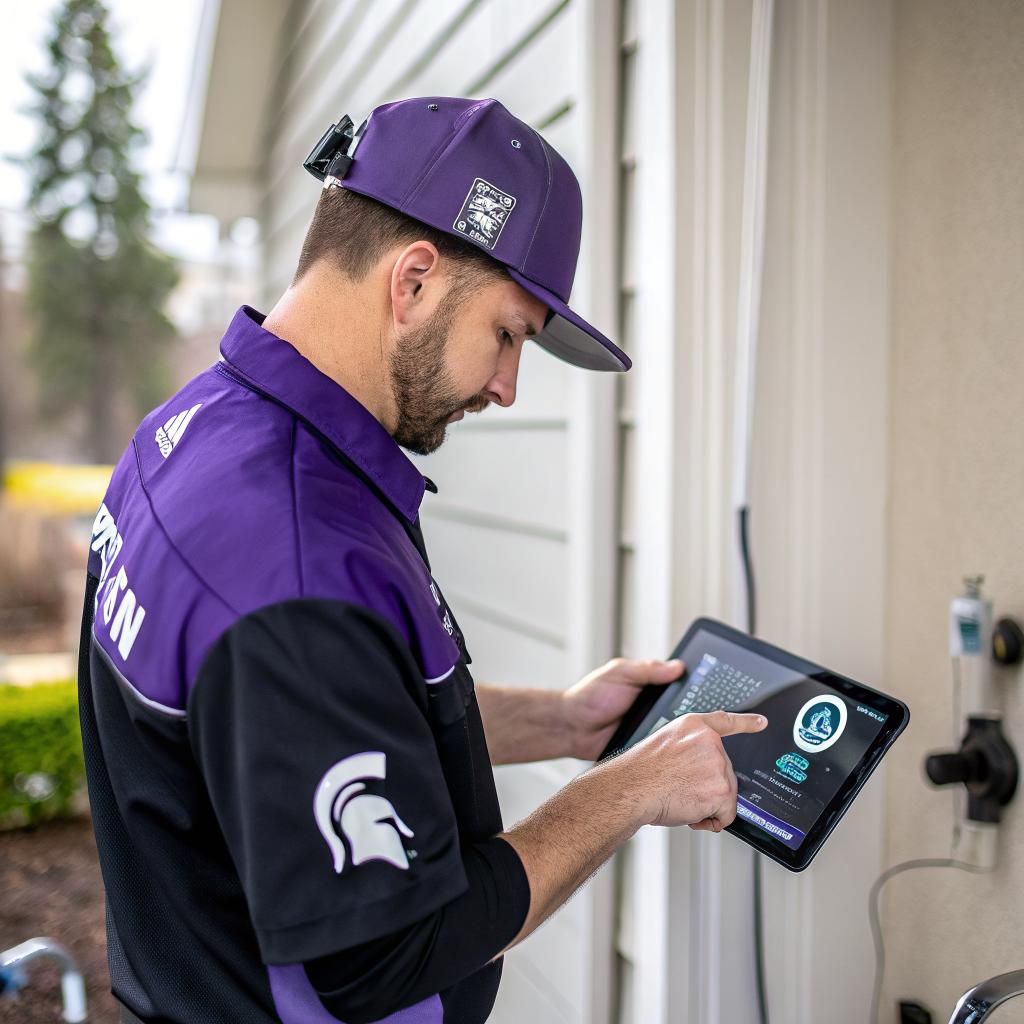
If you watched a Spartan Plumber tech work, you would see a lot of familiar tools from any smart home install. It is not just wrenches.
Apps, dashboards, and alert tuning
Plumbers who work with smart gear tend to:
- Configure leak sensors and shutoff valves through apps
- Show you how to set thresholds and alerts that make sense
- Help you avoid constant false alarms that you end up ignoring
There is a learning curve. If your phone screams every time someone takes a long shower, you will turn the system off. So they try to match settings to your household:
- Home with kids running in and out vs quiet couple
- Frequent guests vs predictable routines
- People home all day vs empty house most of the time
Some homeowners like to see every little chart. Others just want a “something is wrong” text. A good tech does not just install hardware. They calibrate it to you, even if that means fewer alerts and less data on screen.
I think this is where some people take a wrong approach. They buy all the smart gear, turn on every notification, and then complain that it is noisy. It is better to start with a few key alerts that matter, then add more if you find gaps.
Cloud services and privacy concerns
If you are deep into tech, you probably have at least a mild worry about yet another device pinging a cloud server. Water usage patterns can say a lot about your life: when you wake up, when you travel, how many people live there.
Spartan Plumber does not control all of that, because many sensors are third-party products. Still, a careful plumber can:
- Explain what data leaves your home and what stays local
- Offer options that work locally when possible
- Help you set up accounts with strong security
You should ask questions like:
- “Does this shutoff valve still close if Wi-Fi is down?”
- “Can I control this without an external cloud account?”
- “What happens if the app company disappears?”
Not every device will pass every test, but it is better to talk through it than just plug things in and hope.
From one-off repairs to ongoing monitoring
Traditional plumbing is mostly reactive. Something breaks, you call. Tech slowly nudges this into a more ongoing relationship.
Planned checkups with data, not guesswork
Spartan Plumber visits used to be like any other trade visit: quick notes, maybe a paper slip, then gone. With smart gear in play, a periodic visit can include:
- Review of sensor logs for leaks or weird flow patterns
- Inspection of camera footage if there have been drain issues
- Health check on filters, regulators, and shutoffs
This moves your plumbing from a black box to a system with at least some observability. You are not streaming a live dashboard 24/7, but you have history to look at when making decisions.
When does smart plumbing not help?
There are limits. Not every problem is fixable with sensors and apps.
For example:
- A broken hose that floods a room will be a mess, even if the shutoff kicks in
- A badly installed drain can clog no matter how many alerts you have
- Wi-Fi blindness in parts of the house can make devices unreliable
Some homes will never justify a full suite of smart gear. Maybe it is a small condo. Maybe the plumbing is already new and simple. Maybe the owner just does not want connected devices in utility areas. That is fine.
The tech does not replace good pipe layout, solid fittings, and correct slopes. It just adds early warning and better visibility.
Practical ways Spartan Plumber applies smart tech in real homes
It can help to walk through a few real-world style setups without glamorizing them too much.
Scenario 1: The older house with unknown plumbing history
You buy a 1960s house. Nobody really knows what has been done behind the walls. You suspect the sewer line is old, and there is a slightly musty smell in the basement.
A Spartan tech might:
- Run a sewer camera to check for roots and collapsed sections
- Map out the line so if repair is needed, it is targeted
- Add a main-line flow monitor plus a few leak sensors in risky areas
- Test water pressure and install or adjust a regulator
The result is not a fully “smart” home. It is a house where the highest-risk plumbing problems are watched, so you are more likely to catch them early.
Scenario 2: The frequent traveler
You are away from home a lot. You worry about coming back to surprises, but you do not want to turn your house into a data center.
Here, Spartan Plumber might focus on:
- A monitored shutoff valve on the main line
- Leak sensors near the water heater, washing machine, and main bathroom
- Simple alerts that go to your phone for anything serious
You can even choose to shut off water whenever you leave, then reopen it remotely before you return. It is a basic layer of protection that reduces the chance of multi-day leaks.
Scenario 3: The tech hobbyist with a smart home setup
You already have smart lights, smart lock, and maybe a Home Assistant or similar hub. You are comfortable with dashboards and rules.
Here, Spartan Plumber might tailor gear that:
- Integrates with your home hub, not just a vendor app
- Feeds leak and flow data into your existing automations
- Still works locally during internet outages
You end up with rules like:
- If the leak sensor at the water heater trips, cut water and send a push notification
- If long flow is detected and presence is “away”, alert loudly and close the valve
This is where plumbing starts to feel genuinely connected to the rest of the smart home, not just bolted on.
What smart tech cannot replace: actual plumbing skill
There is a risk in talking about tech like it solves everything. It does not.
Good installation still beats clever monitoring
A well-installed system with:
- Correctly sized pipes
- Proper venting and slopes
- Quality materials
will outperform a messy system with lots of sensors glued onto it. Spartan Plumber still needs to do the basics right:
- Use the right fittings
- Secure pipes so they do not move and stress joints
- Test for leaks the old-fashioned way before closing walls
You can think of smart tech like monitoring in software. It shows you what is happening. It does not fix bad code on its own. You need both: solid underlying work and good visibility.
When low-tech solutions are better
There are times when the simple fix beats a gadget.
Some examples:
- Replacing old rubber washing machine hoses with braided lines
- Adding drip pans under key appliances
- Installing manual shutoff valves you actually can reach and use
These moves reduce risk without a single sensor. Sometimes that is all you need, at least for now.
You can always layer smart tools later if your risk profile or budget changes.
Costs, tradeoffs, and how to decide what is worth it
Not every home needs a full suite of smart plumbing tools. There is a reasonable way to decide.
Think in terms of risk vs cost
Ask yourself a few grounded questions:
- What area of my house would cause the most trouble if it flooded?
- How old is my plumbing, water heater, and main lines?
- Do I travel often, or is someone almost always home?
- Do I already have smart home gear and comfort with apps?
If you have a finished basement full of electronics, an upstairs laundry room, and a 15-year-old water heater, a few sensors and a shutoff valve start to look like a small cost compared to possible damage.
If you live in a small rental with concrete floors, maybe you just push for decent hoses and know how to reach the main shutoff.
Where Spartan Plumber usually starts
From what I have seen, they rarely push a full high-tech package on day one. A typical starting path might be:
- Address any obvious current issues like drips or slow drains
- Check pressure, basic condition of visible pipes, and heater age
- Recommend one or two monitoring tools for the highest risk areas
- Talk through how much data and control you actually want
This keeps the system understandable. You can live with it for a while, see where you still feel nervous, then add more if it makes sense.
I think this gradual approach is better than wiring everything at once. It respects the fact that you need to trust the tech, and the company, before leaning on it.
Common questions about smart plumbing and home protection
Q: Do I really need smart leak sensors if my house is not that old?
A: Age helps, but it does not guarantee anything. Flexible supply lines, appliances, and fittings can fail in newer homes too. If you have water-sensitive areas like wood floors near bathrooms, or an upstairs laundry, a few leak sensors are cheap insurance. For a very small, simple home, you might start with just better hoses and easy manual shutoffs, then decide later if you want sensors.
Q: What happens when the power or Wi-Fi goes out?
A: It depends on the device, and this is where you should be a bit picky. Many smart shutoff valves can still be closed manually, and some can react to leaks even if they are offline, since the sensor signal is local. Alerts to your phone will obviously pause without connectivity. So you want to ask Spartan Plumber which parts keep working offline and which do not, and avoid setups that become useless without the cloud.
Q: Can Spartan Plumber connect my plumbing data to my existing smart home system?
A: Often, yes, but with some caveats. Some leak sensors and valves support standard home platforms or open protocols, and some do not. If integration matters to you, say that up front. They can steer toward devices that talk to your hub, while still focusing on the plumbing side first. Just be prepared that not every branded gadget will fit cleanly into your current stack.
Q: Will smart plumbing gear save me money on water bills?
A: Sometimes, but that should not be the only reason you buy it. Early leak detection can stop slow, constant drips that waste water, and flow data can help you spot wasteful habits. Still, the bigger savings usually come from avoided damage, not lower monthly bills. Think “avoiding a $10,000 repair” more than “cutting $10 off my water bill.”
Q: How do I know which parts of my plumbing are worth monitoring?
A: A simple rule of thumb helps: watch anything that can leak a lot and is near something you care about. Water heaters, washing machines, upstairs bathrooms, and main supply lines are prime candidates. Spartan Plumber can walk through your house and point out specific risks. You might be surprised by how some small changes, with or without smart tech, can lower your overall risk quite a bit.