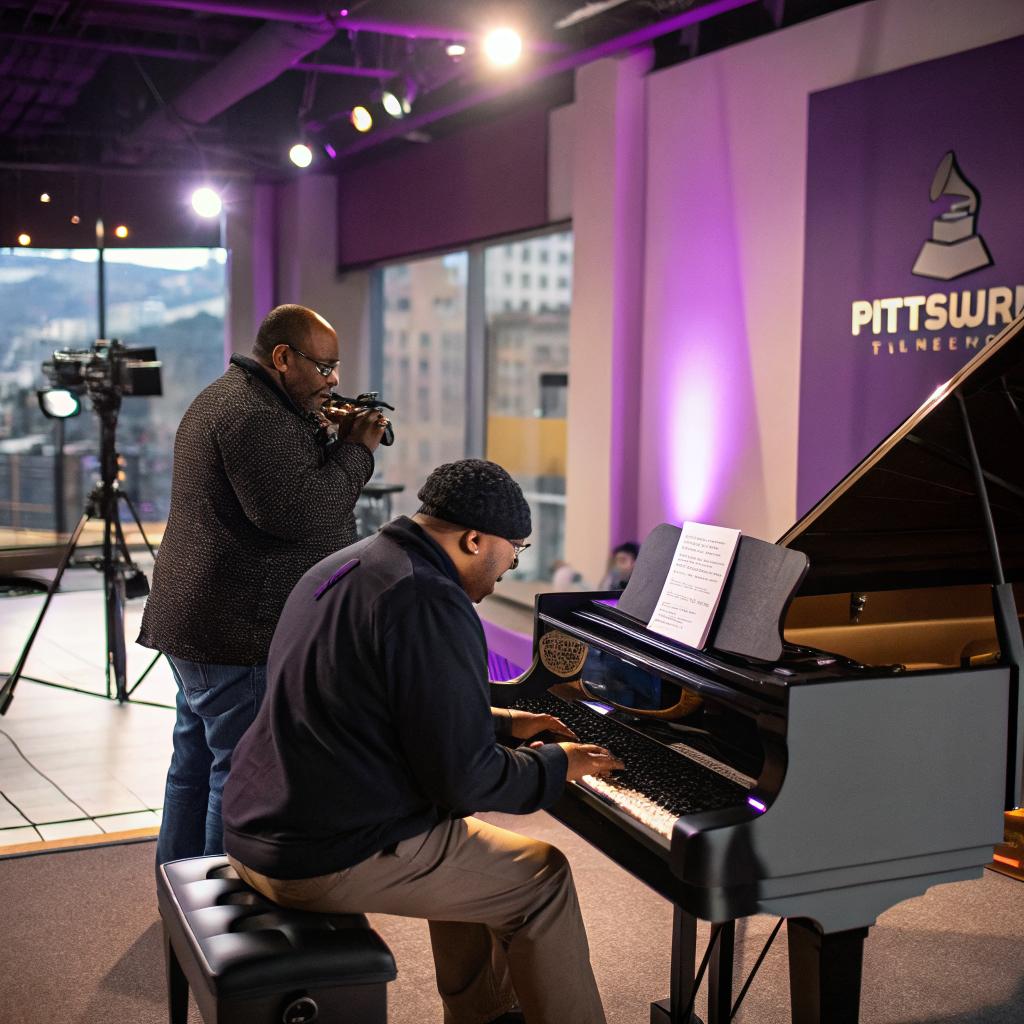
I used to think piano lessons would feel like going back to middle school: old books, stiff posture, and a metronome that clicks like a ticking clock in a quiet room. Then I watched a friend in Pittsburgh run their entire practice routine from an iPad, and it felt closer to a coding session than a traditional music class.
If you are looking for tech savvy piano lessons in Pittsburgh, the short answer is this: look for teachers or studios that mix real, in-person instruction with tools like lesson apps, video feedback, digital sheet music, and online practice tracking. Places that treat your phone and laptop as part of the lesson instead of a distraction tend to work better for busy people who already think in terms of devices, screens, and data. A good starting point is to check out local studios that advertise hybrid or online-friendly setups, such as piano lessons Pittsburgh, and then ask very direct questions about how they use tech before you commit.
That is the basic idea. The rest is about how to tell if a teacher is actually tech savvy, or just saying they are, and how to make that tech work for your goals instead of turning practice into another app you ignore after a week.
Why tech people often learn piano differently
If you write code, work in IT, or just enjoy gadgets, you probably do not approach learning the same way someone raised on only paper books did.
You are used to:
– Fast feedback
– Searchable information
– Visual dashboards
– Version control and logs
So it is a little strange when music lessons ignore all of that.
If a piano teacher never talks about recording, tracking progress, or using tools you already carry in your pocket, your lessons will likely feel behind the rest of your life.
A tech aware approach to piano in Pittsburgh usually clicks better with:
– Engineers who think in systems
– Students already learning on YouTube
– Adults balancing work, family, and commute
– Gamers who like leveling up and completion bars
Not because it is cooler, but because it fits how your brain is already trained to absorb and check information.
And I will be honest: some non-tech teachers are still fantastic. A great ear and calm presence can beat fancy software. But if the whole process feels like a time warp back to 1985, you will probably lose interest before you get through your first book.
What “tech savvy” actually looks like in a piano lesson
A lot of studios throw the word “online” on their site and stop there. That is not what I mean here. Video calls alone do not make lessons smart or modern.
Here are some concrete signs that a Pittsburgh piano teacher actually uses tech in a thoughtful way.
1. They treat your phone as part of the instrument
If the first thing a teacher says is “Please put your phone away,” that might be fine for focus, but it can also be a red flag if that is their only move.
A tech friendly teacher will usually:
– Ask what phone or tablet you have
– Suggest one or two apps that fit your goals
– Help you set up those apps during the first or second lesson
– Show you how to record short clips for feedback
They might use:
- Metronome apps with tempo logging
- Practice trackers with streaks and reminders
- Tuners (if you move into keyboard-related gear, synths, or band work)
- Simple DAWs or voice memo apps for recording
If a teacher sees your phone as a practice tool instead of a threat, you already have a better match for a tech oriented learning style.
The key is that they guide you to use only a few focused tools instead of dumping eight different apps on you in week one.
2. They share notes and sheet music in digital form
Carrying a thick binder can still work, but it is not the only way.
Many tech aware Pittsburgh teachers:
– Email PDFs of sheet music
– Use shared folders on Google Drive, Dropbox, or similar
– Keep a running lesson doc with dates, goals, and comments
– Share mp3 or video references for each piece
This makes a big difference when:
– You switch from acoustic piano at the studio to a digital keyboard at home
– You practice during breaks at work using a small keyboard and iPad
– You like searching notes instead of flipping pages
Some students still prefer printed pages, and that is fine. The point is that you have the option, not that everything must be on a screen.
3. They understand latency and audio setups
For online or hybrid lessons, tech awareness is not a bonus, it is almost required.
Ask how they handle:
– Latency on Zoom or other video platforms
– Camera placement so they can see your hands and posture
– Audio quality, so the piano does not sound thin or distorted
A teacher who says “We use Zoom and that is it” might still be good, but a teacher who can explain why clapping together does not work over most video calls, or who sets up call rules like “you mute while I play; I mute while you play”, is already thinking like a tech person.
Some teachers use:
– External USB microphones
– Two-camera setups (side view and overhead)
– Platforms tuned for music lessons instead of meetings
You do not need a Hollywood studio, you just need someone who knows how to work around lag and poor laptop mics so you can actually hear tone and dynamics.
Comparing traditional and tech savvy piano lessons
Sometimes it helps to see the differences side by side. This is not meant to attack traditional teachers. Plenty of older methods still work. The question is which mix suits you.
| Aspect | Traditional Lesson | Tech Savvy Lesson |
|---|---|---|
| Sheet music | Paper books, handwritten notes | PDFs, apps, shared folders plus print if you want |
| Practice tracking | Verbal check-in, paper notebook | Apps, shared docs, simple metrics and streaks |
| Feedback between lessons | None until next session | Short video or audio clips through email or chat |
| Tools in lesson | Acoustic piano, metronome, books | Digital keyboard, apps, monitors, screen sharing |
| Lesson format | In-person only | Hybrid, online, or mixed formats |
| Support for self-learning | Teacher as main source of guidance | Teacher plus curated online videos and resources |
The goal here is not to chase tech for its own sake. Some people overcomplicate things with equipment and forget to actually practice.
Good tech in piano lessons does not replace focused work; it just makes that work clearer, easier to repeat, and easier to track.
Finding tech savvy piano lessons in Pittsburgh
So how do you actually find these teachers in a city that has everything from classical conservatory backgrounds to casual neighborhood studios?
Here is a simple, practical approach.
Step 1: Search with the right filters in mind
When you search online, do not just type “piano teacher Pittsburgh” and hope for the best. Look for hints of tech awareness in the way schools and teachers describe themselves.
Search for terms like:
- Online and in-person lessons
- Hybrid piano lessons
- Digital resources
- Apps for practice
- Recording and feedback
Then read the site more closely. Ask yourself:
– Do they mention online options as a core part of what they do, not just a side note?
– Do the photos show modern keyboards, laptops, or tablets in the studio?
– Do they talk about helping busy adults or older beginners?
If the site only talks about children, recitals, and graded exams, that might be fine for some students, but not ideal if you want a flexible, tech heavy style.
Step 2: Ask direct questions before you sign up
This is where many people go wrong. They choose a studio based on location and price, with almost no questions about method or tools.
Push a little here. You are not being rude.
You can ask:
- “What apps or digital tools do you normally use with students?”
- “Do you share lesson notes or recordings online?”
- “How do you handle online lessons and latency?”
- “If I want to record my practice, will you review short clips between lessons?”
- “Are you comfortable working with a digital keyboard at home instead of an acoustic piano?”
You might feel a bit picky asking these things, but it saves you months of frustration.
If the answer is a flat “We do not use any tech except Zoom”, that might be enough for some people, but you probably want more.
If the teacher gets curious and starts asking about your gear, your schedule, and your background in tech, that is a good sign they match your way of thinking.
Step 3: Ask to test the setup
Many Pittsburgh studios will give you:
– A short trial lesson
– A discounted first month
– Or at least a quick video call
During that time, pay attention to:
– How they handle screen and camera angles
– Whether sound is clear or always clipping
– How quickly they can switch between demonstrating and watching you
If everything feels clumsy and they blame the software every time, you might be in for a rough ride.
If things go wrong but they adjust settings, suggest a new angle, or share a short test recording, you can see they actually understand the tech side instead of just complaining about it.
How tech can help you practice more and quit less
Piano progress is not magic. It is a mix of:
– Regular, focused practice
– Clear goals
– Good feedback
– A bit of patience when your fingers will not listen
Tech helps by supporting each of those pieces.
Making practice visible, not vague
If you like stats, you will likely respond well to seeing your practice laid out in simple charts.
A basic practice app can show:
– Minutes per day
– Days in a row
– Which pieces got the most attention
– Tempo changes over time for one song
Nothing wild. Just enough to stop you from guessing.
You might notice patterns like:
– Mondays and Thursdays are usually skipped
– You spend a lot of time playing easy parts, almost none on the hard bars
– Your tempo is stuck on a section that you thought you were improving
Once it is visible, you can change it. Tech people do this at work all the time. For some reason, many never think to do it with an instrument.
Using recordings as your own code review
If you record one minute of playing, twice a week, you build a nice record of your progress that your teacher can review quickly.
This is similar to a code review:
– You do the main work on your own
– You push a small “commit” in the form of a clip
– Your teacher comments on timing, tone, or fingering
– You apply the changes during your next practice block
It does not have to be fancy. A phone placed on the music stand works fine.
What matters is that your teacher is willing to respond and that you are not trying to judge every tiny detail in real time while you play.
Sometimes you will hate how you sound on a recording. Most people do at first. That is normal. Over time, you will hear your own progress in a more honest way than you can feel it day to day.
Blending self-teaching and guided learning without getting lost
If you are already on YouTube, you know there are thousands of tutorials:
– Chord progressions
– Pop arrangements
– Jazz voicings
– Ear training tips
– Synth programming
The problem is not a lack of content. It is the mess.
A tech aware teacher in Pittsburgh will accept that you will watch online videos and might even encourage it. The key is that they help you:
– Choose what to watch first
– Skip poor or confusing channels
– Connect random tricks to a real foundation
For example, a student might say:
“I watched a video on lo-fi chords and now my hands hurt and it still sounds bad.”
A good teacher will not just sigh. They might break down:
– Which chord shapes are safe for your level
– How to practice them slowly over a simple rhythm
– How to adjust fingering so you do not strain your thumb
The tech side here is less about new gadgets and more about how you both manage online information.
Choosing hardware and apps without going overboard
If you like gear, it is easy to overbuy. I have seen beginners order full-sized MIDI controllers, audio interfaces, and studio monitors before they can play a clean scale.
You do not need that to start.
Keyboards, pianos, and what actually matters
Pittsburgh has a mix of apartments, shared houses, and older homes with thin walls. That affects instrument choices.
At a basic level, think about:
- Do you need headphones for quiet practice?
- Do you have space for an 88-key keyboard?
- Do you want a real acoustic piano or a good digital one?
For many tech oriented players, a quality digital keyboard is enough at first. Look for:
– Weighted or semi-weighted keys
– Full 88 keys if possible
– Pedal input
– USB or MIDI for connection to a computer
This gives you:
– Quiet practice with headphones
– Connection to music software
– Enough keys to play standard classical and pop pieces
You can always upgrade later.
Simple software stack for a beginner or busy adult
There is no single “correct” app setup, but here is a lean set that many students find useful:
- Metronome app with tempo marks
- Practice log app or even a simple calendar habit tracker
- Note app for lesson points and questions
- Voice recorder or video camera for short clips
If you want to go slightly deeper:
– A basic notation or chord chart app
– A DAW if you are into production (GarageBand, Reaper, etc.)
– Ear training apps for intervals and chords
Talk to your teacher about what they support. If they use a shared system already, follow that rather than building your own complex stack just because you can.
Balancing structure and play: the hidden skill in tech heavy lessons
One risk with tech friendly methods is that you treat piano like another productivity project. You track it, color code it, and forget that music also needs a bit of play.
A good Pittsburgh teacher who likes tech will try to balance these two sides.
Clear goals without killing curiosity
You probably know the feeling of turning a hobby into a spreadsheet and then losing the spark.
To avoid that, ask for goals that show progress without turning the whole thing into a performance review.
Some examples:
– “By the end of this month, I want to play this one song at 80 bpm without stopping.”
– “I want to be able to improvise simple chords in C and G by the end of this quarter.”
– “I want to sight-read easy pieces for 10 minutes a day without panic.”
Those are clear but still leave room to enjoy the process. Your teacher can then suggest:
– Weekly focus items
– Exercises that fit your music taste
– Occasional recording projects that feel like mini milestones
Using tech for play, not just work
There are also lighter ways to bring tech into piano:
– Backing track apps that let you play with a “band”
– Simple loopers so you can layer your own parts
– Software synths for sound exploration
If you only ever use tech for timing and logging, practice might start to feel like a productivity tool. Mix in some play so you do not burn out.
You do not need to be a producer or performer to enjoy this. A 15 minute session where you load a new soft synth, play slow chords, and listen to new sounds can reset your ears and remind you why you started.
What about kids, teens, and older beginners?
Not everyone reading this is an adult engineer in Oakland or Squirrel Hill. Some are parents, some are students, and some are retired and finally have time.
Tech aware lessons can work for almost any age, but the approach shifts.
For kids
With kids, tech can help, but it can also distract.
A good kid-friendly, tech mindful teacher will:
– Use simple, visual apps with clear goals
– Keep screen time limited and structured
– Stay in control of what is on screen during the lesson
Parents in Pittsburgh often like:
– Practice reminders
– Simple video demos of weekly assignments
– Progress reports they can see online
The trick is keeping it about music, not turning the lesson into another game that competes with actual practice.
For teens
Teens often show up already learning songs from TikTok, gaming soundtracks, or anime openings.
A tech aware teacher can:
– Help them find accurate arrangements or create simpler versions
– Encourage them to record covers and small projects
– Show them the basics of DAWs if they like production
At the same time, the teacher should anchor everything in real skills:
– Rhythm
– Reading
– Technique
– Ear training
Without that, tech just becomes a way to churn out sloppy covers faster.
For adults and older learners
Many adults in Pittsburgh come to piano after years away from any instrument. They may be nervous about “starting too late” or about “not being musical.”
Here, tech can actually reduce stress:
– Online lessons lower the barrier on busy or cold evenings
– Recording progress gives a slower but honest view of improvement
– Digital notes reduce the “What did we do last time?” feeling
Some older adults may be less comfortable with phones or computers. In that case, an ideal teacher is willing to:
– Introduce tech slowly, one piece at a time
– Keep backup paper copies of key materials
– Not make anyone feel behind for not owning the latest device
So “tech savvy” here really means “flexible and thoughtful,” not “everything must be on a screen.”
Questions people in tech often ask about piano lessons
Can I really get good with mostly online or hybrid lessons?
Short answer: yes, if you are willing to practice regularly and your teacher knows how to work around latency and sound quality issues.
Online or hybrid setups work best when:
– You have a quiet space and a decent camera angle
– Your teacher provides clear written or recorded follow-up
– You use recordings between lessons to fill in gaps
If you want advanced performance training or detailed tone work for classical recitals, in-person time with a real acoustic piano will still help a lot. But for many goals like playing pop songs, learning chords, composing, or adding piano skills to production work, hybrid lessons can go very far.
How much gear do I actually need to start?
You can start with:
– A basic digital keyboard with weighted keys
– A sustain pedal
– Headphones
– Your phone or laptop for online lessons and practice tools
That is enough. You can spend more later on better keyboards, mics, or monitors if you find that you love it.
If a teacher insists you buy a grand piano within the first month, you might want to slow things down and decide what your long term goals really are.
What if I get bored with scales and exercises?
Tell your teacher directly. Do not just fade away and cancel.
Ask questions like:
– “How does this scale work in songs I might actually play?”
– “Can we connect this exercise to a piece I like?”
– “Can we set a project goal, like recording one full song?”
A good tech aware teacher can:
– Show you recordings of songs that use the scale
– Load a backing track so you can improvise using that scale
– Build a small project plan around one piece
The exercises themselves are not the real issue. The issue is usually that you do not see where they fit. Tech can help make that visible through examples, recordings, and clear roadmaps.
Is it too late for me if I am already deep into my career?
No. You will not move like an 8-year-old with endless free time, but you have other advantages:
– Patience
– Analytical thinking
– The ability to schedule and protect focused blocks of time
If you are in tech, you already learned at least one hard skill from scratch. Piano is similar. It takes time, but the process is not magical.
The real question is not “Is it too late?” but “Am I willing to give this 20 to 30 focused minutes most days, with decent guidance?” If yes, then you can see real progress in a year or two.
And if you can find piano lessons in Pittsburgh that respect your schedule, use tech smartly, and match your way of thinking, there is a good chance you will actually stick with it long enough to surprise yourself.