I used to think fast growth for a tech brand was mostly about product and marketing. If you had a good app or device and knew how to run ads, the rest would somehow sort itself out.
The short answer is that tech brands scale faster when they stop running their own warehouse and shipping, and instead plug into specialized fulfillment services Los Angeles that handle storage, picking, packing, and shipping for them. That switch frees up cash, time, and headspace so the team can focus on product, engineering, and customer experience instead of tape guns and freight quotes.
Why operations can quietly slow tech growth
Most early tech founders I know did not start their company because they love pallets, shipping labels, or barcode scanners.
They started with:
– A product idea
– A technical skill set
– A sense of what problem they want to solve
Then orders start coming in. It feels nice at first. Ten orders a day. Then fifty. Then two hundred. At some point, the team realizes they are spending more time on cartons than code.
If your best people are packing boxes during a launch week, your growth engine has a serious leak.
Tech brands hit a few common friction points:
– Space runs out. Office closets turn into mini warehouses.
– Engineers end up fixing label printers instead of bugs.
– Customer support gets flooded with “where is my order?” questions.
– Inventory gets messy and stockouts become frequent.
– Expedited shipping bills look worse every month.
This is where a well run third party logistics partner in a logistics heavy region like Los Angeles starts to matter.
Why Los Angeles actually makes a difference
Los Angeles is not just a big city near the ocean. For logistics, it is a key hub.
You get:
– Proximity to the Port of Los Angeles and Long Beach for imports from Asia
– Shorter transit times to West Coast customers
– Reasonable ground shipping times to other US regions
– Access to major carriers, freight options, and last mile networks
For a tech brand that imports hardware, accessories, or anything physical, cutting one or two days from transit on every inbound shipment and a day on outbound West Coast deliveries adds up.
I have seen small hardware brands that moved their inventory from a remote warehouse in the Midwest to a Los Angeles based center and cut average shipping time to their biggest customer base by nearly a day without changing carriers.
What tech brands actually hand off to a fulfillment partner
When people hear “3PL” or “fulfillment provider”, the term sounds vague. The reality is more practical.
Here is what you usually hand over.
1. Storage and inventory handling
Instead of renting extra office space or a separate warehouse, your products sit in a facility with:
– Racks, shelving, climate control where needed
– Barcode scanning and bin locations
– Processed receiving so stock is checked in and counted
The tech tie-in is inventory accuracy. If you sell through Shopify, Amazon, your own API, or other channels, you want stock levels to be right. Not almost right.
Every time a customer orders something that is “in stock” on your site, but not actually on a shelf, you lose more than one sale. You lose some trust as well.
Good fulfillment services sync with your systems so stock updates flow both ways in close to real time.
2. Pick, pack, and ship
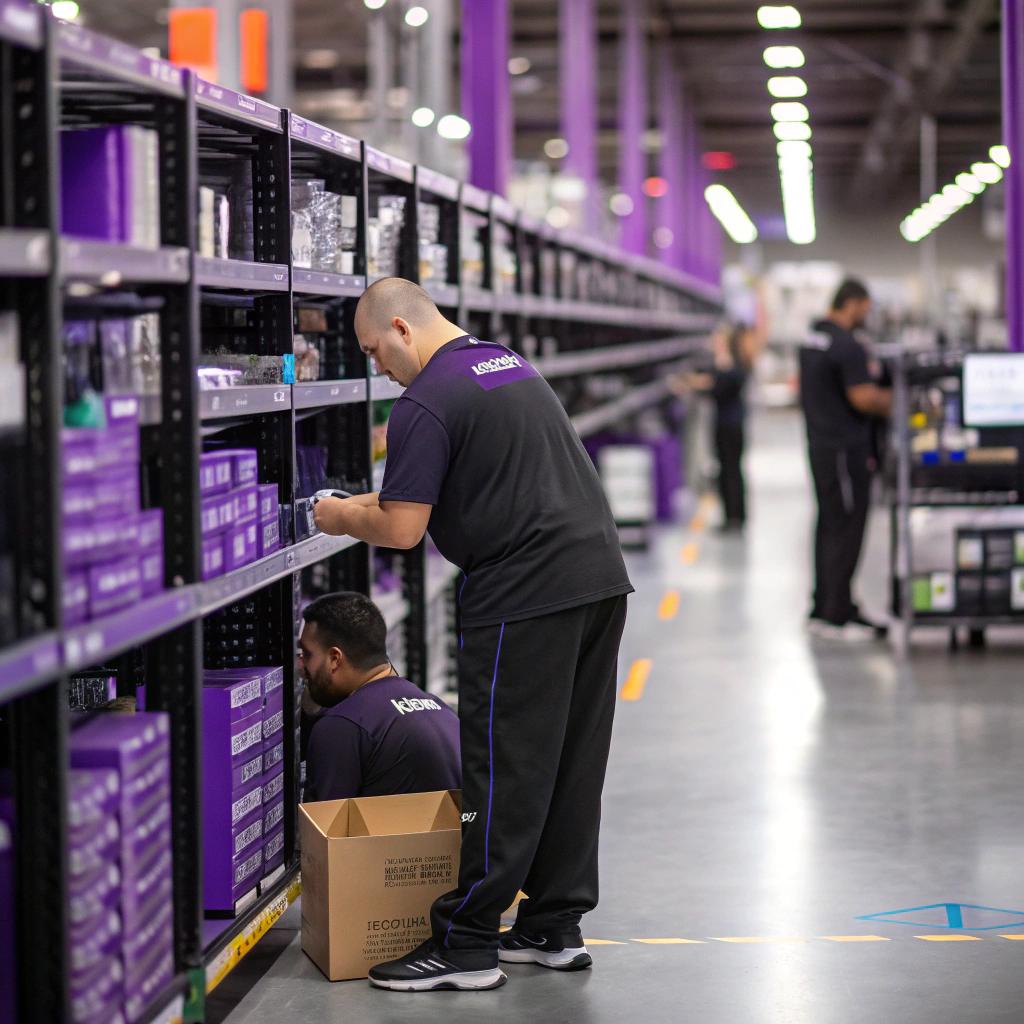
Once an order comes in, staff on the warehouse floor pick the products, scan them, pack them, label the box, and hand it to a carrier.
The parts that matter to a tech brand:
– Standard operating procedures
– Error checking through barcodes
– Consistent packing quality
You probably do not want your new hardware shipped in flimsy boxes that arrive crushed. Or mismatched cables in the box. Or missing accessories.
A partner that handles tech gear often knows small details, like protecting sensitive items from static, or sealing boxes with the right materials so returns are easier to manage.
3. Return handling (RMA and refurb workflow)
Tech returns are rarely just “put it back on the shelf”. Often there is an RMA process, testing, refurbishing, or recycling.
A Los Angeles based 3PL that understands tech can:
– Receive and scan returned units
– Sort into “resell”, “refurbish”, “recycle”
– Consolidate returns for your internal repair team or partner
– Feed data back into your support and product teams
If you are shipping consumer tech, having a visible pattern of returns from a certain batch or region can help you catch a firmware or hardware issue faster.
Why this helps tech brands scale faster, not just cheaper
I think people sometimes frame outsourcing fulfillment as only a cost decision. Is the warehouse partner cheaper per order than doing it yourself?
That is part of it, but focusing only on cost per order misses the real advantage.
Speed of experimentation
Tech companies live or die on experiments:
– New product bundles
– Different price points
– Limited edition drops
– Beta hardware for select users
If your internal warehouse setup is rigid, each experiment is painful:
– New SKUs need manual setup
– Staff need new instructions
– Packing needs special rules
– Mistakes are more likely at launch
A decent fulfillment partner can handle:
– New SKUs with clear data and barcodes
– Rules like “add this cable only for EU orders”
– Pre launch staging, so stock is ready before you announce
So you can try more ideas without burning out your small operations team.
Faster shipping promises without breaking the team
Customers have strong expectations. Two day shipping feels normal to many people. Same day or next day is spreading.
If your tech brand ships from only one location that is not well placed, you pay for faster service in two ways:
– Higher shipping rates for distant zones
– More stress and overtime inside your own small warehouse
Los Angeles is strong for West Coast and often for Pacific time zones. If a big share of your users is in California, Washington, Oregon, Nevada, Arizona, and nearby states, a local fulfillment partner lets you promise faster delivery there without constant express shipping.
Shorter shipping zones often matter more than shipping discounts. You cut both time and cost at once when products start closer to your best customers.
Focus shift for key roles
Look at your team. Count the hours senior people spend on physical tasks:
– Troubleshooting shipping issues
– Mailing replacement units
– Updating spreadsheets with inventory counts
– Talking to carriers about missed pickups
Those tasks will not go away, but they should not tie up senior engineers or the product lead.
When a 3PL owns the daily operations, your internal ops person can focus on:
– Vendor management
– Process design
– Data analysis
– Coordination with product and support
That is more leverage. Sorry, I know “leverage” is another buzzword. I just cannot find a simpler word here. It means the same number of people can drive more useful change.
Why Los Angeles works well for different types of tech brands
Not all tech companies sell the same way. Some are pure DTC hardware. Some are SaaS with a small hardware component. Some run crowdfunding campaigns.
Los Angeles based fulfillment serves them in slightly different ways.
1. Consumer electronics and accessories
Think:
– Headphones
– Chargers
– Smart home devices
– Phone cases
– Wearables
These products often come from Asia by sea. Ports in Los Angeles and Long Beach handle a huge share of that traffic. When your containers arrive, moving them to a nearby warehouse cuts drayage cost and time.
Once stored, orders to West Coast and Southwest states ship quickly with low zone counts from major carriers.
If you also sell on marketplaces, many 3PLs can handle multi channel fulfillment, where they ship web store orders, marketplace orders, and wholesale orders from the same pool of stock.
2. Crowdfunding and product launches
If you have ever run a Kickstarter or similar campaign, you know how chaotic fulfillment can be.
You might have:
– Multiple pledge levels
– Custom add ons
– Early bird benefits
– Global shipping
Trying to handle that complexity in house, while also finalizing the product, fixing last minute firmware issues, and answering backer questions, is rough.
Los Angeles based partners are used to launch waves. Many startups ship their first large batch into LA, then push it across the US and abroad.
The key is planning:
– Share SKU lists and pledge combinations early
– Stage inventory before the promised ship date
– Run test orders across different reward levels
Your ops person can sit in your city of choice and coordinate through dashboards instead of taping boxes until midnight.
3. SaaS companies with hardware components
Some software companies ship devices like:
– Point of sale terminals
– Access control badges and readers
– IoT hubs
– Modems and routers
Often those devices need:
– Pre configuration
– Labeling for specific locations
– Kitting with instructions and cables
Many 3PLs in Los Angeles and nearby regions offer light assembly and kitting work as part of their warehouse services.
So they can:
– Load a config file onto a device
– Attach stickers with location IDs
– Bundle devices plus accessories per site
This offloads a non core task from your internal IT or support team.
How tech friendly fulfillment differs from generic storage
Not every warehouse is a good fit for tech brands. Storing books or clothes is not the same as handling devices, cables, and sometimes batteries.
Inventory complexity
Tech shipments often contain:
– Multiple SKUs that look similar
– Versions by region (US, EU, UK plugs)
– Firmware changes by batch
– Bundles with variable parts
If the warehouse treats all boxes as equal, you see:
– Wrong version sent to customers
– Returns due to wrong plugs or cables
– Hard to trace batch level issues
More tech focused operators pay attention to:
– Lot tracking
– Serial number capture when needed
– Version labels on shelves
You need to ask concrete questions. For example:
– Can you track serials or IMEI at shipment level?
– Can we separate batches with different firmware?
– How do you avoid mixing very similar SKUs?
If you get vague answers, that is a sign the fit might not be great.
Handling of lithium batteries and sensitive goods
Many devices carry lithium batteries. That creates shipping and storage rules.
Points to consider:
– Are staff trained for battery handling and labeling?
– Are there carrier restrictions from that facility?
– Can they help you keep paperwork in order?
If your gear is static sensitive, you may also want:
– Anti static packing materials
– Handling rules for open units
– Clear return processes so damaged units do not go back into stock
Systems and integration
For a tech brand, this part is non negotiable.
Look for:
– Direct integrations with your storefront or order system
– Webhooks or APIs your engineers can work with
– Live or near live inventory and shipment feeds
I have seen teams patch things together with CSV exports for a while. It works for 30 orders a day. It breaks at 300.
The more your systems talk directly, the easier it is to:
– Get accurate stock counts on your site
– Forecast reorders
– Alert customers when orders ship
Cost structure: when fulfillment starts to make sense
Many founders ask, sometimes with a bit of frustration: “At what volume does a 3PL make sense?”.
The short answer is that the break point is different for each business, but you can think about cost categories.
Here is a simple comparison that helps frame it.
| Cost item | Do it in house | Use LA fulfillment partner |
|---|---|---|
| Space | Office/warehouse rent, utilities | Storage fee per pallet/bin |
| Labor | Hourly staff, benefits, overtime | Per order pick/pack fee |
| Equipment | Racks, carts, printers, tape, scales | Included in service fees |
| Software | WMS, label tools, integrations | Included or small platform fee |
| Shipping | Retail or small business carrier rates | Discounted volume carrier rates |
| Management time | Your team hires, trains, supervises | Vendor management and oversight |
There is no single magical order volume threshold. Some brands switch at 50 orders a day, others at 500. The real questions are:
– Are you planning to grow order volume in the next 12 to 24 months?
– Do you want your core team focused on product, or on logistics?
– How sensitive is your customer base to shipping times and quality?
If you expect flat volume, maybe you tolerate manual work. If you expect strong growth, the lack of a scalable logistics setup is a hidden cap on your revenue.
How to pick a Los Angeles fulfillment partner that actually fits a tech brand
Not every provider is the same. The glossy website will not tell you much. You need to ask pointed questions, and sometimes push a bit.
Key things to check
- Experience with tech products
Ask for specific examples. What devices do they handle? Any experience with returns that need testing or quarantine? - Error rates
Ask for actual picking accuracy numbers. Not “we are accurate”, but “99.8 percent” or similar, and how they measure it. - Integration details
Confirm that they connect cleanly with your storefront, marketplace, or custom stack. Ask if they support webhooks, not only daily batch syncs. - Turnaround time
Clarify cut off times for same day shipping. For tech launches, you want clear promises like “orders in by 1 pm Pacific ship same day”. - Returns process
Ask what happens when a product comes back. Do they inspect? Do they take photos? Can they capture reason codes and pass that data back to you? - Support responsiveness
Try their support before you sign. How quickly do they answer? Are replies clear and practical, or vague and slow?
You do not want to be one of a hundred clients that all look the same to them. Tech has quirks. A provider that shrugs at those quirks might not be a good long term partner.
Practical steps for switching from in house to LA based fulfillment
This part can feel scary. There is stock, live orders, customer expectations. But it is manageable if done in phases.
Phase 1: Audit and clean up
Before moving anything, get a clear view of current reality:
– List all SKUs, with current on hand counts
– Note any bundles or virtual SKUs in your store
– Mark items that are obsolete or to be liquidated
– Check packaging requirements, manuals, inserts
This is also the time to tidy up. If you have random old stock, cords with no devices, or devices with old firmware that you will never ship, do not pay to move and store them.
Phase 2: Process design with the new partner
Sit down with the 3PL (virtually or in person) and walk through:
– How orders flow from your systems to theirs
– How they will receive and check in your first inbound shipment
– Any kitting or assembly needs
– Rules for backorders, partial shipments, and preorders
– Return handling rules
You want this in writing. Not as a legal exercise, but so everyone knows what to expect.
Phase 3: Inventory transfer
You have two main options:
– Ship inventory gradually while still shipping some orders in house
– Ship almost everything at once and flip the switch
For many tech brands, a staged move is less stressful. You can:
– Start with one product line
– Route a share of orders to the new warehouse
– Compare performance and fix issues early
Once you are confident, you can shift the rest.
Phase 4: Monitor and refine
After go live, pay close attention for the first 60 to 90 days:
– Order accuracy
– Shipping time by region
– Customer feedback related to packaging and delivery
– Return patterns
Meet with the partner regularly. Weekly at first, then maybe monthly.
Ask for concrete reports:
– Orders shipped per day
– Cut off time adherence
– Error incidents and corrections
Many problems in logistics come from miscommunication. Regular check ins help catch small issues before they grow.
How this changes your roadmap and strategy
Once logistics no longer live inside your office, your planning shifts in a few ways.
More room for physical product ideas
Some software first companies avoid hardware accessories because they are afraid of “running a warehouse”.
When fulfillment is handled externally, you can think clearer about:
– Limited run physical add ons
– Branded accessories
– Hardware enabled features that extend your SaaS
You still need to design and source well, but you are not blocked by lack of storage or shipping capacity.
Better data for decision making
Good fulfillment partners feed useful data back to you:
– Ship times by region
– Return percentages per SKU
– Damage and defect rates
– Peak ordering times
Combined with your own analytics, this helps answer questions like:
– Should we launch a second warehouse on the East Coast?
– Is a certain device color driving more returns?
– Are our shipping promises realistic?
Logistics data often reveals user behavior that you cannot see inside app analytics alone.
If a certain region orders more but also returns more, maybe your product marketing there misrepresents something.
Stronger customer experience on delivery
The product experience does not end when the user clicks “buy”. The first real physical impression is the box.
A good 3PL helps you:
– Use packaging that protects and looks decent
– Include the right quick start guides or inserts
– Reduce broken units and messy returns
You probably do not need fancy “unboxing experiences”. Many people say they want that, but what customers usually want more is:
– On time delivery
– Correct product
– Clear instructions
Logistics done well supports that.
Common worries tech founders have about outsourcing fulfillment
There are a few fears that come up again and again. Some are reasonable. Some are slightly exaggerated.
“We will lose control”
You will lose some direct control. That is true.
But you gain:
– More time to work on what you are actually good at
– Specialized staff who think about logistics all day
– Systems built for shipping, not quickly patched together
You still control:
– Product decisions
– Packaging design
– Service levels and promises
– Vendor choice
Your job shifts from doing every step to designing and supervising the system.
“The 3PL will not care about our brand”
Not every partner will care deeply. You are right to be skeptical.
That is why it helps to:
– Choose a partner that already serves brands with some complexity
– Make service expectations clear in writing
– Set measurable targets on accuracy and timing
– Have regular reviews and feedback loops
If they consistently fail and do not improve, you move on. Vendor relationships are real, but they are not permanent marriages.
“Our volume is too low, so no one will treat us well”
There is some truth that very tiny volumes might not get top priority from big providers.
You can respond to that by:
– Looking for 3PLs that specialize in small to mid sized brands
– Being honest about your growth plans and sharing them
– Paying fair rates rather than hunting for the absolute lowest cost
Sometimes paying a bit more for attention and flexibility beats saving a few cents per shipment.
Bringing it back to your own tech brand
If you read this far, you are probably either:
– Running a tech brand with growing physical shipments, or
– Planning something that includes hardware or merch
The central question is not “should we use Los Angeles based fulfillment or not”. It is more direct:
What work do you want your team to spend its energy on over the next two years?
You know that:
– Logistics will take time and focus no matter what
– Customers will judge you on shipping speed and accuracy
– Mistakes in fulfillment hurt the reputation of your product
Outsourcing to a partner in a logistics hub like Los Angeles does not magically solve every issue. It does, however, change the shape of the problems you deal with.
Instead of:
– “Who is boxing orders tonight?”
– “Where can we put the extra pallets that just arrived?”
– “Why did the carrier not show up again?”
You start asking:
– “How can we reduce returns on this new device?”
– “Should our next warehouse be closer to Europe or the East Coast?”
– “What new product lines could we launch now that storage is not a bottleneck?”
Those are questions that fit better with the work of a tech team.
One last question: when is the right time to switch?
There is no single right moment, but here is a simple, honest way to check.
Ask yourself:
If your order volume doubled in the next three months, could your current setup handle it without burning people out or wrecking customer satisfaction?
If your answer is “yes, easily”, then maybe you can wait.
If your answer is “no” or even “maybe”, then it is time to at least talk with a few Los Angeles based fulfillment services and see what growth could look like with logistics handled by a team that actually wants to be in the warehouse business.