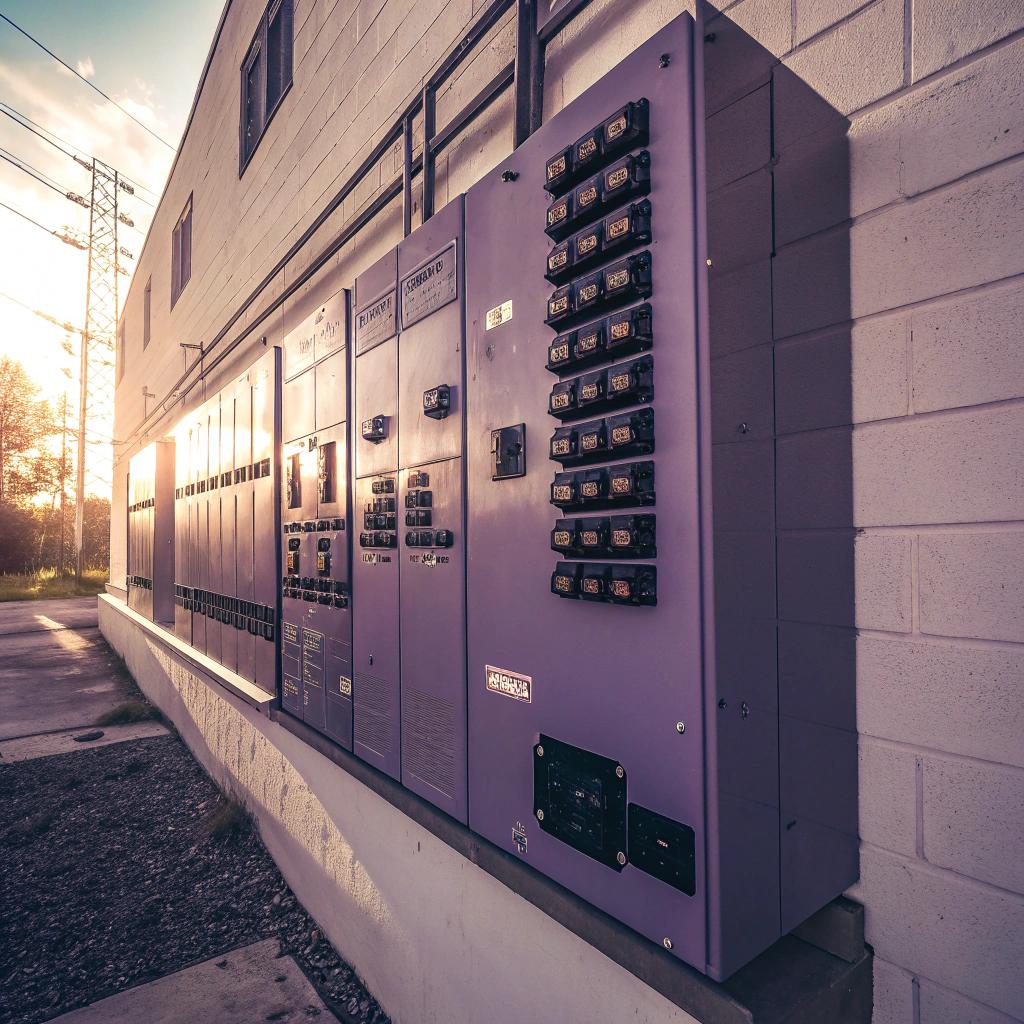
I used to think the electrical panel was just that gray box I ignored in the basement. Then one day half the house went dark, the Wi‑Fi died, and I realized that box is basically the hardware hub that keeps everything else running.
If you just want the short answer: electrical panel repair in Colorado Springs is not a DIY weekend project, even for tech savvy people. You can learn how it works, spot early warning signs, and speak the same language as your electrician, but when your panel is buzzing, overheating, or tripping constantly, the safe move is to call a licensed pro who handles electrical panel repair Colorado Springs on a regular basis.
What your electrical panel actually does, in plain language
Your panel is just a smart power splitter.
Electricity comes from the utility into your home, hits the panel, then gets broken into smaller circuits for outlets, lights, HVAC, servers, gaming rigs, whatever.
Every breaker in that panel is a safety switch. It trips when something draws more current than the wire is rated for. That prevents overheating and fire. It is a simple hardware protection layer, not that different in spirit from a circuit breaker in a PC power supply, just scaled up for the whole house.
The main things the panel does:
- Takes high power from the meter and breaks it into circuits
- Limits current on each circuit using breakers
- Routes power to different parts of the house
- Provides a place to shut off power for work or emergencies
You might think, “If I can build my own PC, I can replace a breaker.” The problem is not only the wiring. It is that the panel ties into high fault current and service conductors that can kill in a fraction of a second. With a PC, worst case you fry a board. With a panel, worst case is far worse.
Your electrical panel is closer to a power distribution unit in a data center than a power strip under your desk. The risk profile is completely different.
Common electrical panel problems in Colorado Springs homes
Colorado Springs has cold winters, dry air, and some pretty big temperature swings. That mix is not friendly to old electrical gear. Add older housing stock in some areas, DIY work from previous owners, and more high draw tech gear, and panels start to struggle.
Signs your panel needs attention
Here are some of the more common symptoms you might see:
- Breakers that trip over and over under normal loads
- Lights dimming when a big load turns on, like a microwave or space heater
- Warm or hot breakers or a warm panel cover
- Buzzing, crackling, or sizzling sounds from the panel
- Visible corrosion, rust, or burn marks
- Faint burning smell near the panel
- No capacity left for new circuits when you want EV charging, servers, or shop tools
A single trip once in a while is fine. Breakers are supposed to trip. Clusters of weird behavior across multiple circuits are not fine.
If your panel has both age and symptoms, treat that like a log file with repeating errors. Something upstream is wrong, not just one little setting.
Why tech heavy homes stress panels more
Even a small home can now have:
- A gaming PC or two pulling 500 to 800 watts under load
- Network gear, NAS, and always on smart home hubs
- Multiple monitors, chargers, and audio equipment
- An EV charger on a 40 to 60 amp circuit
- Power hungry space heaters in winter
Individually these are fine. The problem is that older panels were not sized with this kind of baseline consumption in mind.
Think about a 100 amp panel that was installed 40 years ago for a house with a few outlets and some incandescent bulbs. Now that same panel is feeding servers, a rack, Wi‑Fi mesh, camera systems, and an EV charger hanging off the same structure. It can work for a while, then you start to see frequent trips or annoying flickers.
Repair, replace, or upgrade: how to decide
A lot of people jump straight to “I need a new panel” when a breaker misbehaves. Sometimes that is true. Sometimes it is like replacing a whole PC because a single RAM stick went bad.
Here is a simple way to think about it.
Quick comparison: repair vs replacement
| Situation | Repair usually makes sense | Replacement / upgrade is smarter |
|---|---|---|
| Age of panel | Under 20 years, in good physical shape | 30+ years, corrosion, obsolete or recalled brand |
| Problem scope | One or two faulty breakers, loose connection, minor damage | Multiple failing breakers, heat damage, overcrowded panel |
| Future loads | No major new loads planned | Adding EV charger, workshop, server closet, or solar |
| Safety profile | No burnt insulation, no melted plastic, no arcing | Burn marks, melted insulation, scary noises or smell |
Common repair level fixes
These are the kinds of things a licensed electrician might do without replacing the whole panel:
- Tighten loose terminations and lugs
- Replace a weak or damaged breaker
- Re terminate wires that show minor damage at the ends
- Correct mis labeled or poorly balanced circuits
- Clean up neutral and ground bars
In tech terms, this is like fixing a failing PSU cable or bad slot, not swapping the entire chassis.
When full replacement is the better call
Here are cases where keeping the old panel is a bit like running a high end GPU on a no name power supply from 2006.
- The panel brand is on known problem lists, such as certain Federal Pacific or Zinsco models
- Copper bus bars are pitted or damaged
- There is clear overheating or melting
- The panel is undersized, like 60 or 100 amp, for what you already use
- You plan to add EV charging, solar, or a shop that pushes demand even higher
If your electrician says “I can repair this, but I would not keep it in my own house,” it is worth listening. That is usually not sales talk. It is risk judgment.
How an electrician actually diagnoses a panel issue
For people who like to know what is happening under the hood, the diagnostic process is interesting. It is hands on, but there is more structure and data than most people expect.
Step by step look at a typical visit
- Interview and symptom review
The electrician will ask when the problems started, which circuits fail, and what you were running. Treat this like a bug report. Vague answers lead to longer hunts. - Visual inspection
They remove the panel cover and look for heat marks, loose wires, corrosion, double tapped breakers, or anything that looks hacked together. - Testing with a meter
They measure voltage at the main lugs, at branches, and sometimes at suspect outlets. They might check if the two legs of the service are balanced or if one is sagging. - Load review
They look at the size and number of breakers, note big loads like electric ranges, dryers, EV chargers, well pumps, or AC units. With that they can estimate how much real headroom you have. - Code and safety check
Things like missing panel covers, incorrect grounding, or shared neutrals on the wrong type of breaker get flagged. - Plan and estimate
Based on the findings, you get specific options: replace a few breakers, rewire a circuit, or plan a panel upgrade with a new service size.
If you are into tech, this part is actually kind of fun if you are present and ask questions. You can learn a lot about how your house is wired in 30 minutes.
How Colorado Springs conditions affect electrical panels
Local context matters more than people think. A panel in coastal Florida and a panel in Colorado Springs do not live the same life.
Altitude
At higher altitude, air is thinner and heat dissipation changes. For panels and breakers, that can reduce current ratings slightly. Manufacturers sometimes specify derating curves for altitude. An electrician who works in Colorado Springs should already factor that in.
Temperature swings
We get hot summers and cold winters. Panels in unconditioned spaces like garages or exterior walls see:
- Expansion and contraction of metal parts
- Condensation in shoulder seasons
- More wear on connections over time
Screws and lugs that were tight at install can work loose after years of thermal cycling. A loose connection builds resistance and heat. Over enough time, that can damage breakers or insulation.
Dry air and dust
Dry air is nice for humans, but it attracts static and dust. If your panel is in a workshop, near a dryer, or by a busy utility space, dust can collect. It is less dramatic than water damage but can still hold moisture and affect contacts.
A good electrician will catch these things during routine repair or maintenance visits.
Smart loads, EV charging, and the modern electrical panel
A lot of people reading a tech site are not just thinking “keep the lights on.” They are thinking “can this panel support an EV charger, a rack, or solar integration without collapsing?”
EV chargers and load calculations
Level 2 EV chargers are usually on 30 to 60 amp circuits. That is a big continuous load. Your panel has to be able to carry that on top of everything else without running too close to its rating.
Electricians use a standard load calculation method to figure out if you have enough capacity. It is a bit like sizing a power supply for a PC build, but with more rules and safety margins.
Common outcomes:
- You have plenty of capacity and just need a new breaker and circuit
- You can support EV charging only with a load management device or lower current setting
- You need a panel upgrade to handle it safely
Home labs, servers, and always on gear
If you run:
- A server closet or rack
- PoE switches powering cameras and access points
- UPS units
- Media servers and storage
You are drawing continuous power from a specific circuit or group of circuits. The electrician can move those loads to less crowded phases or create a dedicated circuit. That can reduce nuisance trips and subtle issues like monitor flicker when a compressor kicks in.
Panels and smart home tech
Modern panels and add ons can:
- Report per circuit usage to your phone
- Alert you to high consumption or odd events
- Pair with smart breakers in some systems
You do not have to go all in on smart panels, but during repair or upgrade it is a good time to ask what is possible. If you already watch your PC thermals and network graphs, it is strangely satisfying to see your whole house power graph at circuit level.
Safety basics for tech minded homeowners
You probably already respect static when handling a CPU. Electricity in the panel is just not something to “try and see.”
What is reasonable for you to check yourself
Here are simple, low risk checks you can do without opening the panel:
- Feel the panel cover with the back of your hand to check for unusual warmth
- Listen for buzzing or crackling when big loads turn on
- Sniff for any faint burning smell near the panel
- Watch for patterns in breaker trips and write them down
- Label circuits clearly so you and the electrician know what is what
If you are careful, you can also:
- Turn breakers off and on to reset them properly
- Shut off the main breaker in an emergency
- Test outlets with a simple plug in tester in living areas
What you should not do is remove the panel cover and poke inside the wiring unless you are licensed and trained. The risk is not abstract.
How often should a panel get looked at
If your home is older than 20 years and you use a lot of tech gear, then having an electrician look at the panel every few years is reasonable. Not for upselling, just for catching loose connections, early corrosion, or small problems before they become real ones.
Think of panel inspections less like car warranty upsells and more like cleaning dust from a PC before it overheats. It does not feel urgent until it is.
Cost factors for electrical panel repair in Colorado Springs
People always want a hard number before they call anyone. That is not realistic, but you can at least know what drives the price range.
Main cost drivers
- Scope of work
Replacing one breaker costs far less than rewiring several circuits or changing the entire panel. - Panel age and condition
Older, corroded, or obsolete panels often take longer to work on. Some parts might not be available, which pushes toward replacement. - Access
A panel in a clean, well lit basement is simpler than a cramped closet or a panel half buried in stored boxes. - Code upgrades
If your system is far out of date, the electrician might need to bring parts of it closer to current code during the repair. - Permits and inspections
Significant panel work usually needs a permit and an inspection in Colorado Springs.
Instead of chasing a price from the internet, it makes more sense to treat the first visit as an assessment and conversation. Ask what is optional, what is strongly recommended, and what is non negotiable for safety.
Questions to ask your electrician before they start
You do not have to be an expert, but you should not just nod at everything either. Some pushback and curiosity is healthy.
Here are questions that help you get real clarity:
- What exactly is wrong with the panel or breakers, in simple terms?
- What are my options, from minimum safe repair to ideal upgrade?
- What would you personally do in your own home with this setup?
- How much capacity will I have for future loads like EV charging or more equipment?
- Will this repair bring the panel up to current code, or just fix the specific fault?
- Do I need a permit and inspection for this work?
- How much downtime should I expect, and what should I shut down first?
If any answer sounds vague or rehearsed, ask for a concrete example. Tech people are used to that. It works here too.
How panel repair affects your home tech experience
This part is easy to overlook. People think of panel work as “avoid fire” and forget how much it can improve stability.
Better power quality, fewer weird glitches
Unstable voltage can cause:
- Random device reboots
- Glitches on displays
- Buzzing audio gear
- Tripped surge protectors
After repairs or upgrades, many people notice:
- Fewer unexplained reboots or errors on sensitive gear
- Less flicker when motors, compressors, or microwaves start
- UPS units no longer complaining about under or over voltage
It does not feel like a big “feature” until you realize that your whole stack is more stable.
Room to grow your tech stack
If your panel is already at capacity, every new high draw device is an argument. You end up unplugging one thing to run another.
A well planned repair or upgrade can:
- Add new circuits for dedicated loads like servers or a workshop
- Balance existing circuits across the two service legs
- Reserve capacity for an EV charger or future HVAC upgrades
That is basic infrastructure for your home tech life, even if you never think about the panel again afterward.
FAQ: quick answers to common questions
Can I replace a breaker myself if I turn off the main?
You can physically do it, but that does not make it a good idea. The main lugs and service conductors are still live even with the main off. Also, a wrong breaker type or a loose connection can create slow burn problems you will not see until something fails badly. For safety and code reasons, it is better to have a licensed electrician handle it.
Is a buzzing panel always an emergency?
Not always, but it is never a good sign. A faint hum from magnetic parts is one thing, sharp buzzing or crackling is more serious. If the sound changes with load or you notice heat or smell with it, call an electrician soon and avoid ignoring it.
My breakers trip when I run the microwave and PC. Do I just need a bigger breaker?
Most of the time, no. The breaker size is matched to the wire size. Putting a larger breaker on the same wire risks overheating and fire. The usual fix is a new circuit or better load distribution, not an oversized breaker.
Does every panel repair need a permit in Colorado Springs?
Small tasks like swapping a single standard breaker might not. Larger work, like changing the panel, service size, or major rewiring, almost certainly will. A local electrician should know exactly when permits and inspections are required and handle that process.
How long does a full panel replacement take?
For a typical home, the on site work often fits in a day, with power off for several hours. More complex setups or service upgrades can take longer. You will want to shut down sensitive gear cleanly and plan for some offline time.
Is it worth upgrading a panel just to support more tech gear?
If you are already pushing limits, tripping breakers, or planning an EV charger or large home lab, then yes, it can be worth it. If your current system is solid and you just want a bit of comfort, you might stick with smaller targeted repairs for now. The key is to match the decision to both your safety needs and your realistic future plans, not just the coolest option on paper.