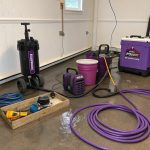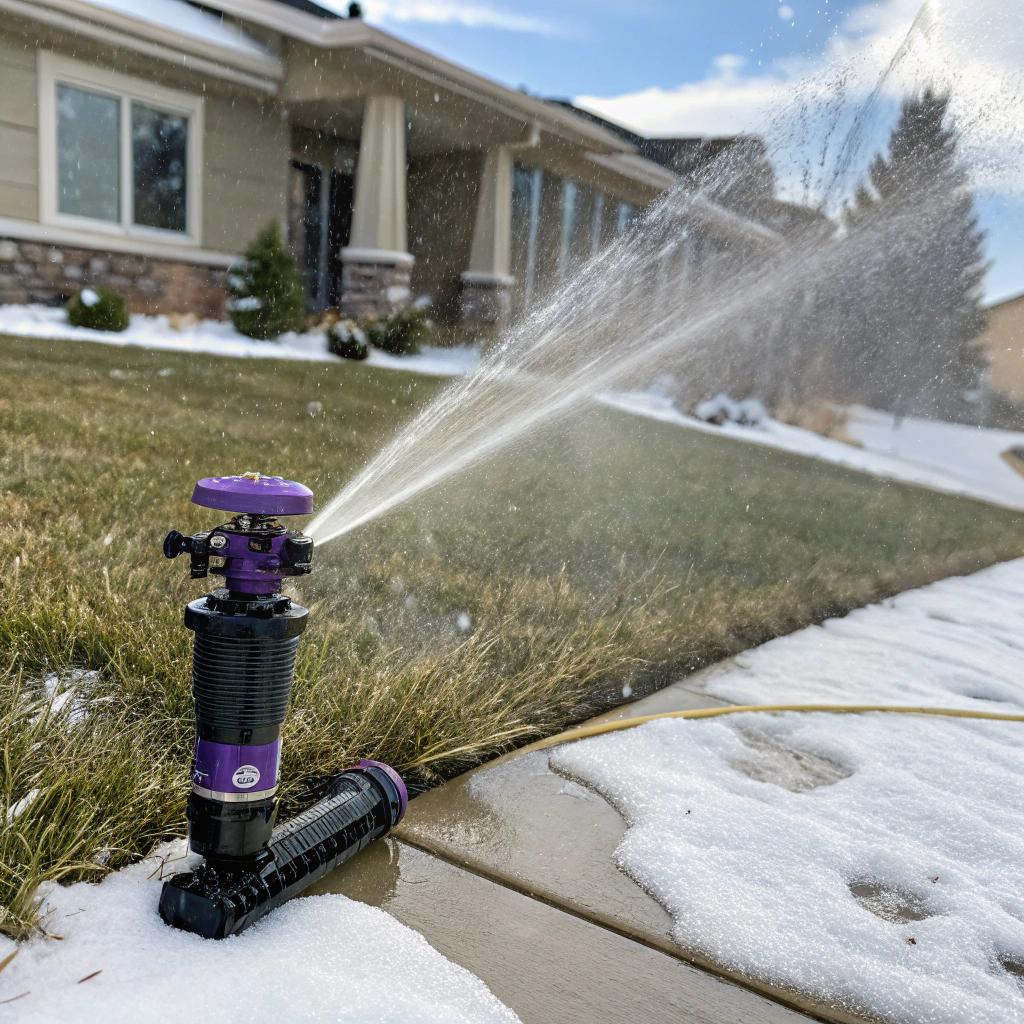
I used to think winterizing a sprinkler system was just closing a valve and walking away. Then one November in Colorado Springs, my neighbor turned his on in April and about three heads shot geysers into the street.
If you want the short version: in Colorado Springs you need to blow out your irrigation lines with compressed air every fall, usually in October, before the first hard freeze, or pay someone who knows what they are doing. That is what people mean when they talk about Colorado Springs sprinkler winterization. Everything else is just variation on that theme: protect the backflow, drain or blow out the lines, and shut down the controller correctly so nothing tries to run in January.
Why winterization is such a big deal here
Colorado Springs is not gentle on pipes. You have:
- High altitude with colder nights
- Freeze and thaw cycles that repeat over and over
- Dry air that tricks you into thinking it is not that cold
If you leave water in your sprinkler lines, it freezes and expands. PVC and polyethylene are not flexible enough to handle that over and over. The result is cracks, split fittings, or a broken backflow valve near your house wall.
The real cost of skipping winterization is usually not one broken head, it is finding several underground leaks when you finally need water in spring.
For a tech person, the logic is simple. You already manage risk and failure in your day job. This is the same idea in physical form:
- Low cost, recurring maintenance task
- Prevents high cost, hard to debug failures later
- Runs on a clear calendar schedule
You could think of winterization as a seasonal “backup” of your irrigation system. If you skip it once, you might get lucky. Skip it twice or three times, and you are gambling with the entire system.
How a sprinkler system actually works, in plain language
I used to ignore diagrams in manuals, but with sprinklers, a quick mental map helps a lot. It also helps you talk to a contractor without feeling lost.
Most residential systems here look something like this:
| Component | What it does | Why it matters for winterization |
|---|---|---|
| Main shutoff valve | Connects or disconnects irrigation from house water | Needs to be closed before you blow out or drain lines |
| Backflow preventer (vacuum breaker / RP) | Stops irrigation water from flowing into house supply | Filled with water, sits above ground, very easy to crack in a freeze |
| Zones (valves and pipes) | Separate sections of your yard | Each one needs to be cleared of water, one at a time |
| Sprinkler heads / drip emitters | Apply water to lawn or plants | Trapped water here can crack plastic or damage seals |
| Controller (timer / smart hub) | Decides when zones run | Needs a winter configuration so it does not start a cycle in freezing weather |
Once you see the system in these chunks, winterization sounds less mysterious. You are really doing three things:
Shut off the source, protect the above ground hardware, and clear the lines zone by zone so nothing is left to freeze.
Everything people argue about on forums is usually just personal preference on how exactly to do each step.
When to winterize in Colorado Springs
People who move here from warmer places often guess wrong on timing. The front range can give you warm afternoons in October, so it feels too early to shut anything down.
Here is the rough rule that works for most yards:
- Plan your winterization between late September and late October
- Watch for the first few nights near or below 28°F
- If you see a hard freeze warning and you have not winterized, you are late
There is some wiggle room. Sprinkler lines are usually buried below the frost line, so they do not freeze instantly. The risk is the backflow preventer and any exposed copper or PVC near the house. Those parts can freeze and crack in one bad night.
I know people who stretch their season into early November to keep the lawn greener. Every year, at least one of them ends up calling a repair company in spring because something split. So you can do it, but you are trading grass color for hardware risk.
Traditional blowout vs “drain only” methods
You will see two main approaches:
1. Gravity drain systems
Some systems have manual drain valves at low points or self draining heads.
Pros:
- No compressor needed
- Lower skill required
- Less stress on components from air pressure
Cons:
- Trapped pockets of water can remain
- Not ideal in a climate with strong freeze cycles like Colorado Springs
Most modern installs here still rely on blowouts, even if they also use drain valves. Gravity helps, but it is rarely perfect.
2. Compressed air blowouts
This is what almost every Colorado Springs irrigation company does for winterization.
Basic idea:
- Shut off main water to sprinklers
- Connect a compressor to the system
- Cycle through zones, forcing water out through the heads
People debate pressure levels and compressor types. That part matters, but less than doing the process calmly and in the right order.
If you are not sure what kind of system you have or how deep your lines run, a controlled blowout is safer than guessing with partial draining.
For a tech analogy, gravity drain is like letting temporary files age out on their own. A blowout is like clearing the cache and confirming it is empty before shutdown.
Smart controllers and winterization
If you are into tech, you probably have or want a smart controller. Something that ties into Wi‑Fi, maybe supports Home Assistant, and lets you track runtime data.
That does not replace winterization, but it does slightly change how you handle it.
What to do with a smart controller in fall
During winterization, your priorities shift from watering logic to system safety. A few simple steps:
- Disable all schedules after your final watering day
- Put the controller in “off” or “rain delay” mode for the winter
- Keep remote access active if you want to manually trigger zones while blowing out
If you are standing at the compressor, calling out for someone to “start zone 3,” remote control from your phone is very handy. It also saves you a lot of walking back and forth.
Some controllers have a built in “winter” setting. That usually just means they do not run schedules. It does not blow out lines or do anything physical, obviously.
Data that actually helps you
Smart controllers generate a lot of data. Most of it is interesting but not very useful when you talk about winterization. A few numbers can matter:
| Metric | Why it matters for winterization |
|---|---|
| Zone runtime history | Shows which zones are slow to drain, often the ones with more low spots |
| Flow sensor data | Can reveal small leaks before freeze season, so you fix them before the blowout |
| Soil moisture trends | Lets you taper watering in fall without stressing plants before shutdown |
So, yes, you can overthink it. But a small amount of data driven tuning can make the winterization itself less messy.
DIY blowout: realistic walkthrough for a techie
People online often make this sound scarier than it is or, sometimes, much easier than it actually feels when you stand next to a loud compressor for the first time.
I will walk through a standard residential case. Some steps may not match your exact setup, but the pattern is similar.
1. Gather tools
- Air compressor that can sustain roughly 10–20 CFM at 40–60 PSI
- Adapter to connect compressor to your sprinkler system blowout port
- Basic wrench set or adjustable wrench
- Eye protection
- Smartphone or remote to control the sprinkler controller
If your home compressor is tiny and designed just for nail guns or tires, it will struggle. You can rent a larger unit for one day. That is what many people do.
2. Shut off water supply
Find your irrigation shutoff. It might be:
- In the basement, near where the main water line enters
- In a valve box outside, near the foundation
Turn it off, then open a nearby hose bib or test port on the backflow for a moment to relieve pressure.
3. Prepare the backflow preventer
This part scares people because backflows are expensive. You do not want to crack one.
Typical steps:
- Turn valves on the backflow to a 45 degree position so water can drain
- Open test cocks slightly to release trapped water
- If needed, loosen caps or covers so water can escape
You want that assembly as empty of water as possible before you start sending air into the system.
4. Connect the compressor
There should be a threaded port on or near the sprinkler manifold for blowouts. It may be labeled, or it may just look like a capped pipe connection.
Steps:
- Attach your adapter firmly
- Connect the compressor hose
- Double check all shutoffs so you are not pressurizing your house plumbing by mistake
Set the compressor regulator to a safe pressure range. Many manufacturers recommend staying at or below 50–60 PSI for PVC. Check your manual if you have one.
5. Blow out zones, one at a time
This is where your smart controller helps. The pattern is simple, but you need to pay attention.
- Start with one zone active on the controller
- Open air flow from the compressor
- Watch the heads spray water, then a mist, then mostly air
- Stop air after 2–3 minutes for that zone
- Let the compressor rest if needed
- Move to the next zone and repeat
Do not just leave air blasting for ten minutes per zone. That can overheat components and is not necessary once you only see air.
You might choose to cycle through all zones twice with shorter runs. Some people like that for peace of mind.
6. Final checks
Once you are done with all zones:
- Shut off compressor and bleed pressure from the line
- Disconnect the hose and remove the adapter
- Leave backflow valves slightly open or at 45 degrees so any small remaining water can move
- Double check that the irrigation shutoff is still off
- Set your controller to off, or set a long rain delay
At this point, your system is mostly air with a bit of residual moisture. That small amount has room to expand without breaking anything.
When it is smarter to hire someone
You can absolutely do this yourself. You also do not have to. Many tech people like control and prefer DIY, but there are valid reasons to call a pro.
Signs you might be better off outsourcing:
- You have a large yard with many zones and long runs
- Your backflow assembly looks complicated and you feel uneasy around it
- You do not own a suitable compressor and do not really want to deal with one
- Your time in fall is tight and you value the hour back more than the service fee
Some companies bundle winterization and spring startup into a yearly visit. That can help if you tend to forget these seasonal tasks.
If you track your time and stress the same way you track a build pipeline, hiring winterization out often looks like a good trade for what you save in risk and hassle.
There is a bit of pride at stake for many people. But pride does not fix cracked PVC.
How techies can overcomplicate this (and what actually helps)
I have seen people turn their sprinkler systems into small automation projects. ESP32 boards, soil sensors in each zone, Grafana dashboards for water use. It is fun. I am not against it.
For winterization though, some of that energy is misplaced.
Things that help:
- Weather automation that stops your controller from running near freezing temps, especially early or late in the season
- Flow sensors that catch leaks before winter
- A home lab note or task in your calendar that repeats yearly with your preferred winterization steps
Things that are interesting but not very helpful for winterization:
- Detailed moisture curves in December when the system is off
- Complex automations around start times when all valves are empty
- Overly clever logic that makes it harder for someone else in your home to understand how to turn things off
A simple and boring system that you clearly understand is usually better, at least for this specific seasonal task.
Common mistakes and how to avoid them
You can find long lists of horror stories online. Most of them trace back to a small group of errors.
Not fully closing the main shutoff
Even a slight leak at the shutoff valve can slowly refill the system after a blowout. You think you are done for winter. A month later, water has crept back into low spots, then freezes.
Best practice:
- Close valve firmly
- Check a test port on the backflow a day or two later for any pressure
If you still get water or pressure, the valve might be failing.
Using too much air pressure
There is a myth that “more pressure means better clearing.” That is like running hardware much higher than its rated voltage because you want “more performance.” It can work, until it does not.
Stay in the recommended range for your pipe and heads. Ask the installer if you are not sure. Many residential systems here are fine at 40–50 PSI for blowouts.
Forgetting drip zones
Drip lines often branch off a zone that also feeds regular spray heads. People see the spray heads clear and assume the entire zone is done.
If you have drip lines:
- Find where they tie in
- Check for any low manifolds that might trap water
- Run that zone a bit longer at lower pressure if needed
Drip components are smaller and can crack more easily, which is frustrating, because they are also harder to visually inspect before spring.
Ignoring the backflow assembly
This part sits out in the cold air, above ground. It is usually the first thing to crack if you skip or rush winterization.
Problems to avoid:
- Leaving it full of water
- Leaving valves fully open or fully closed so water cannot move as it freezes
- Not draining test cocks
Taking an extra five minutes on that step can save you a lot of money later.
Spring startup: the other half of the cycle
Winterization is only one side of the story. If you care enough to shut the system down well, it makes sense to bring it back up in a controlled way.
Basic spring pattern:
- Close all drain ports and test cocks
- Slowly open the main shutoff to refill lines without a pressure surge
- Inspect the backflow for leaks while it repressurizes
- Run each zone from the controller, watching heads for leaks, clogs, or unusual spray patterns
A smart controller can make this more pleasant. Run zones from your phone while you walk the yard. Take pictures of any issues to fix later.
You can also use the first startup as a small audit:
- Are heads still aimed correctly, or did lawn work bump them?
- Did any lines settle so water now pools in odd spots?
- Do your schedules still make sense based on tree growth and shade?
It does not need to be a big project. Just a quick pass while the weather warms up.
Simple tech habits that make winterization easier every year
Here is where being a “techie” is actually a benefit. You already manage recurring tasks, backups, and checklists.
A few habits that pay off:
Use calendar reminders
Set two calendar events:
- Early fall: “Plan sprinkler winterization” with a one week reminder
- Late fall: “Hard stop on outdoor watering” tied to local frost dates
Treat them like you treat certificate renewals or domain expirations. They matter, just not every day.
Keep a basic system log
Nothing fancy. A note in your favorite app with entries like:
- Year, date of winterization
- Who did the work (you or a company)
- Any issues found (small leaks, broken heads, strange noises)
Next year, you know what to watch first. Patterns show up more quickly when you have more than one year of notes.
Label hardware clearly
You do not need an industrial label printer, but clear labels help.
Examples:
- “Irrigation shutoff” on the correct valve
- “Sprinkler blowout port” on the fitting you use
- “Backflow test cocks” with small arrows showing typical winter positions
It takes ten minutes once and makes the whole thing feel less stressful, especially if someone else ever has to handle it when you are away.
Q & A: common questions from tech people about sprinkler winterization
Can I automate winterization completely with smart gear?
Not in any practical way. You still have water in physical pipes that cross freezing ground. You can automate reminders, schedules, and some prep steps, but you still need either your hands or a service technician to do the actual blowout safely.
Is it safe to use my home air compressor?
Sometimes. If it has very low CFM, it will just take longer and might overheat. If it can hit very high PSI, the risk is that you accidentally run too high and stress the system. If you understand how to limit pressure, and the compressor can run long enough, it can be fine. If you are unsure and your yard is decent sized, a rental compressor for one day is usually simpler.
What if I miss the ideal time and it already froze once?
All is not lost. If the freeze was mild and short, you might be okay. There is still value in doing a late blowout. Focus on the backflow and exposed lines first. In spring, pay extra attention to leaks or odd wet spots. Just do not treat one lucky year as proof that winterization is “optional” going forward.
Does a smart controller reduce my need for winterization?
No. It mainly changes how you control the system, not what physics does to water in cold pipes. Smart controllers can help you avoid unnecessary watering near freezing temps and can make the blowout process smoother, but they do not replace it.
How can I tell if my lines are truly clear?
You cannot see underground pipes, so you rely on:
- Visual change at heads from steady water to mist to air
- Running each zone long enough for that change
- Re running zones briefly and seeing only air
There might still be a little moisture along the walls of the pipes. That is fine. You just want to avoid large standing volumes of water. If you want extra reassurance, you can do a second short cycle of all zones after a short rest for the compressor.
What single habit gives the biggest payoff for long term system health?
If I had to pick only one, it would be consistent, careful winterization every year, plus a quick spring startup check. That rhythm catches problems while they are small, and it fits naturally into the yearly cycle of outdoor work.
What part of this process feels least clear for you: handling the compressor, figuring out your specific plumbing layout, or deciding when to schedule the work in our unpredictable Colorado Springs fall?