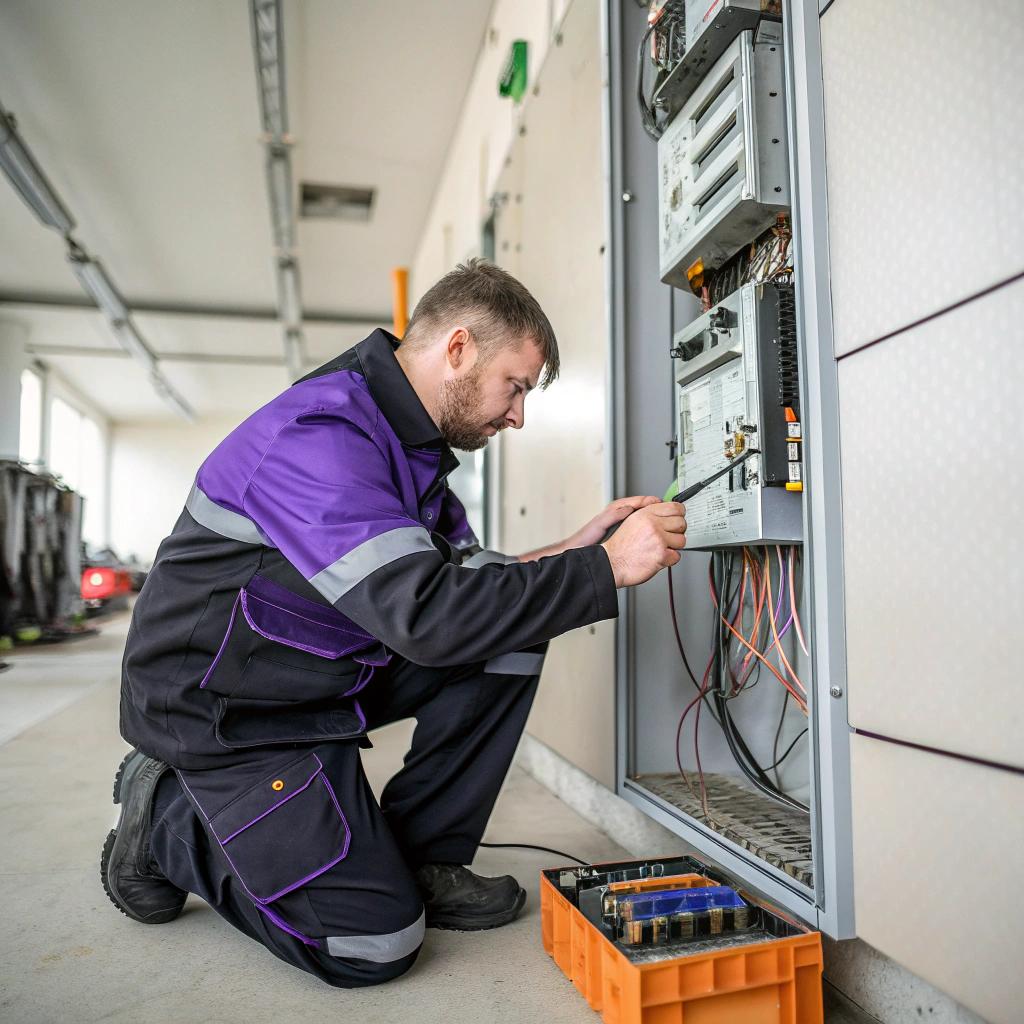
I used to think an electrician was an electrician. If the lights turned on and nothing caught fire, that was the whole story.
But the more tech I kept adding at home and at work, the more I realized something: the electricians I trust most are the ones who understand how I live with tech. And in my experience, that keeps pointing back to good, local residential electricians Indianapolis who actually get why people obsess over gear, latency, cable runs, and clean power.
The short answer to why tech lovers trust them is pretty simple: the good ones in Indy speak both languages. They know the electrical code, and they know what a mesh network, NAS, PoE camera, or EV charger means for your wiring. They do not just hook wires together. They think about networks, interference, current draw, and future devices you have not even bought yet.
Why tech people care about which electrician they call
If you are deep into gadgets, smart home gear, or you work in IT, you already know this: bad power ruins good tech.
You can buy the best router, the nicest TV, the perfect server, and then watch it all glitch because of:
- Voltage drops every time your AC kicks on
- Circuits that are already overloaded before you add new gear
- Poor grounding that makes audio hum or causes weird resets
- Cheap panels and breakers that trip at random times
Tech people notice these things fast, usually before anyone else in the house.
I had a friend in Indy who kept complaining about their WiFi “randomly” rebooting. They blamed the router firmware for months. It turned out the real problem was a badly wired circuit that sagged under load. After a local electrician fixed the wiring and balanced the panel, the “router problem” vanished.
Tech issues are often power issues in disguise.
Once you see that pattern, you stop treating electricians like a last-minute emergency call and start treating them like part of the tech stack itself.
From simple wiring to full tech infrastructure
Most homes and small offices were never designed for the amount of tech we run now.
Think about what you probably have plugged in or mounted somewhere:
- Mesh WiFi, maybe with wired backhaul
- Multiple monitors and docking stations
- Game consoles, VR gear, soundbars, amps
- PoE cameras, doorbells, access points
- Smart switches, dimmers, smart plugs, hubs
- Battery backups, power strips, chargers everywhere
It all pulls power. Some of it is sensitive. Some of it runs 24/7.
A lot of older places in Indianapolis still run on panels and branch circuits that were planned for a TV, a few lights, maybe a stereo. Not racks of gear, chargers in every outlet, or an EV drawing 40 amps in the garage.
Good electricians in a tech-heavy city notice this shift. The ones tech lovers trust are the ones who can look around your place and see an “infrastructure map” instead of random gadgets.
They look at:
| Tech setup | What a basic electrician might do | What a tech-aware electrician adds |
|---|---|---|
| Home office with multiple monitors and PC | Add an outlet or two | Check circuit load, suggest dedicated line, plan surge protection and clean grounding |
| Smart home gear everywhere | Install smart switches as requested | Check box fill, neutral availability, radio interference, load compatibility with dimmers |
| Home server / NAS / rack | Use existing outlet nearby | Add a dedicated circuit, discuss UPS placement, cable routing, heat and noise |
| EV charger | Install charger circuit | Consider panel capacity, future upgrades, charging schedule, and where you park and run cables |
You can feel the difference when someone does that. They are not just finishing a job. They are looking at the whole tech setup and asking how their work will affect it.
Why Indianapolis is an interesting test case for tech and power
Indianapolis has a mix of older housing stock, new builds, and a growing tech scene. That mix causes some interesting gaps.
Some people live in 70-year-old homes filled with brand new gear. Others live in recently built houses that look modern but still cut corners on electrical planning.
If you are running a heavy tech setup in Indy, your life tends to fall into one of a few categories:
- Older house, slowly upgraded, with random wiring from different decades
- Newer house that technically passes code but was not built with “tech heavy” use in mind
- Renovated house where the electrical work is a mystery because nobody documented anything
- Small office or startup space carved out of an older commercial building
In each of those cases, someone who only cares about “does this outlet work” will miss a lot.
That is where trust comes in. Tech people in Indy stick with electricians who do at least three things very well:
They respect the code, think like a system designer, and actually listen to how you use your gear.
How tech lovers judge an electrician, even if they do not say it out loud
You probably do a quiet evaluation the first time an electrician visits. Maybe you do not say anything, but you notice things.
Here are some of the silent questions many tech people have in the back of their minds.
1. Do they speak “tech” without pretending to be an engineer?
No one expects their electrician to write Python or configure BGP. But some basic shared language helps a lot.
You can tell a lot from questions like:
- “Is this outlet for general use, or is this where your server or main PC lives?”
- “Do you have any PoE cameras or access points that need data and power together?”
- “Are you planning to add more monitors or another workstation on this wall?”
- “Do you care about hiding cables, or is function more important than looks?”
When someone asks questions like that, you feel seen. You also feel a bit more willing to pay for work you know will actually solve problems before they show up.
On the other side, if someone just says “We can stick a couple outlets here” with no curiosity, tech people notice that too.
2. Do they think about power quality, not just quantity?
A basic install might give you enough outlets, but the quality of the power matters just as much.
There are a few “tells” that an electrician understands this:
- They talk about panel balancing instead of just “finding a spare slot”
- They mention surge protection at the panel, not only power strips
- They care about grounding and bonding, and can explain why it matters for your gear
- They warn you about running sensitive electronics on circuits shared with large motors
I once saw an electrician in Indianapolis explain to a homeowner why running their audio gear on the same circuit as their sump pump was a bad idea. The homeowner shrugged, but the recording engineer in the basement immediately said, “Thank you.”
That is what I mean by trust. One sentence, and the tech person knows this is not just a basic “lights and switches” contractor.
3. Do they respect your cables and your network gear?
A weird but real trust signal: how an electrician treats your network cables and rack.
If they see a network closet and:
- Do not move anything without asking
- Ask where you want new runs terminated
- Keep power and data lines separated where possible
- Label new circuits or outlets clearly
you are going to remember their name.
If they unplug your UPS without warning, or tug on your cable bundle to “get it out of the way,” that is game over for a lot of tech people.
For someone who lives in tech, the network rack is almost sacred space. How an electrician treats it says a lot about how they treat your whole setup.
Common projects where Indy electricians and tech lovers overlap
Some types of work keep coming up with tech-heavy homes and small offices around Indianapolis. If you are into gear, there is a good chance you have thought about at least one of these.
Dedicated circuits for home offices and gaming rooms
Once you go beyond a simple laptop and monitor, a dedicated circuit starts to make sense.
Consider what often ends up on one general-purpose circuit:
- PC or Mac with a high wattage power supply
- 2 or 3 monitors
- Speakers or an amp
- Printer, chargers, lamps, maybe a space heater in winter
- Modem, router, maybe a small UPS
That adds up fast, especially in older homes.
An Indianapolis electrician who gets tech will often suggest a dedicated 20 amp circuit for a main workstation, AV setup, or combined office and gaming room. It is not glamorous. But it prevents tripping breakers during calls or streams and can extend the life of your gear.
They might also suggest a better layout:
- One circuit for the heavy gear that runs a lot
- Another for lighting and lighter devices
- Clearly labeled breakers so you can cut power for upgrades without guessing
Smart switches, dimmers, and compatibility problems
If you have played with smart lighting, you know it does not always “just work.”
Common problems:
- Smart dimmers that flicker certain LED bulbs
- Switches that need a neutral wire where the box does not have one
- Multi-way switches wired in confusing ways decades ago
- WiFi-based switches dropping connections because of poor placement
A tech-aware electrician in Indianapolis will usually:
- Check box fill and neutral availability before promising anything
- Recommend smart switch brands they have seen play nice with common LED bulbs
- Explain when a hub-based system might be more stable than WiFi-only devices
- Suggest smart-ready wiring for future switches you have not bought yet
Is it overkill for some people? Yes. But if you are the kind of person who reads spec sheets, it feels like finally talking to someone on your wavelength.
EV chargers and future power planning
More people in Indianapolis are installing EV chargers at home. To someone who loves tech, this feels less like “just another appliance” and more like part of a long-term plan.
An electrician who understands that approach will often ask questions like:
- “Do you see yourself having two EVs in the next few years?”
- “Do you want this charger as close as possible, or slightly farther away so the cable run is tidier?”
- “Will you ever want backup power or solar in this place?”
The answer shapes:
- Panel upgrades vs temporary fixes
- Conduit routing through the garage or outdoors
- Breaker sizing and charger settings
None of this is complicated on its own. It just requires someone to think beyond “bolt it to the wall and leave.”
Data, logs, and a weird overlap with electrical work
Many tech people like numbers, graphs, and logs. Electricians who are open to that mindset build trust faster.
Some examples that come up more often now:
- Using smart energy monitors on the main panel to see real usage over time
- Looking at UPS logs to match brownouts to real-world events
- Pairing breaker trips with specific devices or times of day
I know one homeowner near Indy who graphed their UPS input voltage for a month. They called an electrician not to “fix the power” in some vague way, but to ask:
“Can we look at these dips around 6 to 8 pm and see if we can isolate my rack from whatever causes them?”
Many tradespeople would roll their eyes at that conversation. The electrician they picked did not. They examined the logs, checked loads, rebalanced some circuits, and reduced the dips. Not perfect, but better.
That kind of interaction builds long-term trust, even if most customers will never show up with graphs.
What “trust” with an electrician looks like over time
Tech lovers tend to form long-term relationships with vendors and services that treat them well. Electricians are no different.
Here are some signs that trust is forming, beyond “they did not shock themselves on my panel.”
You start asking them before you buy more gear
Once you find someone who understands your tech habits, you naturally start asking questions like:
- “If I buy a second PC and another monitor, should we add another circuit?”
- “Is my panel going to hate me if I add an EV and a workshop in the garage?”
- “Would it help to move my server to a different area power-wise, not just physically?”
The electrician is not dictating your setup. They are one of the people who helps you avoid bad surprises.
You stop treating electrical work as an afterthought
Instead of tacking on wiring at the very end of a new room or remodel, you start planning power first.
That leads to changes like:
- Running dedicated lines for gear that must stay online
- Adding more outlets at desk height where you really plug things in
- Separating noisy loads, like pumps or compressors, from sensitive electronics
A good electrician in Indianapolis will usually appreciate this shift. It makes their job easier and your space better.
Balancing safety, code, and tech experiments
There is sometimes a mild conflict between tech tinkerers and electricians.
Many tech people like to experiment. They might swap outlets, try to run their own low-voltage lines, or hook up DIY smart relays. Sometimes that works fine. Other times it collides hard with code and safety.
Electricians think in terms of:
- Fire risk, not only function
- Insurance and inspections, not just “it turned on”
- Future buyers or tenants who will inherit your setup
You might want a custom, hacked-together control panel. They might say no, or at least push for something tested and listed.
It can be annoying in the moment. But after you cool down, you usually realize why that tension exists. A small fire or a failed inspection is a bigger problem than not getting your perfect oddball switch.
Trust here works both ways:
The best electricians listen to your ideas and explain where the line is. The best tech clients push for creative setups without ignoring that line.
Why this matters more as our homes keep getting smarter
Every year, more of what you own depends on stable, clean power:
- Security systems and cameras
- Smart locks and sensors
- Cloud-connected appliances
- Work-from-home setups that must stay online
If power is flaky or badly planned, you deal with:
- Random reboots during calls or streams
- Corrupted data on drives
- Shortened lifespan of expensive gear
- Annoying troubleshooting of “ghost” issues
It is no surprise that people who care about tech end up caring more about who handles their wiring.
An electrician who sees your home or office as a living, connected system will make choices that support that system long after they leave.
They might:
- Label circuits clearly for your future self
- Leave room in the panel for later upgrades
- Run conduit so more cables can be added later without tearing walls
- Choose devices and layouts with maintenance in mind
Those small decisions are why tech lovers in Indianapolis tend to stick with the same electricians over years, not just one project.
Frequently asked questions from tech people about Indianapolis electricians
Q: How do I know if an electrician really understands tech, not just talks about it?
A: Watch how they handle the first visit. Do they ask where your main gear lives, or do they ignore the obvious network rack? Do they want to know which devices must never lose power? Do they explain choices in plain language instead of hiding behind jargon? You do not need them to be a developer, but they should show curiosity about how you use your space.
Q: Is it overkill to ask for dedicated circuits for my office or gaming room?
A: Not always. In many older Indianapolis homes, general use circuits already handle more than they should. If you have a powerful PC, multiple screens, audio gear, and maybe a space heater in winter, a dedicated 20 amp circuit is very reasonable. It can reduce nuisance trips and help protect gear. The cost is not trivial, but for someone who cares about their setup, it often feels fair.
Q: Should I tell an electrician about my long-term tech plans, or is that too much information?
A: If they are good, they will welcome that information. Knowing that you plan to add an EV, a rack, more cameras, or a workshop lets them size panels, routes, and circuits more wisely. The alternative is doing small, patchwork fixes that you later regret. It is better to say “I might add X in a few years” than stay quiet.
Q: Do I really need whole-house surge protection if I already use power strips?
A: Whole-house surge protection sits at a different point in the chain. Power strips help at the device level, but they do not catch every event at the service entrance. Many tech-savvy electricians in Indy now recommend both: a panel-level device plus decent strips or UPS units. It is not about fear, it is about lowering risk over the life of your gear.
Q: How early should I involve an electrician in a remodel or new office setup?
A: Earlier than most people think. As soon as you know where your main desk, TV, or rack will be, talk to them. That way, outlets, circuits, and low-voltage runs can be planned together. Waiting until walls are closed usually means more compromises, surface wiring, or higher costs.
Q: What if I like to DIY low-voltage cabling? Will that annoy electricians?
A: Many are fine with you running your own Ethernet or speaker wire, as long as you stay within low-voltage limits and do not mix unsafe things in the same boxes or conduits. The key is honesty. Tell them what you already did, show them the paths, and be open if they say something needs to change for safety or code. The best relationships happen when both sides respect what the other knows.